 F4LUFTBILDER
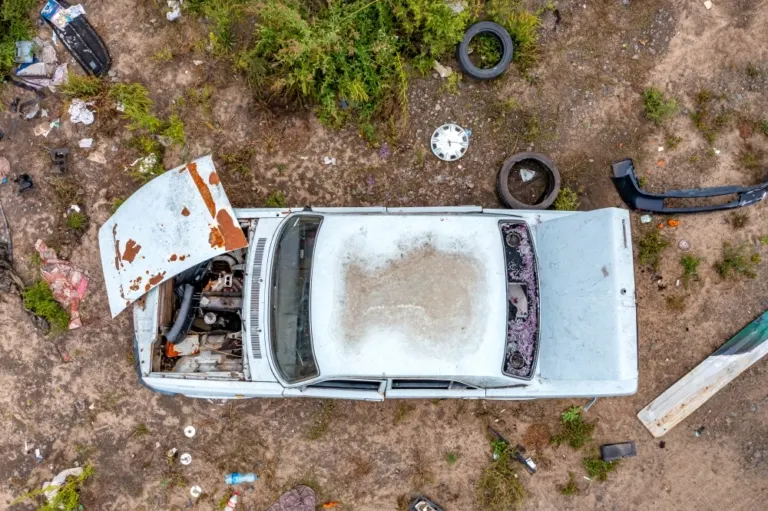



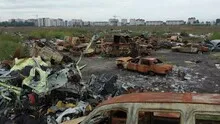
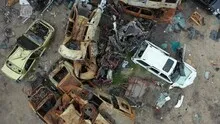
Document damaged vehicles near Kyiv
In the series from Kiev, overview images of an area alternate with close-up views of individual damaged vehicles. Rust-colored bodies and open window frames are clearly visible. An editorial selection should reveal this change in distance so that viewers can correctly associate detail with the overall view.
The distance to the documented object
The article dates the series to September 2022. This information is essential for classifying the images from Kiev. A publication today should include the date on the images so that the situation at that time is not confused with a current view of the site.
With documentary images, the work begins with the exact name of the excerpt. An overview shows the arrangement of visible buildings or objects. A detail makes individual surfaces recognizable, but at the same time takes away part of their surroundings. Pairs of images are therefore particularly suitable for classification. They allow you to go from the larger scene to a detail and then find your way back again. Information about the time and place of creation should come from the documentation. Visible color or damage alone does not allow reliable dating.
Individual vehicles and the entire area
The location of Kiev and the date of September 2022 are directly part of the caption in this series. The recordings document the vehicles visible on the site at this time. Such an overview does not reveal whether an individual car was previously in a different location, how it got here or who it belonged to. This distinction is essential for publication. It preserves the significance of the photos without attributing an unsubstantiated story to the people behind the visible objects.
The individual vehicle roofs form an almost regular pattern from a greater distance. When switching to a narrower image, the differences become noticeable. Body parts are missing, shapes are deformed, and there are gaps of different widths between the vehicles. Anyone who shows such an excerpt next to the overview should check whether its exact position can actually be found again. Otherwise, calling it another detail of the series is more precise than claiming to see the exact same car from a second direction.
A single object and its environment
For a recognizable object portrait, the main subject needs enough space to show its shape. The surroundings also explain where it is located. A good comparison therefore begins with a broader view and then looks for a narrower section that reveals a characteristic feature. In the caption, the location can precede the description of the detail. This means that it remains clear what the recording refers to even if it is later taken over individually from a series.
Build a comprehensible sequence of images
A sequence of images wins if each additional view answers a new question. You can start with an overview that introduces the location. Afterwards, a closer look may reveal a characteristic surface or shape. Finally, a side perspective can spatially explain the previously seen area. If you just string several very similar sections together, you are wasting this opportunity. When making your selection, it is therefore worth simply testing whether you can formulate your own, accurate caption for each image.
Put together an editorial sequence of images
To classify the aerial photos, an editorial team can first name the location and year, then describe the visible arrangement and finally explain the individual details. Emotional or dramatizing attributions are unnecessary. From this perspective, for example, an externally damaged vehicle does not provide reliable information as to whether there were people inside at the time of the damage. Anyone who associates the aerial photographer's images with reports from those affected should state the origin of these reports separately.
The articles Consequences of the war near Kiev and Hostomel document further excerpts. Each series deals with its own location and recording context.