 F4LUFTBILDER
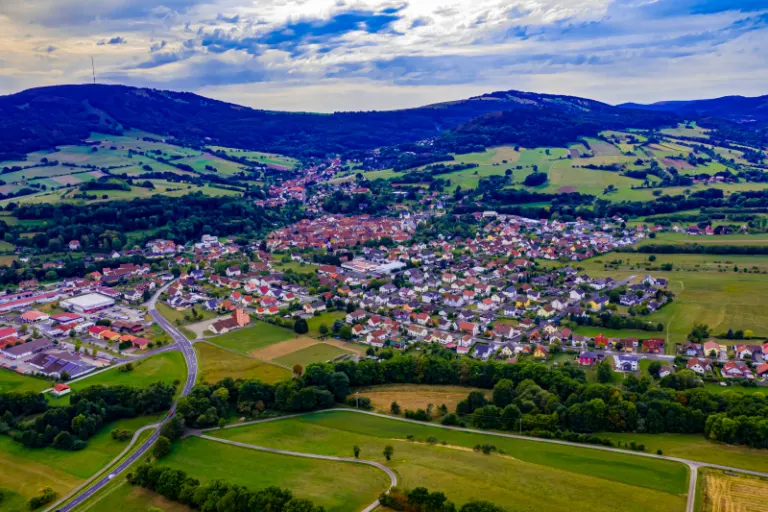


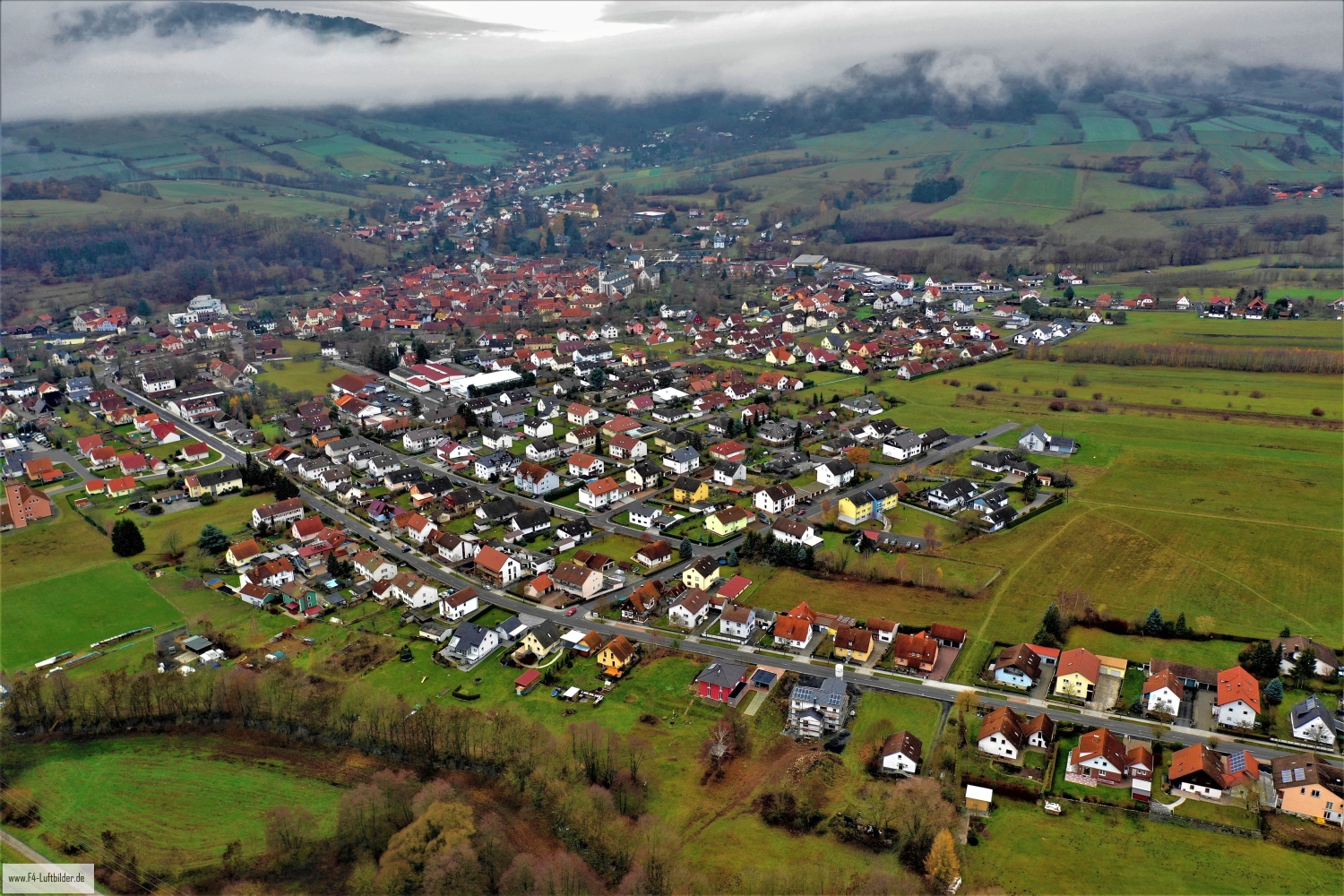
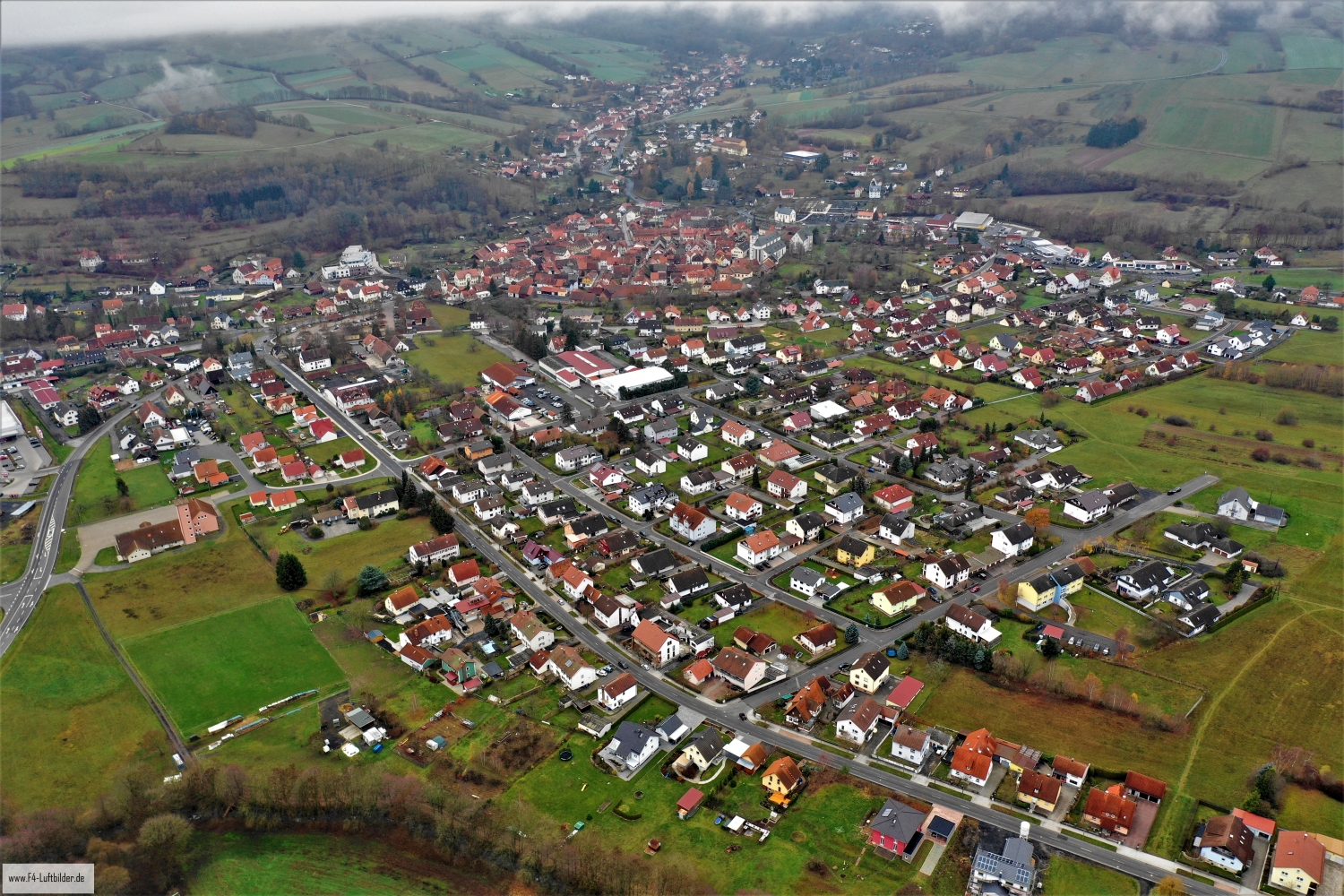
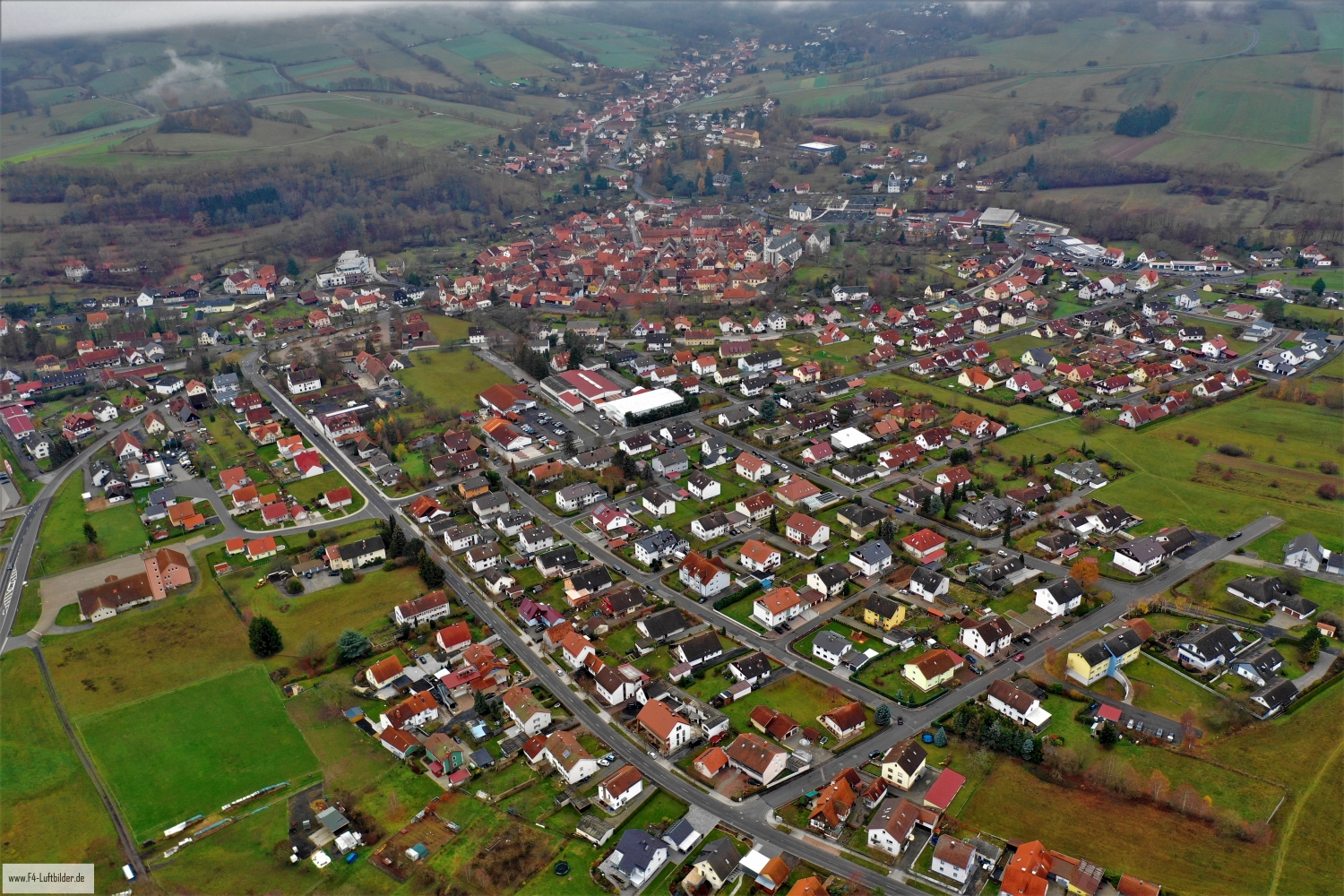
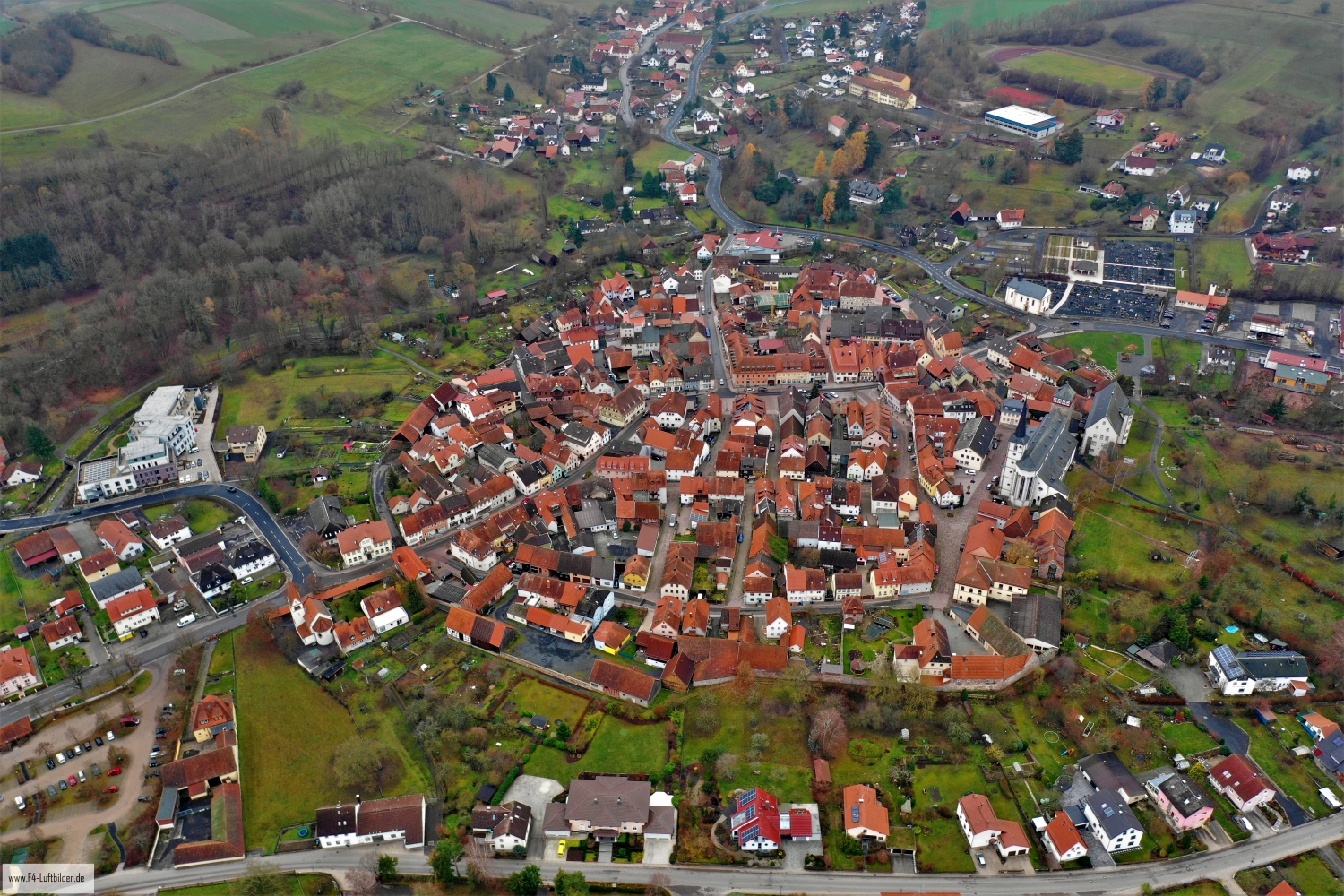

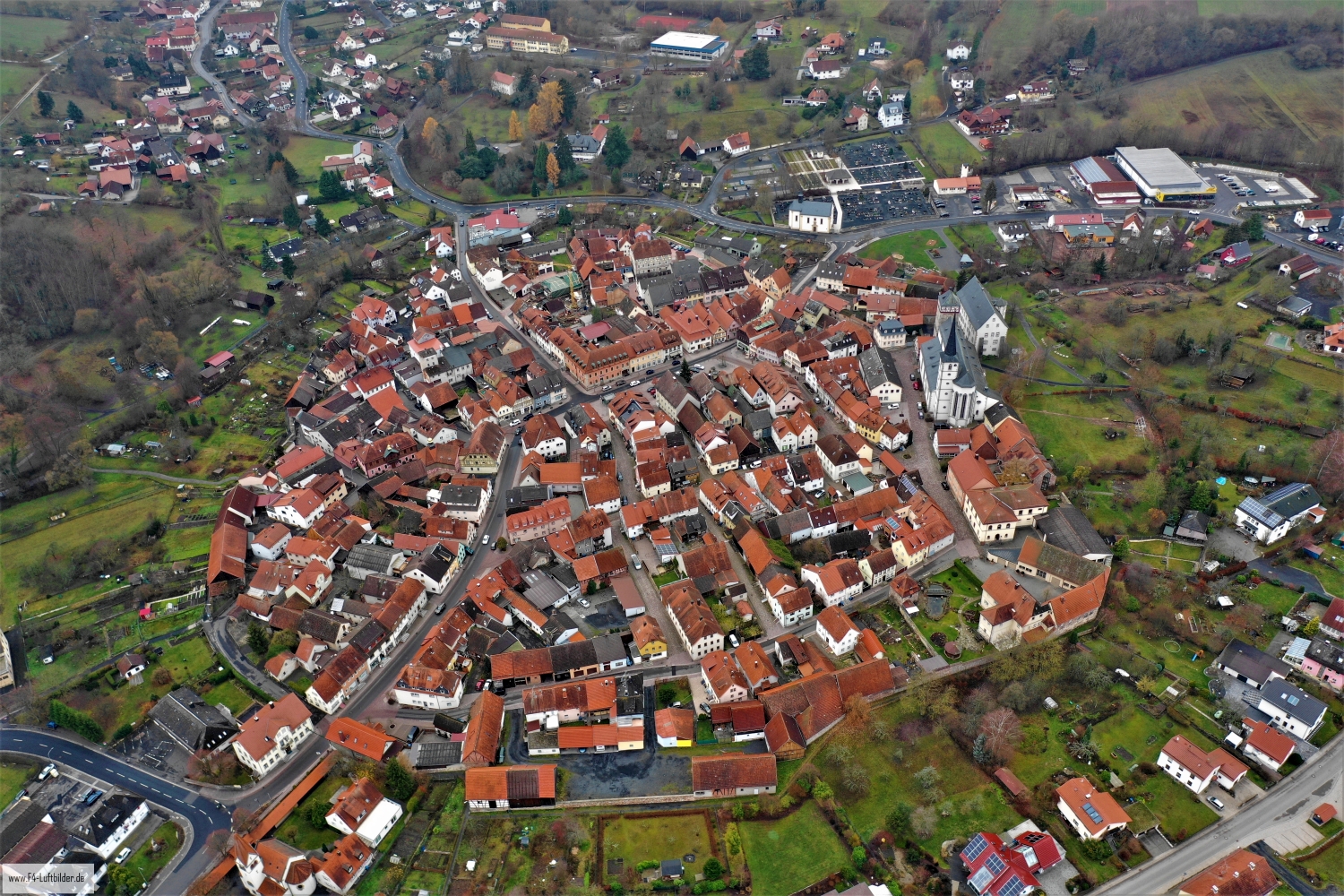
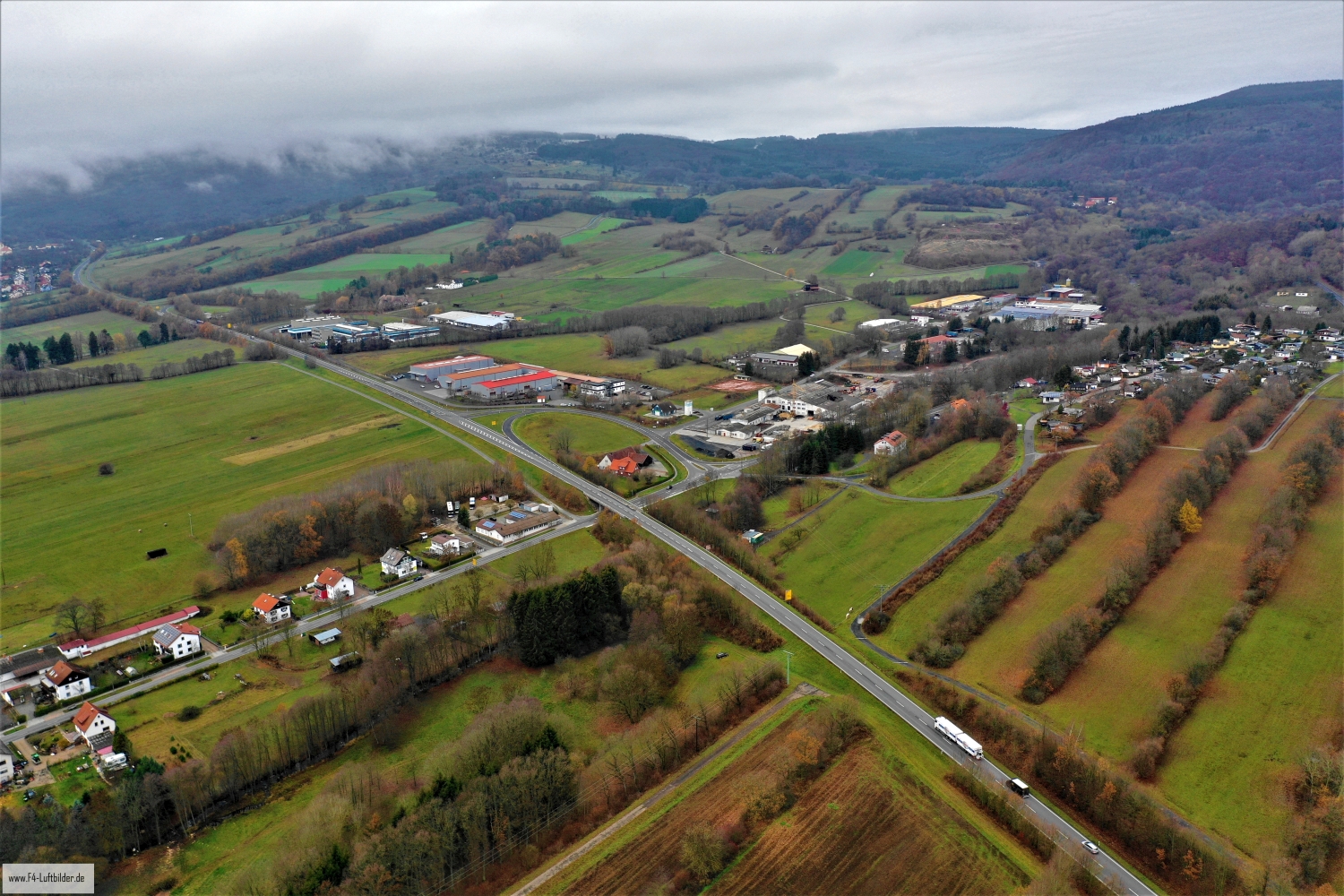
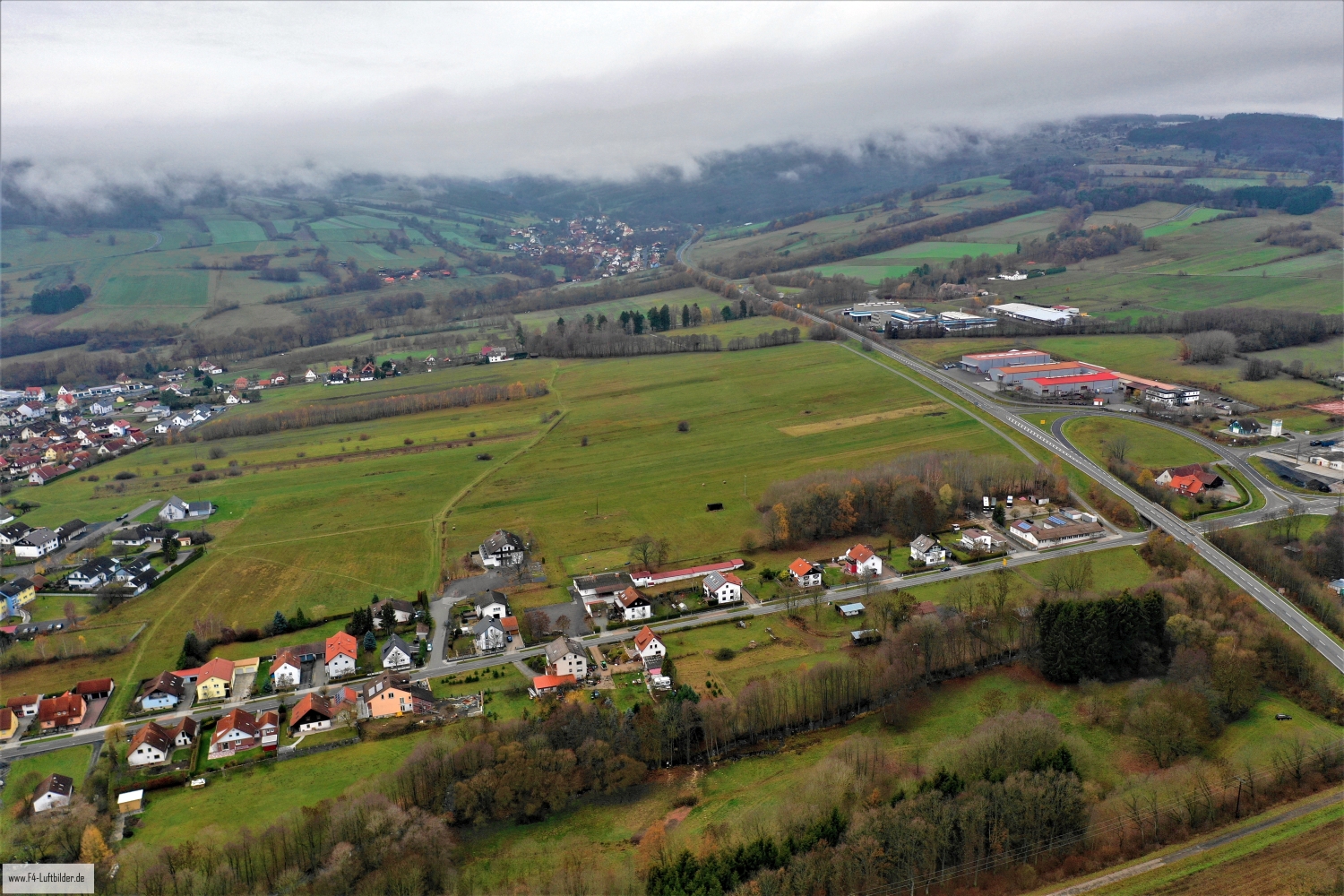
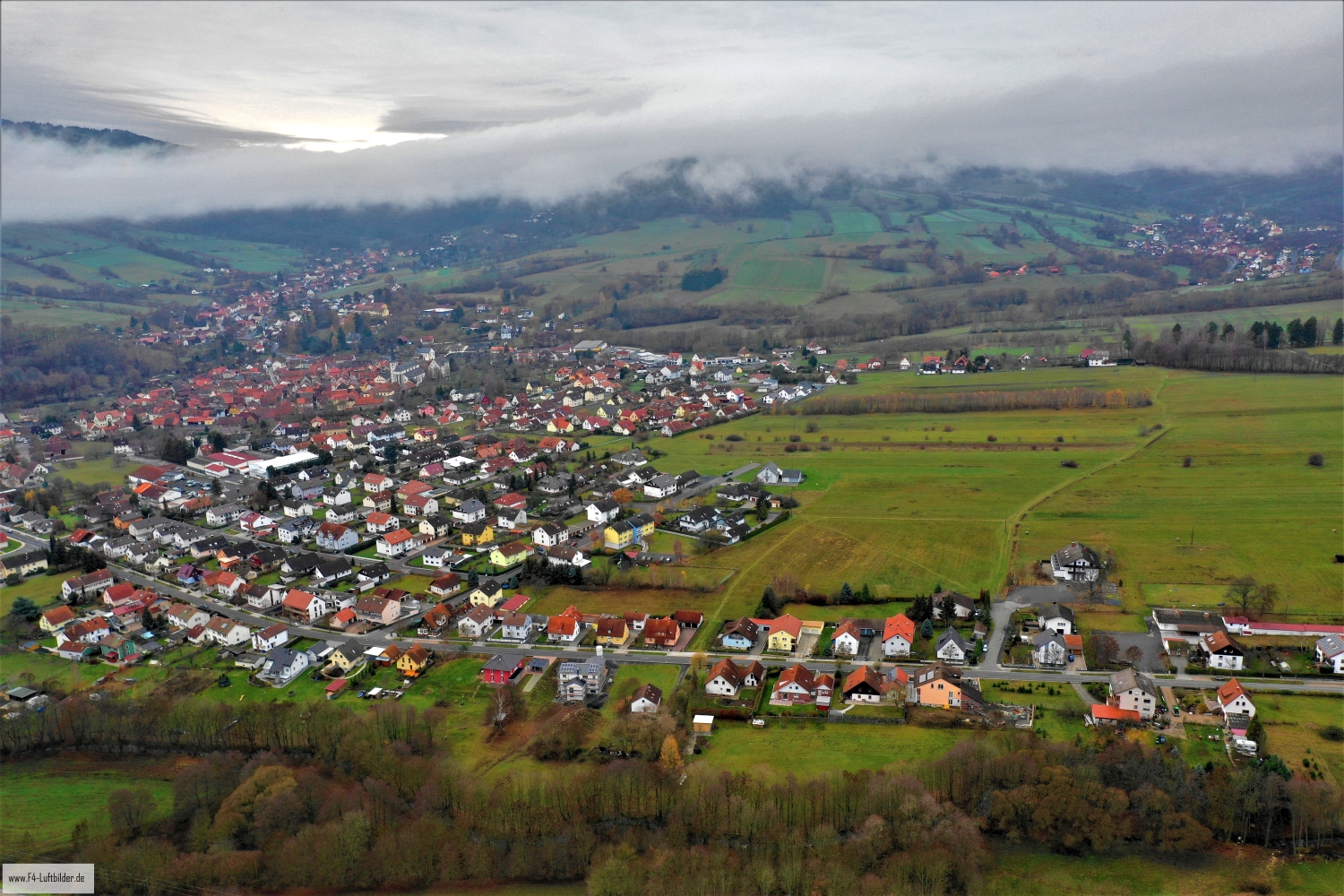
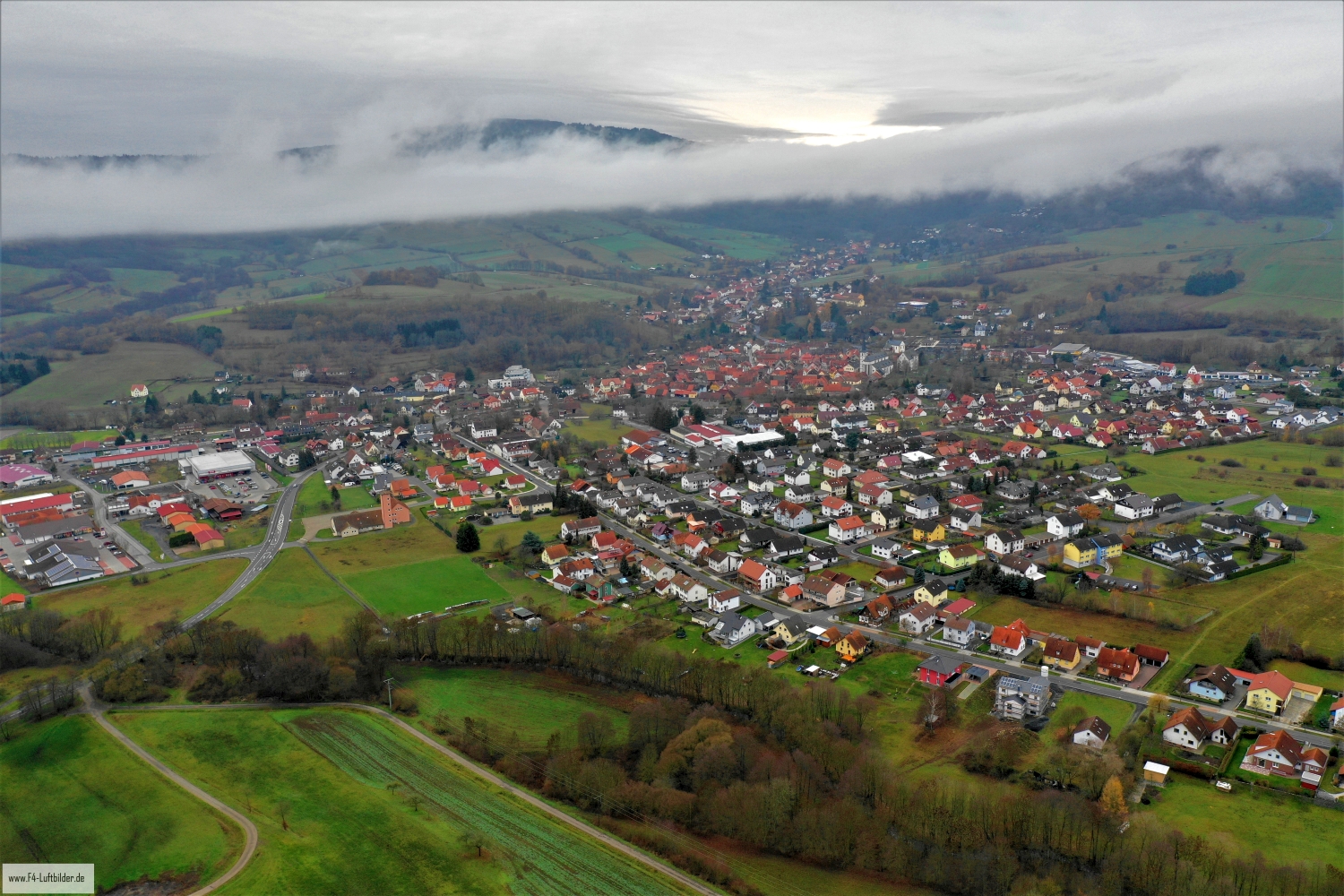
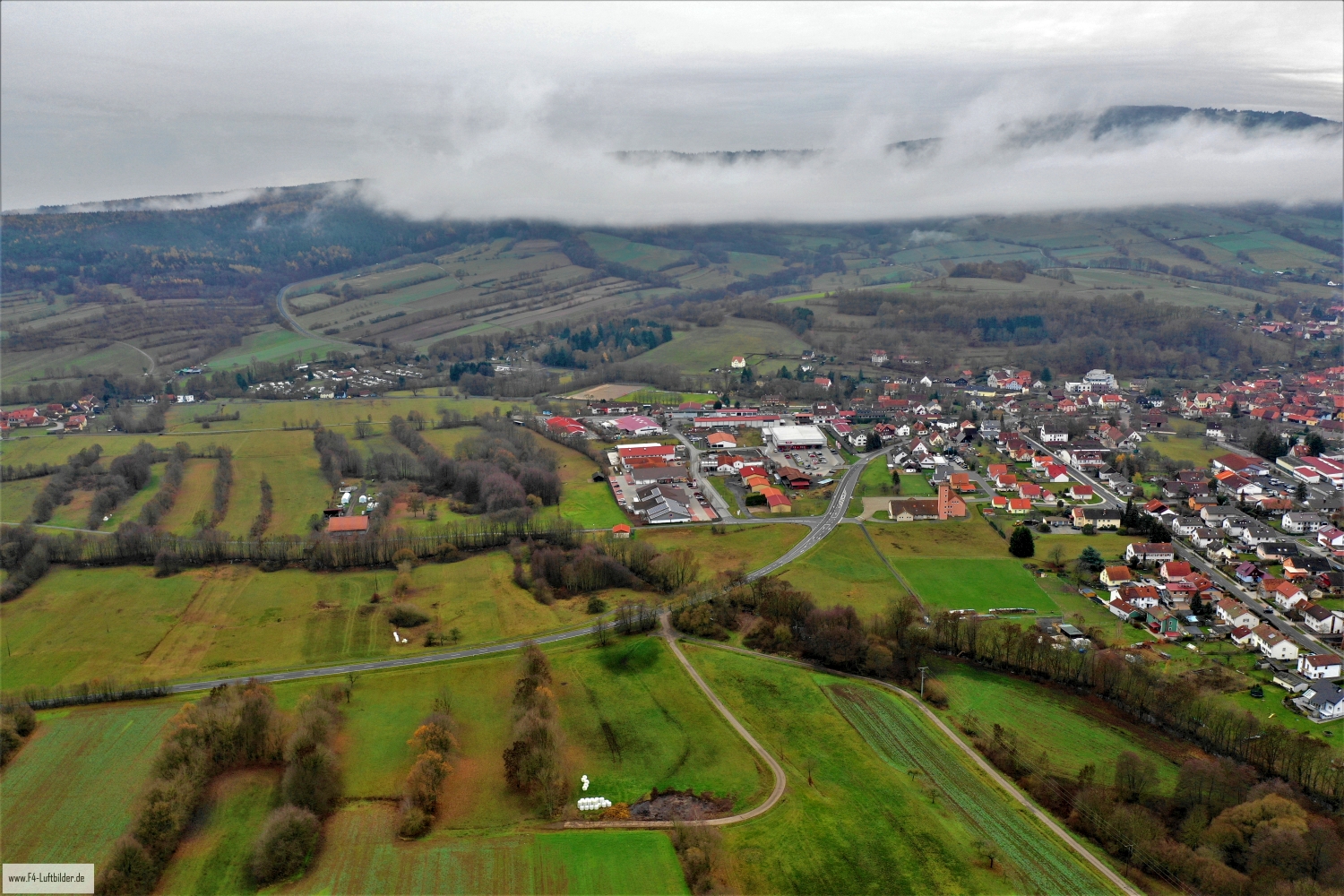
Bischofsheim in front of the Rhön panorama
Near Bischofsheim in the Rhön, wooded heights open up a hollow for development. The center is denser than the edges of the settlement. This situation is particularly well explained in side views, in which the hills behind the first rows of roofs form a second level.
A town in the Rhönmulde
Above Bischofsheim, the Rhön becomes tangible through the sequence of mountain ranges. The nearby roofs form the lower edge of the picture; further back, larger and larger landforms take their place.
Two different narrative directions emerge along a valley and across it. The longitudinal view leads into the distance and shows what is arranged one behind the other. Looking sideways, the width of the valley floor and the rise on either side become clearer. Which view is convincing depends on the question asked of the image. For a description of the location, a lateral view is often productive. For a stretch along a route, the longitudinal view gives the viewer a direction to follow across multiple subjects.
How the place changes from the inside out
The center of a town can often be recognized from the air by the intersection of several streets. These lines diverge towards the open landscape, the properties become longer and the distances between the houses become larger. Anyone who chooses an image for a location portrait can pay attention to these transitions. A motif with a piece of the surrounding area tells where the place is. A narrower shot, on the other hand, gives people who live or have lived here more opportunities to find familiar buildings in the picture.
The graduation of the mountain ranges
In a mountain landscape the view is divided into the foreground, middle slopes and distant heights. What merges into a closed surface in flat light separates into individual ridges when lit from the side. A gap between two ridges is often enough for the viewer to estimate the depth. For a landscape photograph, this gap is an important part of the subject. If you leave them standing while cropping, the spatial effect is retained even in a smaller image format.
The distribution of blue tones
Among the 16 photos in the gallery, shot 9 and shot 1 provide a good starting point for the comparison. In the first excerpt, shades of blue play a smaller role. In the second shot, blue areas take up more space. Blue can extend over a large contiguous area or only appear in individual parts. What also counts for the effect is whether these areas extend to the edge of the picture or surround the main subject.
The camera data for shot 16 is December 5th, 2018, and that for shot 1 is September 16th, 2020. The gallery combines images from different days. Differences in lighting or visibility can be better classified against this background. The exposure time was 1/80 second for the first of the images mentioned and 1/240 second for the second.
Select landforms for a landscape portrait
When publishing about a mountain range, the direction of view should be stated in the caption, as long as it can be determined with certainty. The same ridge can look very different from one valley than from the other side. For the aerial photographer, the question arises when planning whether the location in the foreground or the shape in the distance should be the deciding factor. If a close and a distant reference point is retained in the image, even readers without local knowledge can understand the gradation of the terrain.
Related motifs in the aerial photo archive
Two further articles invite comparison. In the first, Burkardroth, a different detail is in the foreground. The aerial photos show the community of Burkardroth in the Rhön. After that, Mittelsinn is a good option. Mittelsinn fits into the wide green valley floor of Sinn.