 F4LUFTBILDER


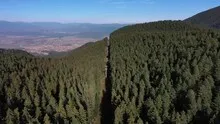
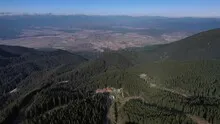
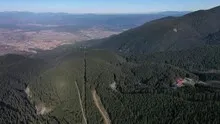
Bansko at the transition to the mountains
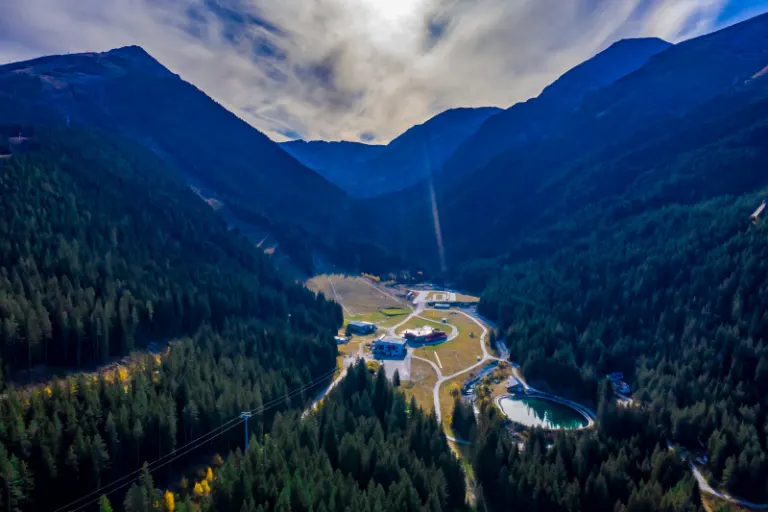
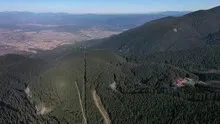
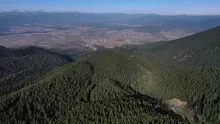
In the series from around Bansko, forested mountain ridges reach to the horizon. In some places the view opens up through the valley, in other places there are several ridges one behind the other. The aerial photos focus on the landscape behind the Bulgarian town.
The mountains behind Bansko
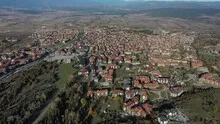
In Bansko the transition to the mountains is right behind the buildings in the picture. Individual strips of forest allow the view from the valley floor to extend beyond the first level of the slope.
The silhouette of a mountain range is a good way to start looking. First you notice the highest point, then the succession of saddles and flatter sections. In an oblique shot, this profile connects with the shapes in the foreground. A steeper perspective takes more interest in the surface of the slope. A direct comparison makes it understandable why a location can change significantly when the viewing angle changes, even though the recognizable heights in the background remain the same.
Recognize the shape of the valley area
Two different narrative directions emerge along a valley and across it. The longitudinal view leads into the distance and shows what is arranged one behind the other. Looking sideways, the width of the valley floor and the rise on either side become clearer. Which view is convincing depends on the question asked of the image. For a description of the location, a lateral view is often productive. For a stretch along a route, the longitudinal view gives the viewer a direction to follow across multiple subjects.
What the treetops reveal
A forest changes the view of every structure and every path that lies on its edge. From one side the treetops cover the lower area, from another a small gap opens. Photos in which the boundary between open space and vegetation can be clearly seen are particularly interesting. They explain which parts of a motif are visible. In a description, it is possible to distinguish precisely between the section depicted and the terrain hidden by the foliage.
The distribution of blue tones
To switch between two of the 20 aerial photos, shot 13 and shot 5 can be called up directly in the gallery. In the first excerpt, shades of blue play a smaller role. In the second shot, blue areas take up more space. Blue can extend over a large contiguous area or only appear in individual parts. What also counts for the effect is whether these areas extend to the edge of the picture or surround the main subject.
Shot 1 and Shot 20 are among the views from November 6, 2020. According to the camera's time information, there are approximately 38 minutes between the two images. ISO 100 and an exposure time of 1/800 second are recorded for both files.
In the Aerial Videos section there are 6 clips for this article. An example is “Bansko in Bulgaria from the air”. Its preview leads directly to the video in the aerial photographer's Adobe Stock portfolio.
Select landforms for a landscape portrait
A single contour line can shape the impression of a landscape and yet reveal little about its extent. For a printed panorama, it is worth looking at the widest view first and then at a section of the same area. In a small format, a foreground with a clear contour can become more important than the most distant peak. If you plan a new view with an aerial photographer, you can make this decision based on the intended page layout and clarify in advance which part of the landscape definitely belongs in the picture.
Related motifs in the aerial photo archive
Two additional views can be used in the archive for comparison. The first can be found under Bulgaria – Rila Mountains. In Bulgaria's Rila Mountains, forested ridges extend to more open, rocky heights. The second belongs to the article Georgia. Mestia is one of the place names in the Georgia series.
Aerial photos of Bansko
Your aerial photographer across Europe
Request a free quote