 F4LUFTBILDER
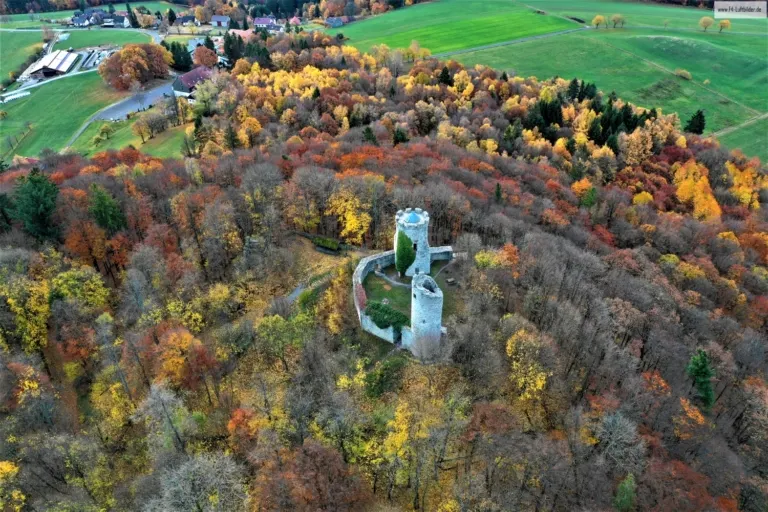
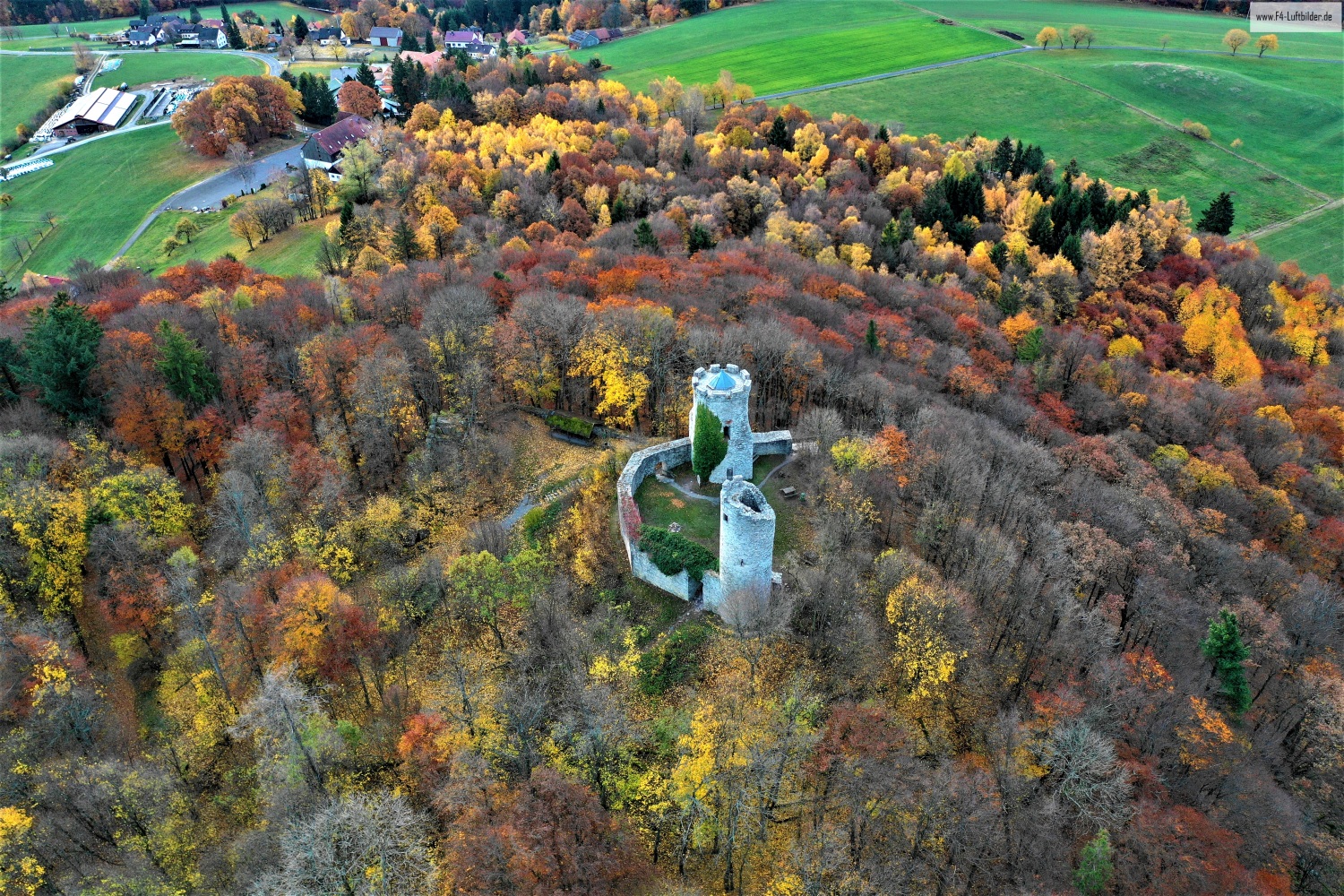
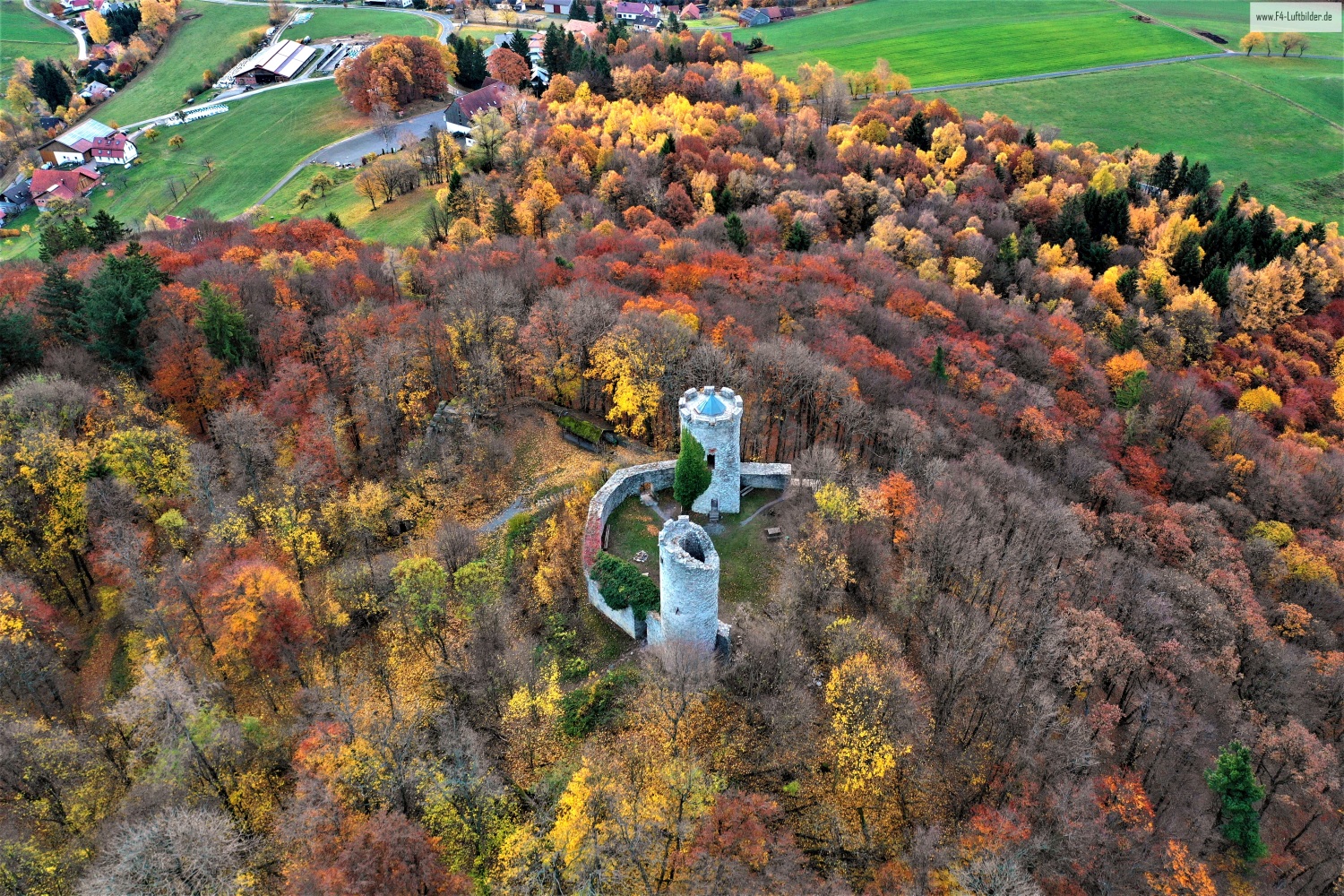
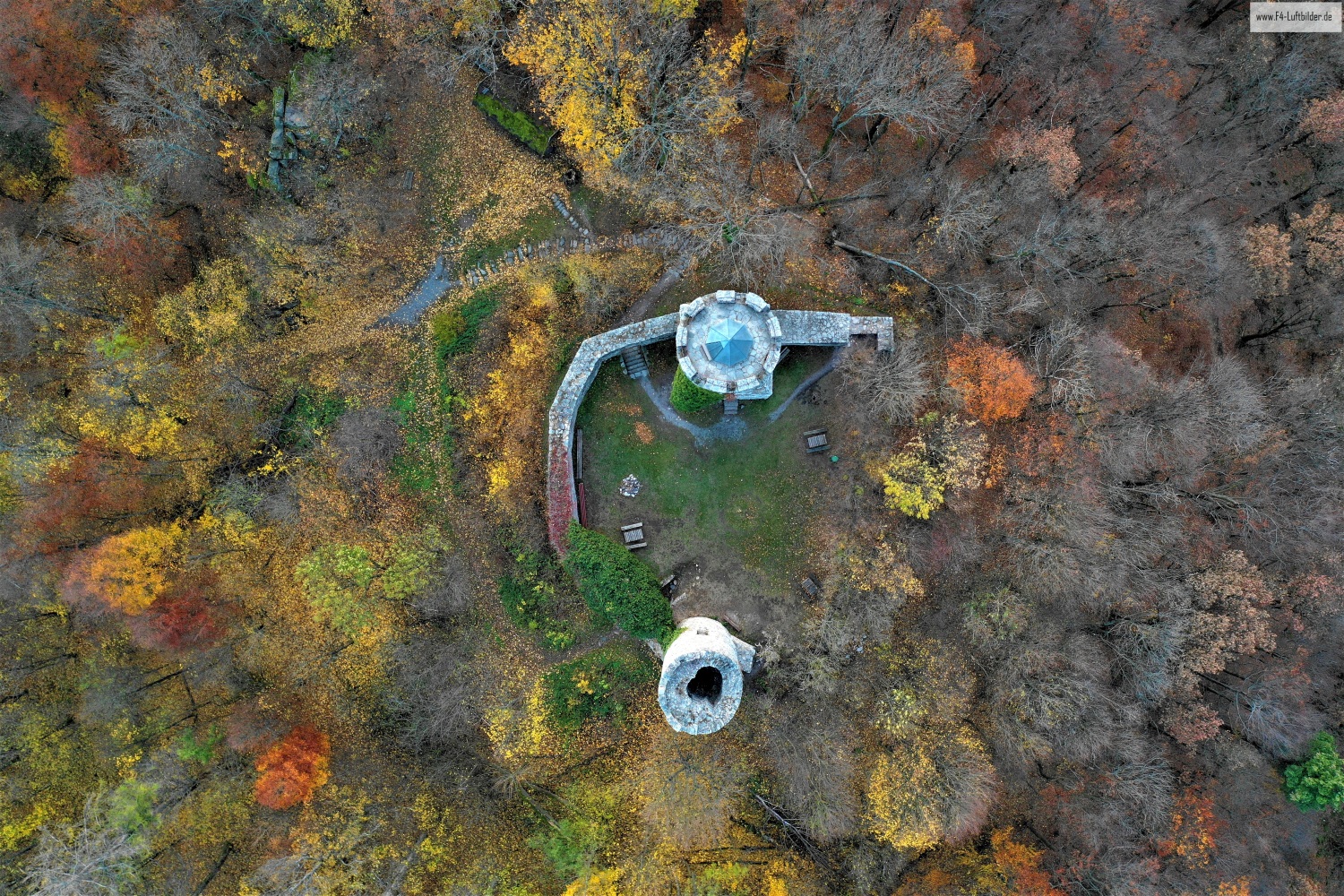
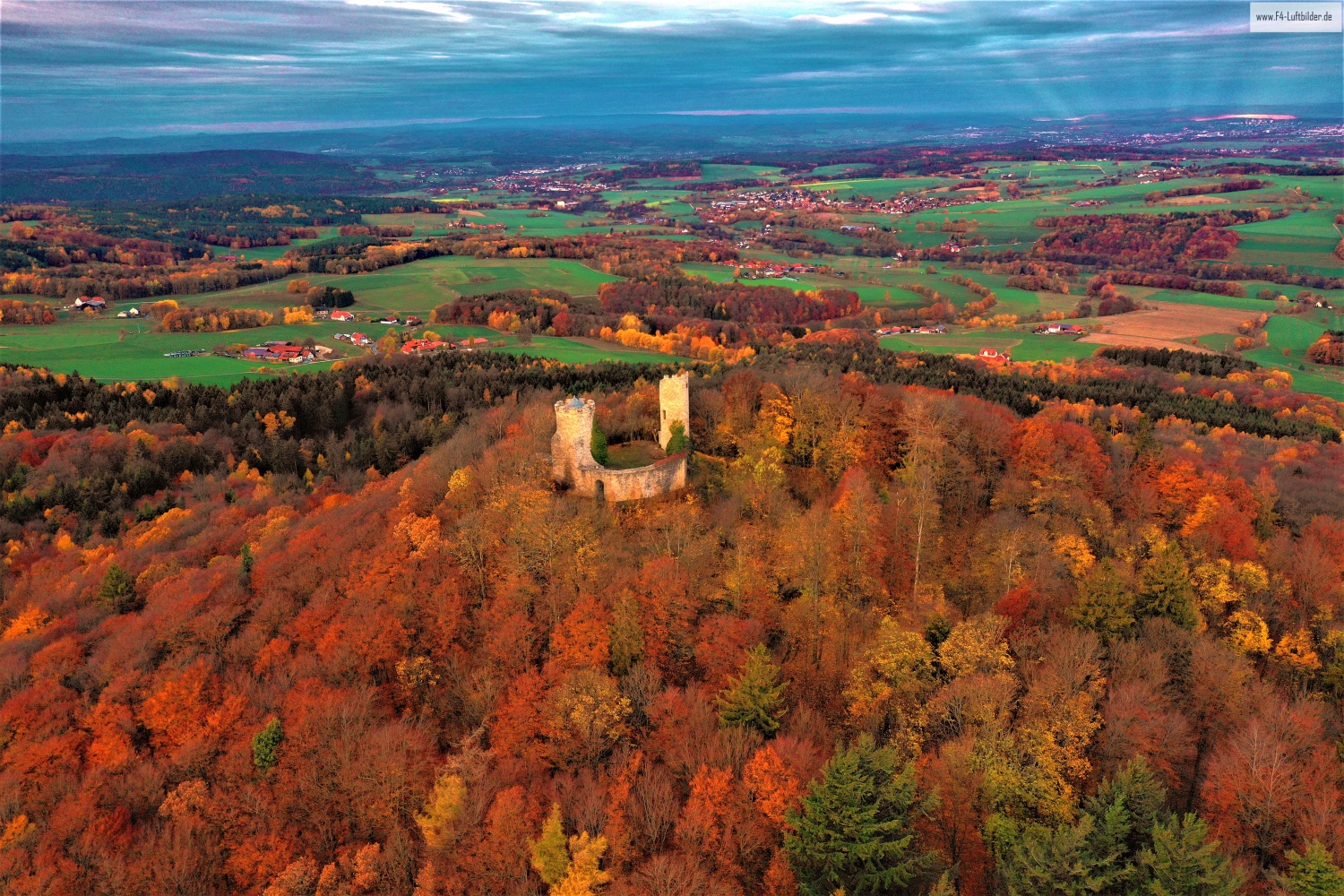
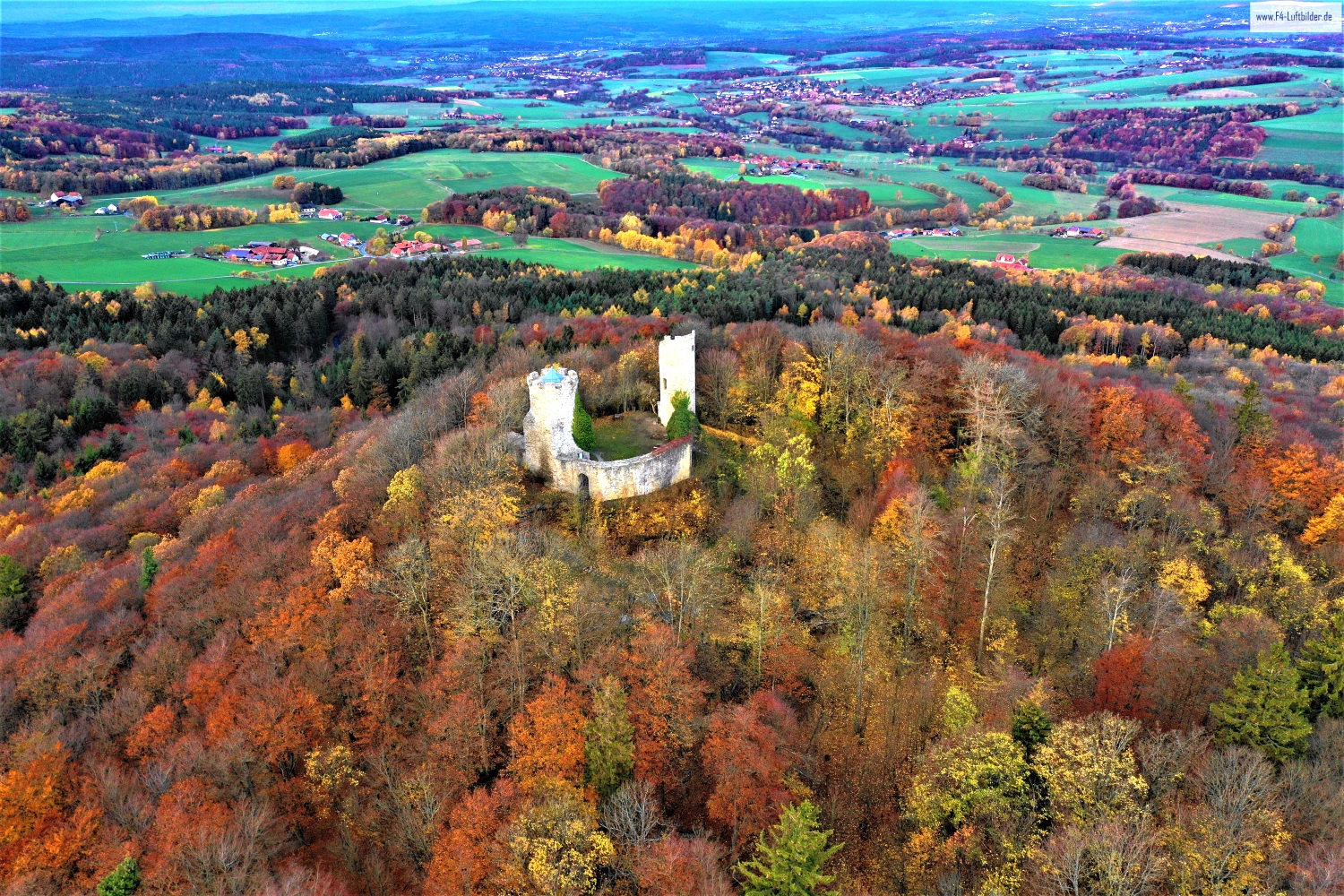
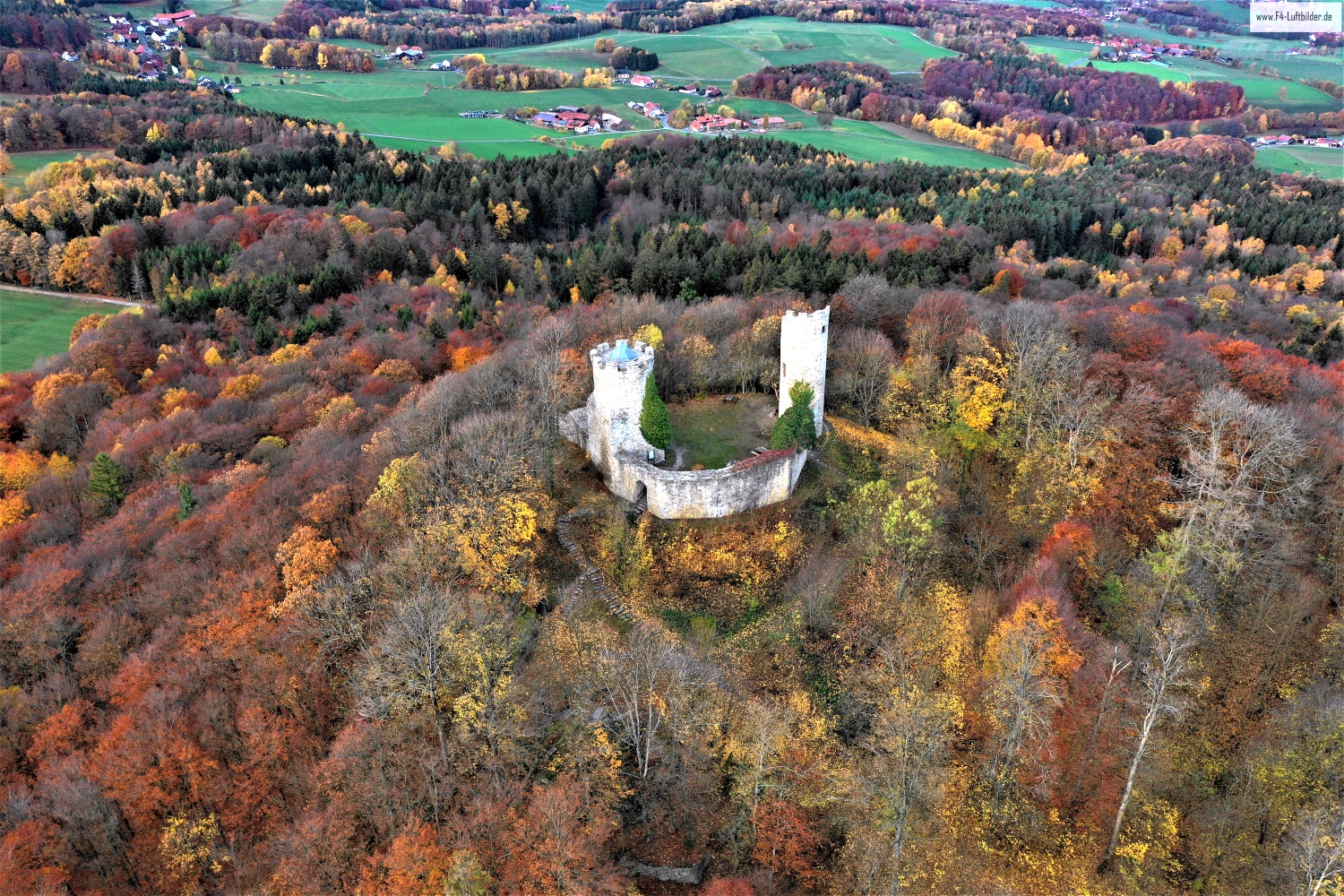
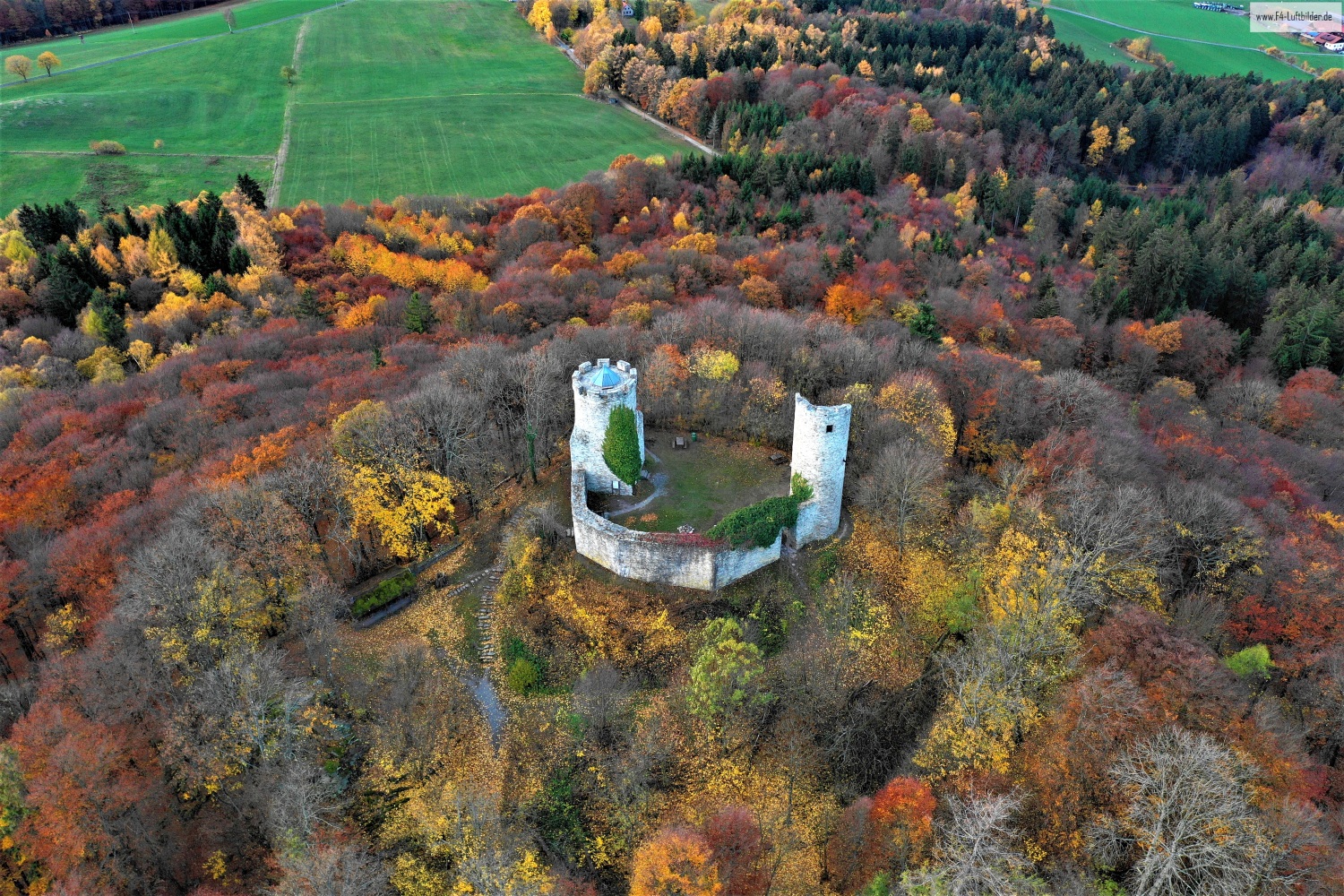
The Ebersburg in the colorful forest
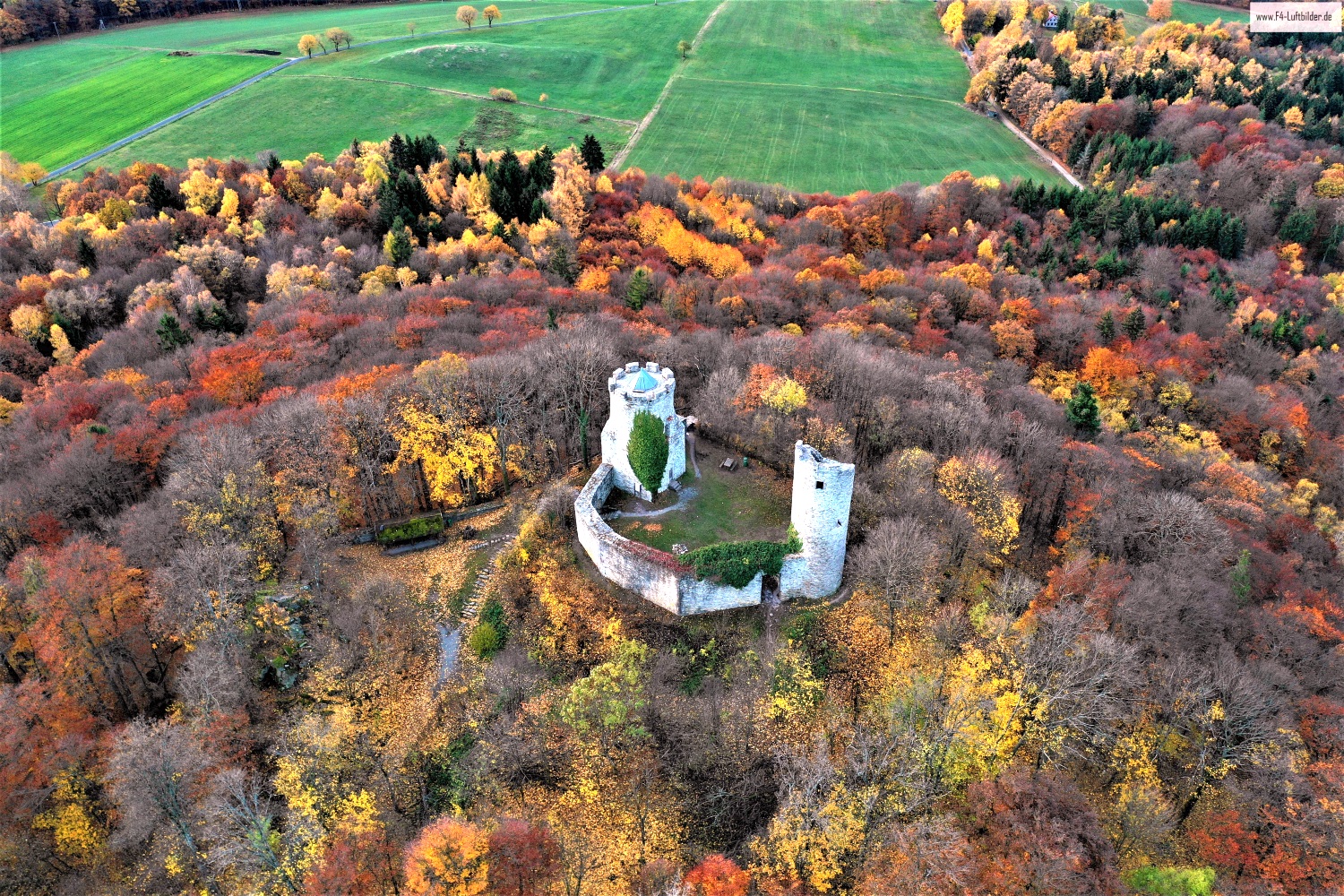
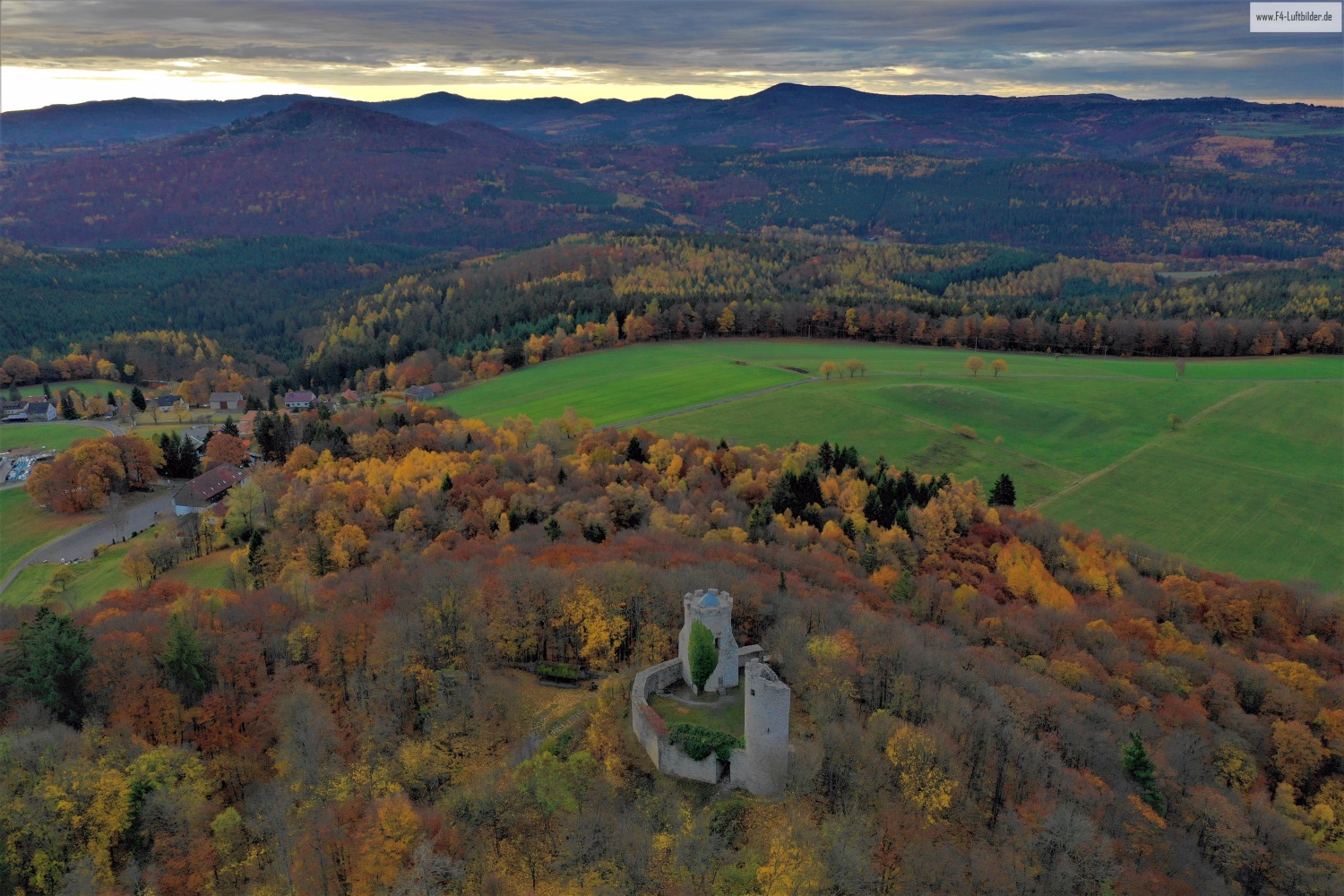
From a distance, the Ebersburg is almost hidden in the autumn forest. Closer, the bright walls and the round tower stand out clearly from the treetops. If you look at both scales together, the small section with the ruins gets its landscape context.
The ruins between the crowns
At the Ebersburg, the treetops cover parts of the walls. A section showing these interruptions conveys the location in the forest better than the tower detail alone.
A ruin is visible from above in places where walls change direction or merge into open interior spaces. There you can follow the floor plan, even if only individual sections have been preserved. Growth and shadows are part of the visible situation. A careful description of the image names the recognizable parts without reconstructing missing buildings from their outline alone. In comparison with a closer picture, it also becomes clear where the large lines of the overview consist of several individual pieces of wall.
What the treetops reveal
A forest changes the view of every structure and every path that lies on its edge. From one side the treetops cover the lower area, from another a small gap opens. Photos in which the boundary between open space and vegetation can be clearly seen are particularly interesting. They explain which parts of a motif are visible. In a description, it is possible to distinguish precisely between the section depicted and the terrain hidden by the foliage.
How a tower dictates the direction of view
Up close, a tower draws the eye upwards. In the aerial photograph this movement is reversed. From the top, the eye follows the sides down to the ground and finds paths, neighboring buildings or vegetation for size comparison. A steep perspective shortens the visible shaft. When viewed from the side, it stands out from its surroundings. When selecting a representative image, it is therefore crucial whether the shape of the tower or its location in the terrain should be shown.
Warm tones within the series
For a direct image comparison, use shot 9 and shot 2 from the gallery with 9 aerial photos. In the second view, warm reds and browns have more weight than in the first. Red-brown and yellowish areas are particularly noticeable next to cooler surfaces. What is interesting when comparing is whether they are concentrated on a single object or appear spread out across the entire view.
According to camera data, Shot 5 and Shot 1 were taken on November 12, 2018. There is a gap of less than a minute between the two images. The exposure time was 1/100 second for the first of the images mentioned and 1/60 second for the second.
Communicate architecture and location together
For a post about a building, two captions can fulfill very different tasks. The first names the system and explains its location, the second leads to a visible component. Historical construction phases or previous uses can hardly be determined from the roof color and current wall edges alone. However, an aerial photographer can show precisely which parts will actually be visible in the later photo. For a guide or local chronicler, this separation makes it easier to work with people who know the local building history.
Related motifs in the aerial photo archive
The article Haineck Castle Ruins offers another perspective. The Haineck ruins appear in the forest as a small stone enclosure. In the gallery Ruins of Botenlauben Castle there is a different focus. The preserved walls of Botenlauben Castle make the hill appear from above like a building floor plan.