 F4LUFTBILDER
The Fat Tower and its shadow
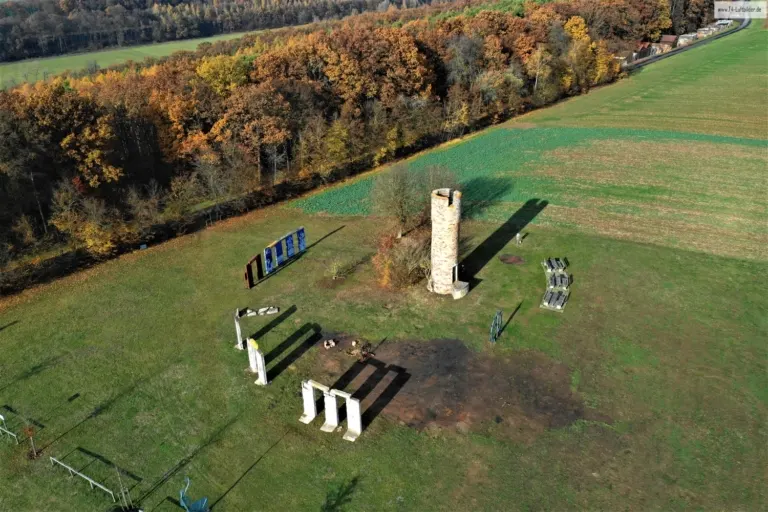
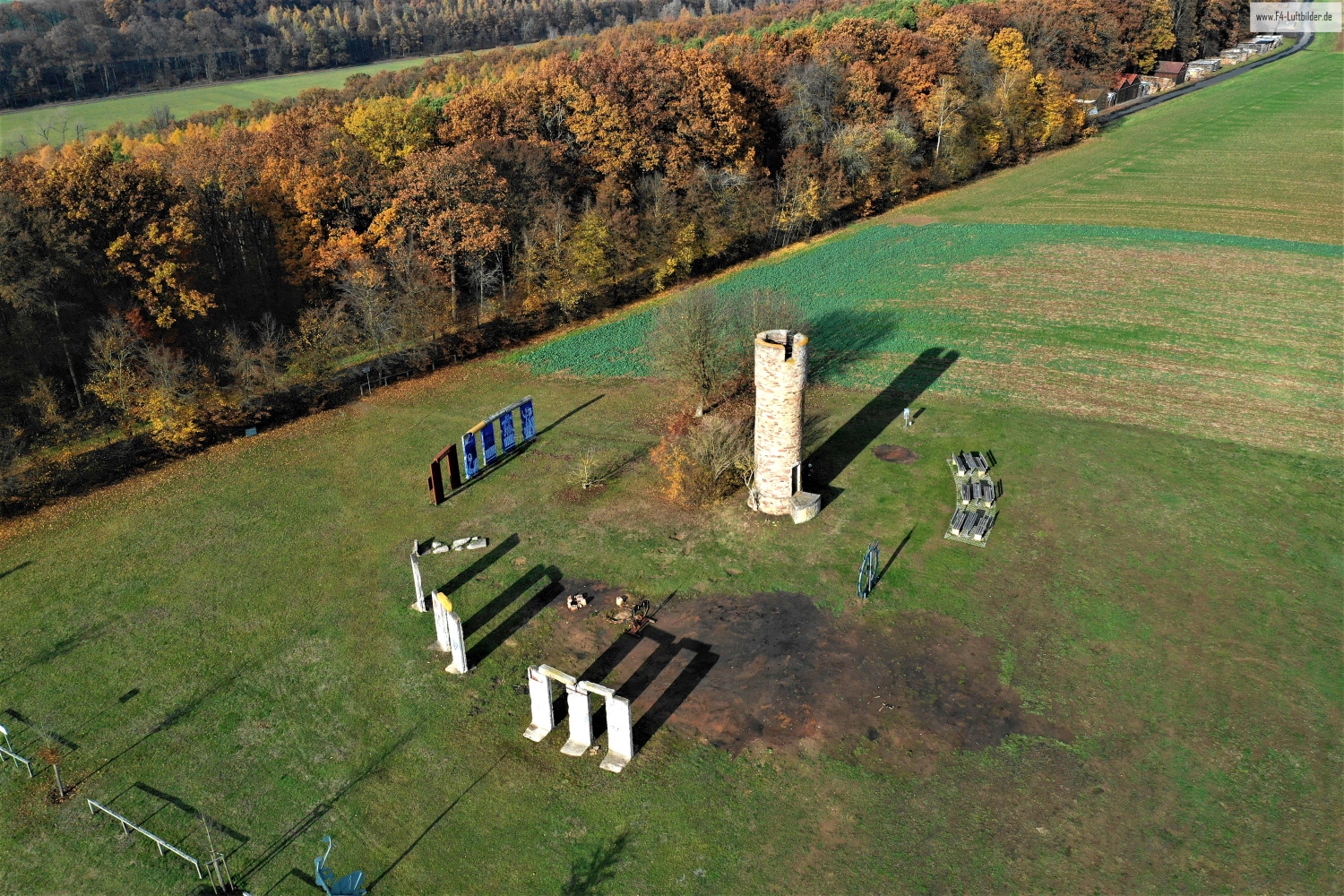
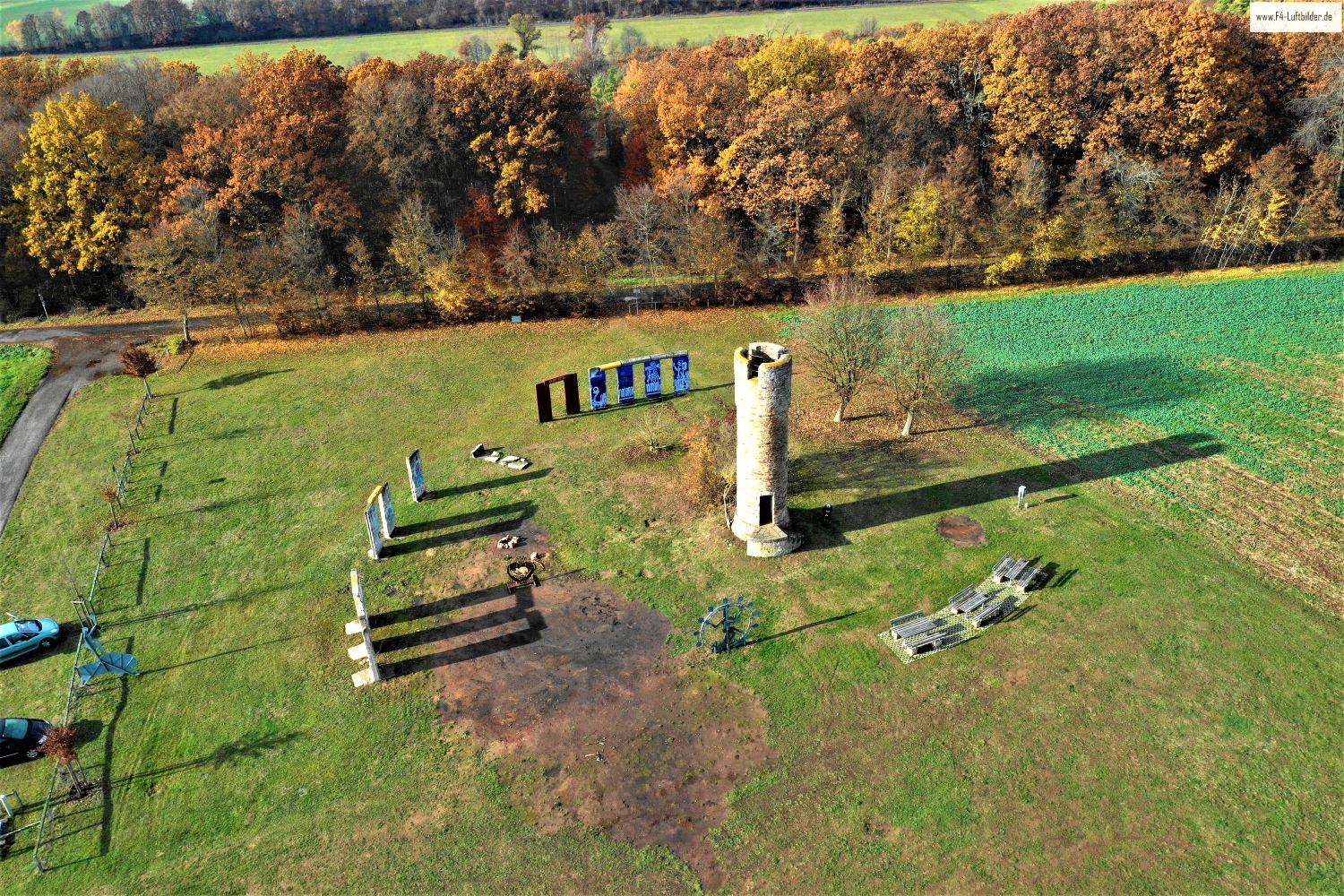
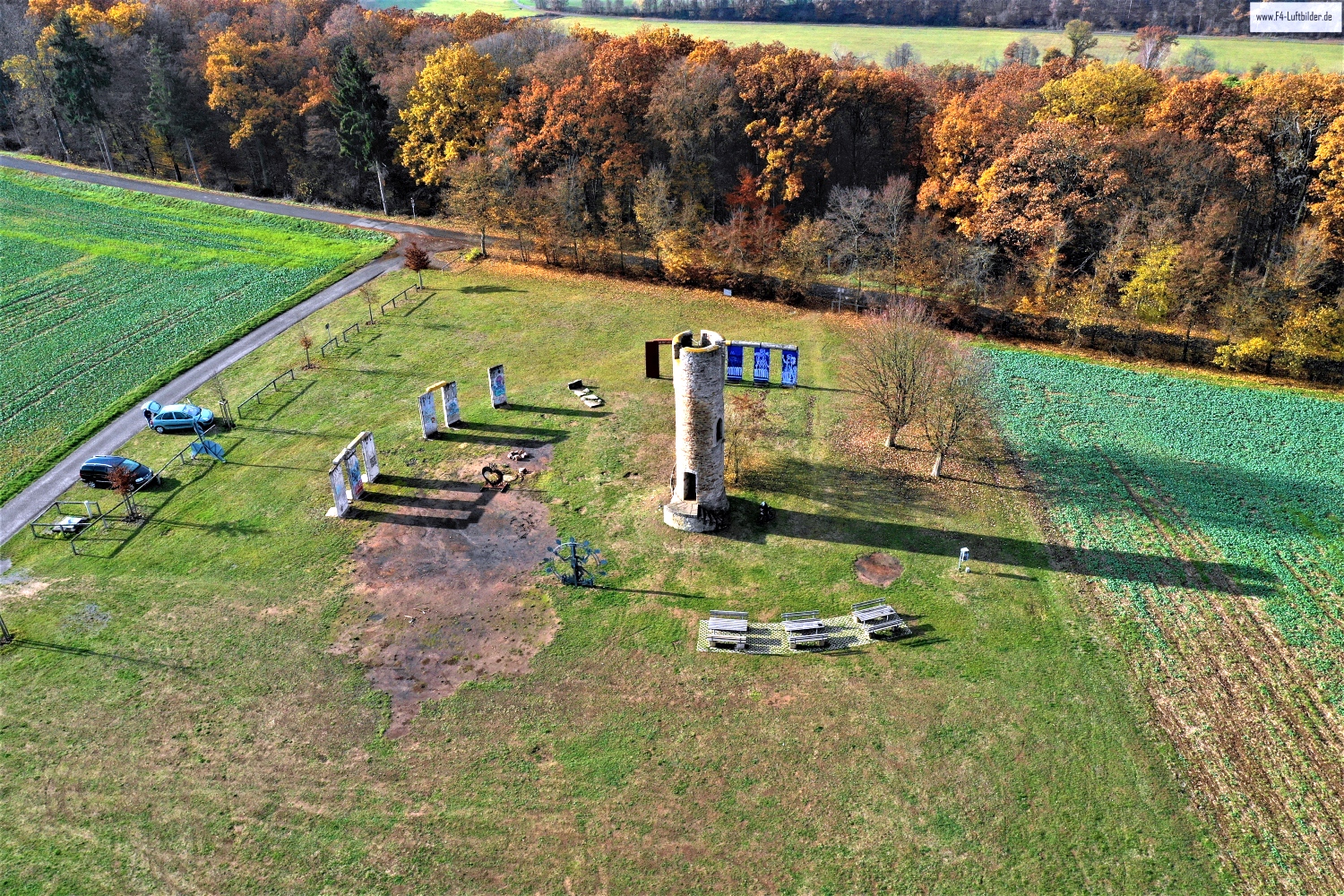
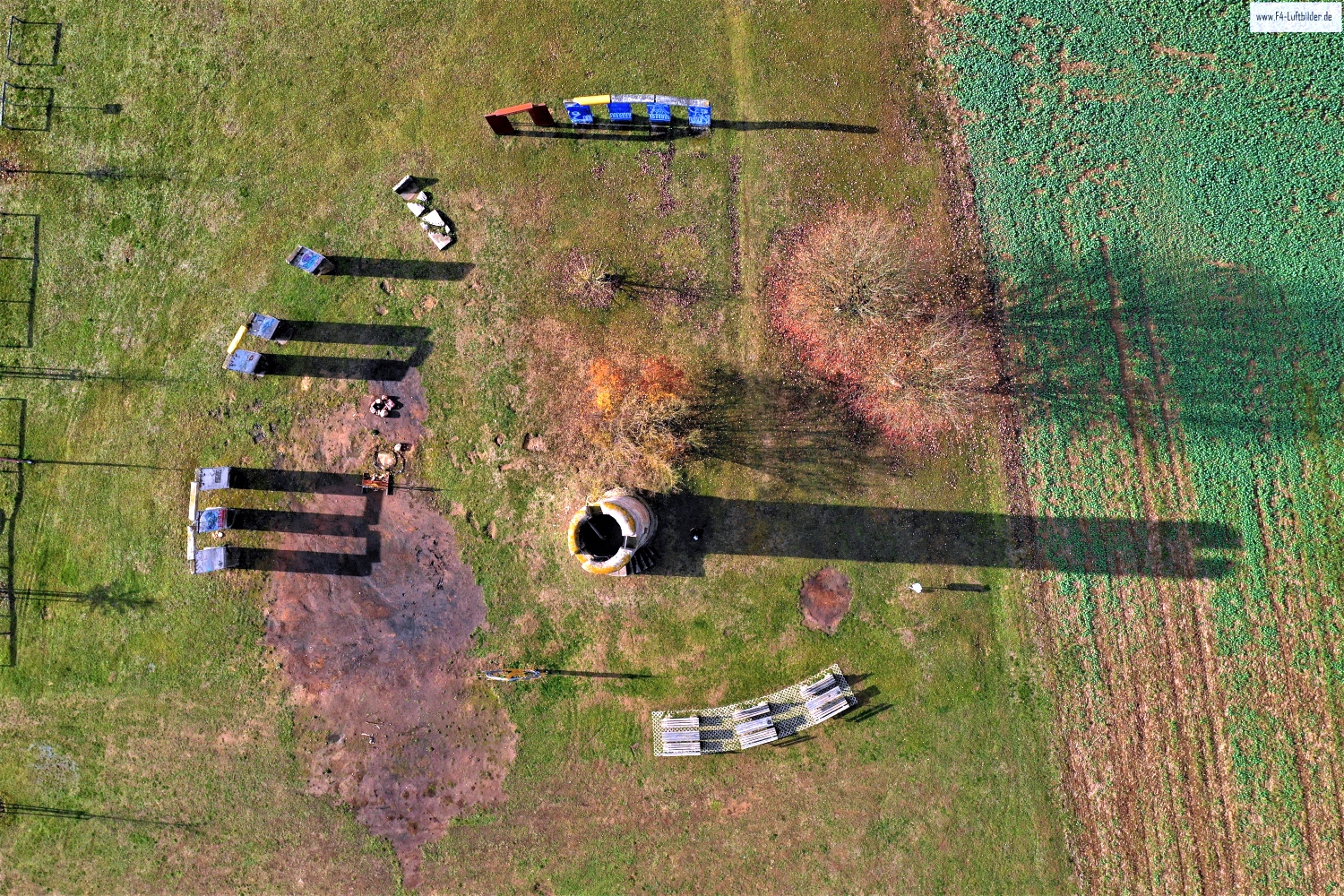
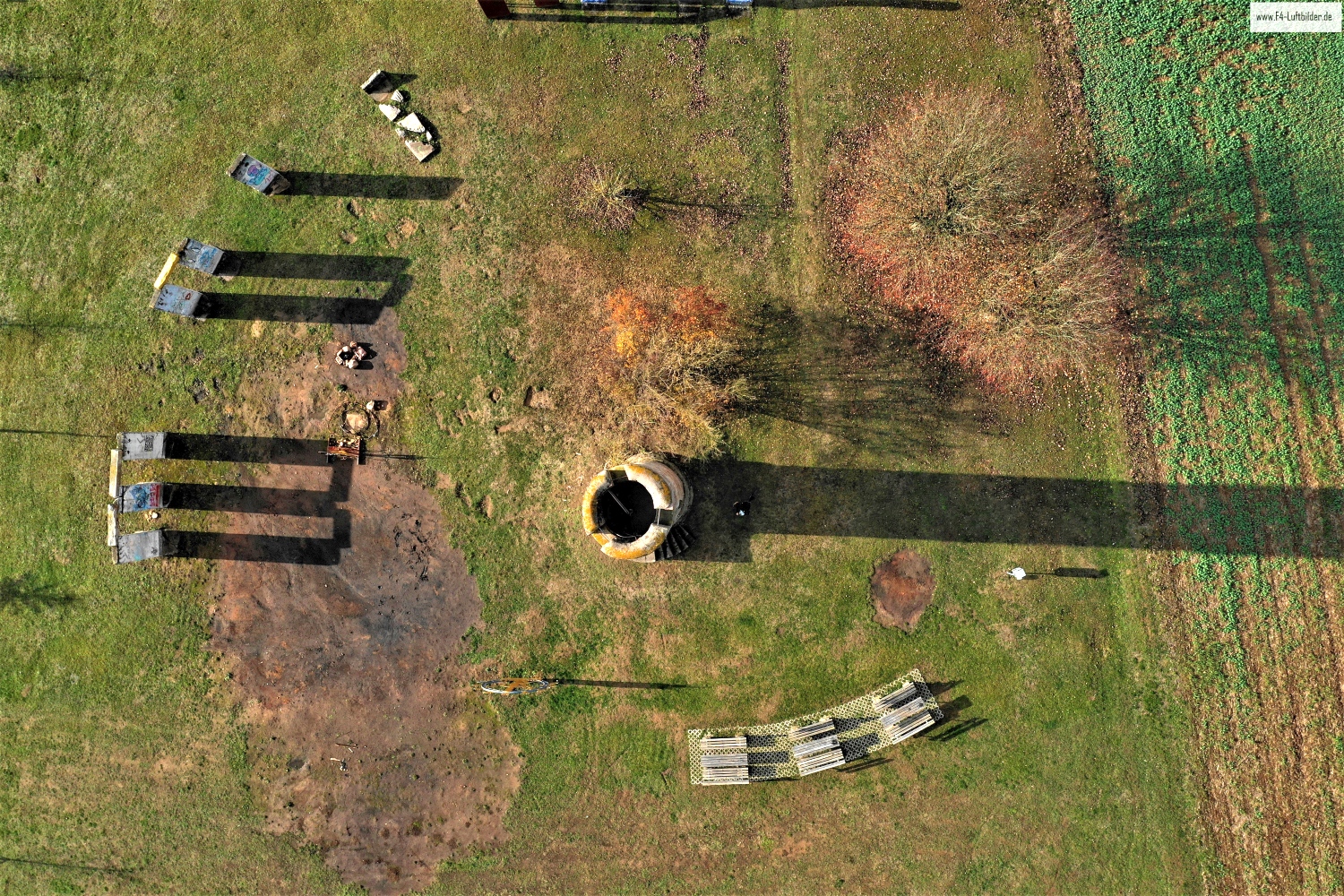
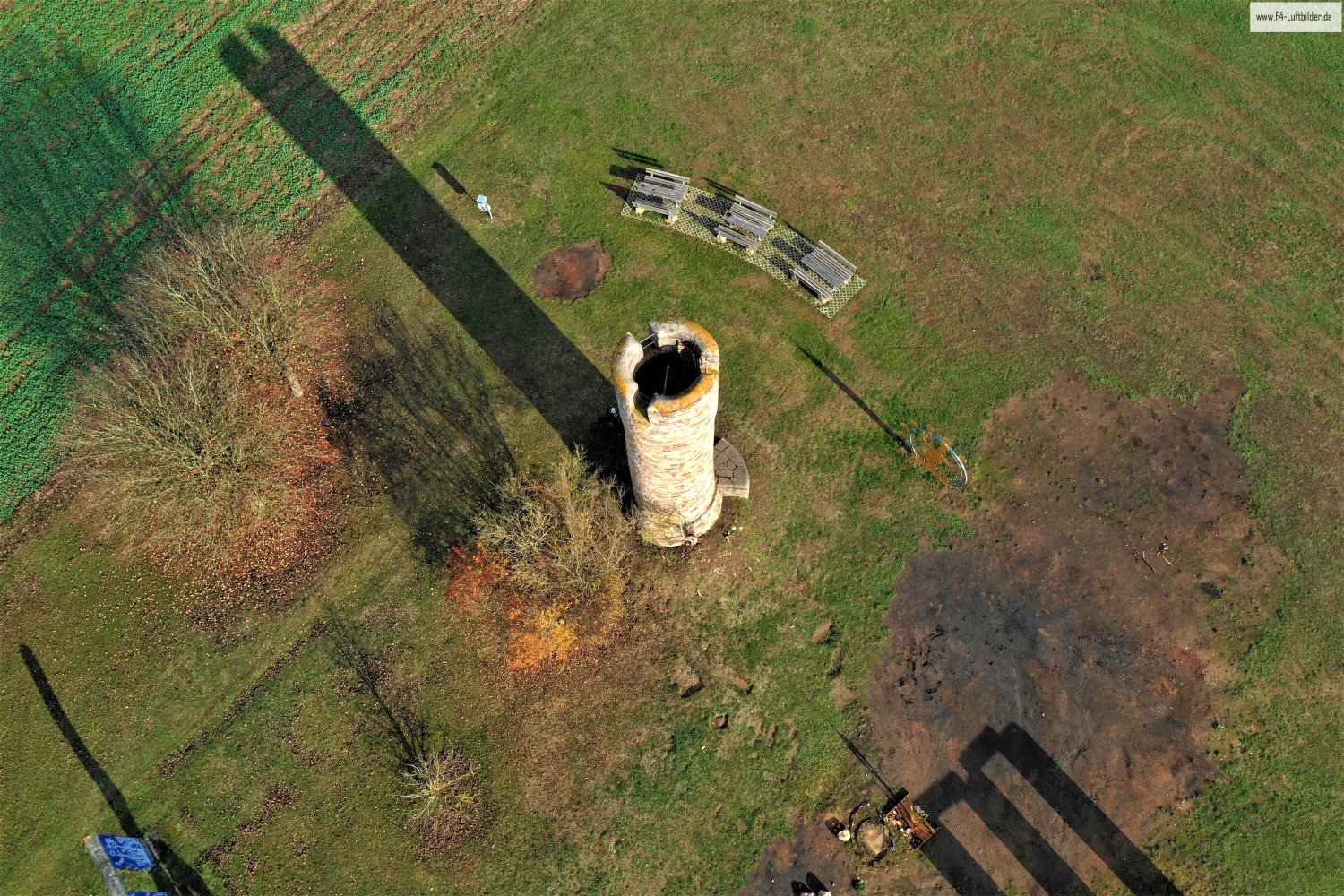
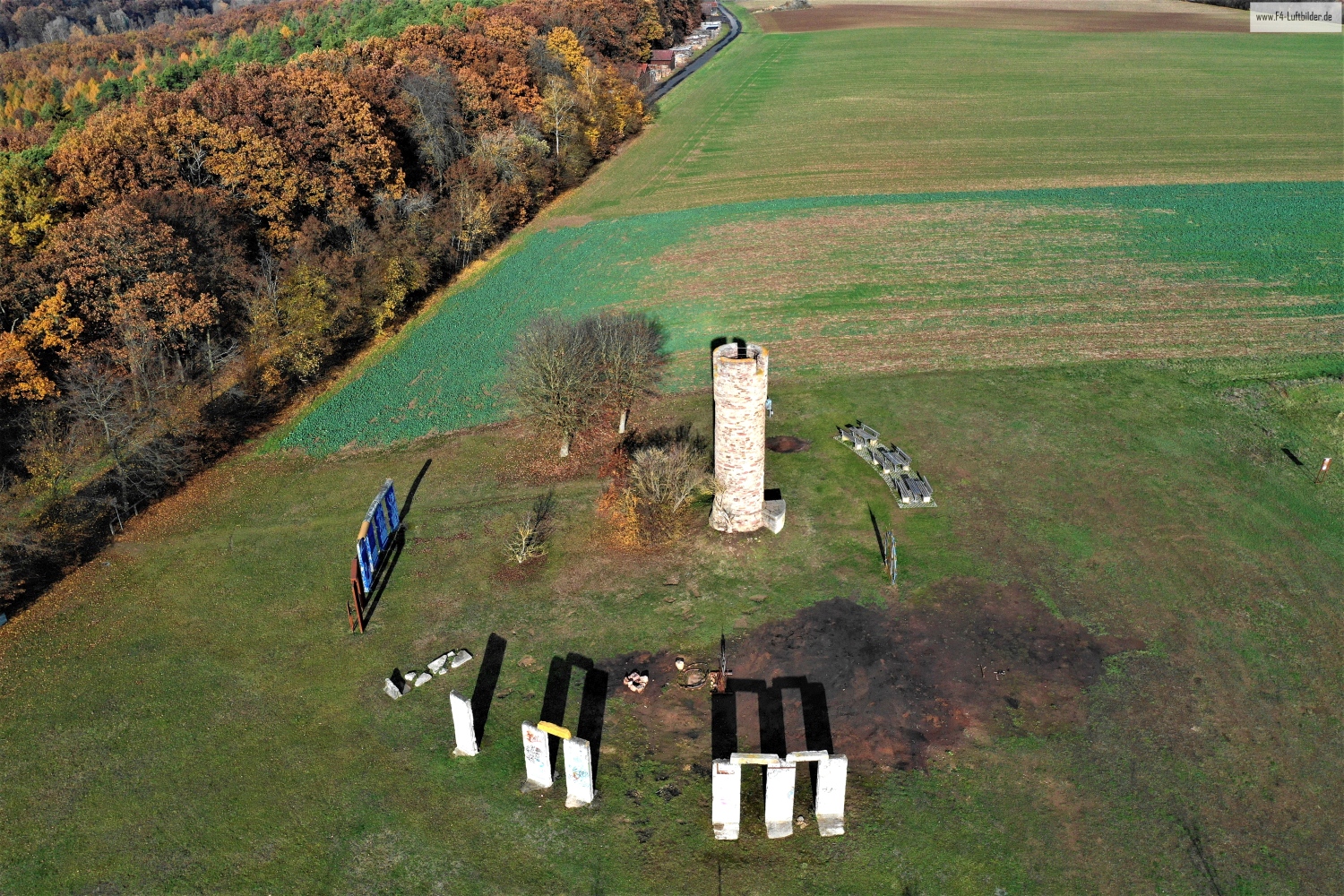
In the photos, the Thick Tower stands freely between the meadow and low remains of the wall. A long shadow makes its height more noticeable than the small footprint. The close and wide views complement each other when it comes to the question of what belongs to the facility.
Tower body and floor plan
On the Thick Tower, the shadow itself is a motif. Its end is visibly outside the base of the wall and draws the eye to the ground surrounding the structure.
Up close, a tower draws the eye upwards. In the aerial photograph this movement is reversed. From the top, the eye follows the sides down to the ground and finds paths, neighboring buildings or vegetation for size comparison. A steep perspective shortens the visible shaft. When viewed from the side, it stands out from its surroundings. When selecting a representative image, it is therefore crucial whether the shape of the tower or its location in the terrain should be shown.
Shadow as an indication of height
In the aerial photo, a shadow lies next to the object that casts it. This makes it possible to perceive the approximate height of a shape in relation to its surroundings, even if its side surface is barely visible. The effect depends heavily on sunlight. When selecting a shot, you can therefore check whether the shadow explains a detail or obscures an important area. A second view from a different direction complements the image where the dark area has little detail.
Preserve open land in the picture
A meadow may look almost empty in a small preview. The larger view shows paths, individual shadows or transitions to neighboring properties. As a foreground, it creates distance before the view reaches the houses or the next slope. This distance is often an important part of the composition in landscape photos. If it is pruned too much, the development will appear denser. A deliberately wider section, on the other hand, shows what space the open land actually takes up.
Shades of green in the image
Among the 7 photos in the gallery, shot 5 and shot 1 provide a good starting point for the comparison. In the first image, green areas make up a smaller part of the section than in the second. It's worth tracking the green areas individually. Only in connection with neighboring forms does it become clear what is in the foreground and what belongs to the more distant surroundings.
The camera captured November 11, 2018 for shot 7 and shot 4. The time interval between these two views is less than a minute. The exposure time was 1/800 second for the first of the images mentioned and 1/500 second for the second.
Communicate architecture and location together
For a post about a building, two captions can fulfill very different tasks. The first names the system and explains its location, the second leads to a visible component. Historical construction phases or previous uses can hardly be determined from the roof color and current wall edges alone. However, an aerial photographer can show precisely which parts will actually be visible in the later photo. For a guide or local chronicler, this separation makes it easier to work with people who know the local building history.
More aerial photos for comparison
Two further articles invite comparison. In the first, Gallows Tower (Mellrichstadt), a different detail is in the foreground. In the open corridor near Mellrichstadt, the gallows tower initially appears like a bright point. Then you can go to Bismarckturm Würzburg. The Bismarck Tower in Würzburg is surrounded by dense foliage in this series.