 F4LUFTBILDER
The Old Main Bridge in Kitzingen
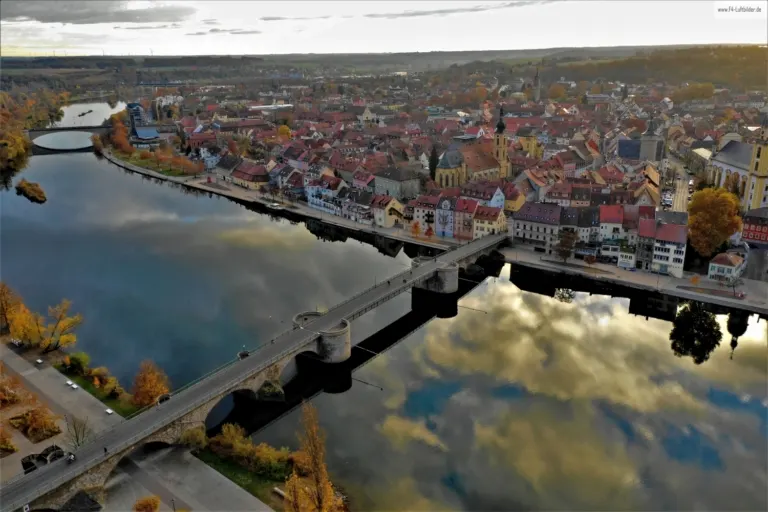
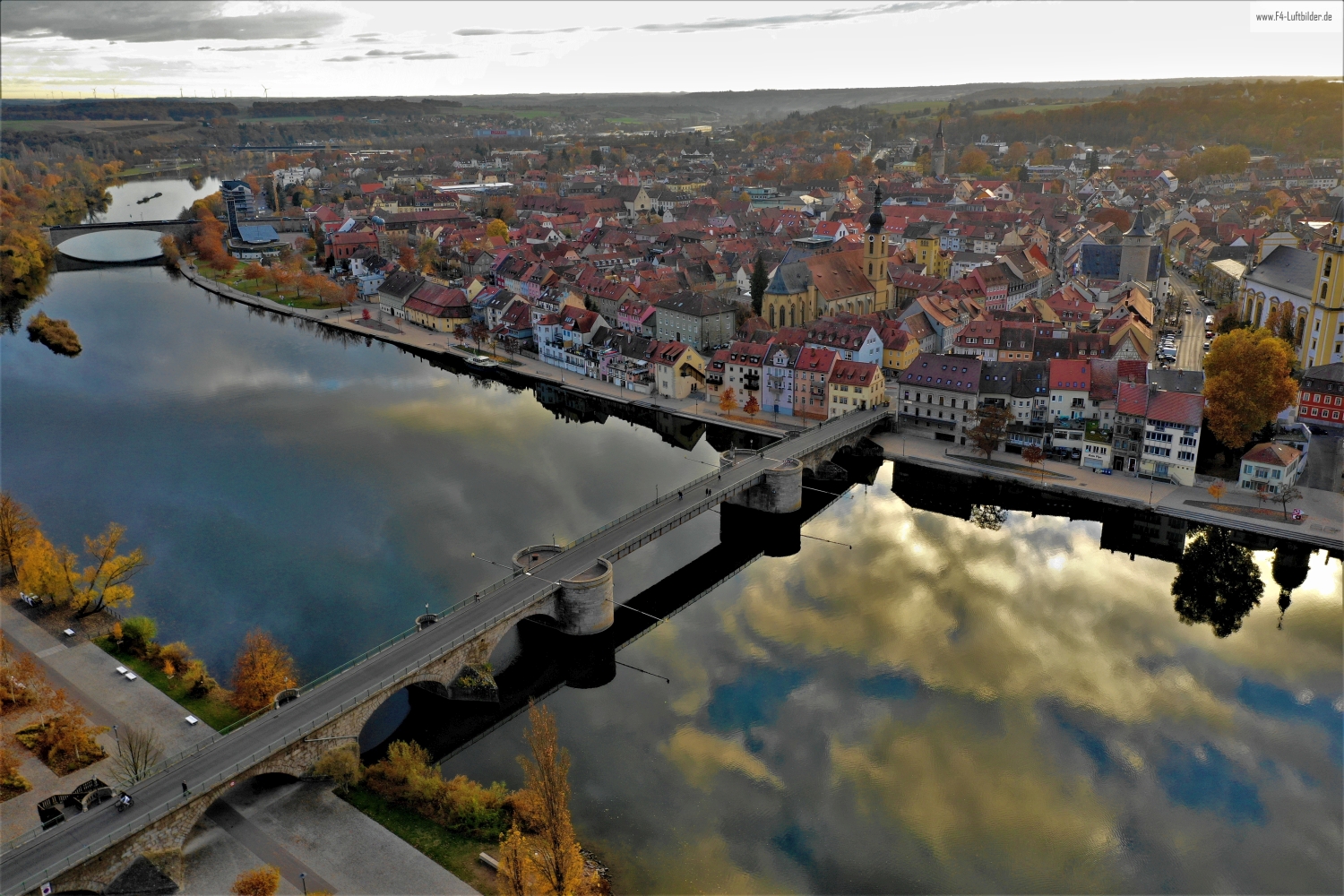
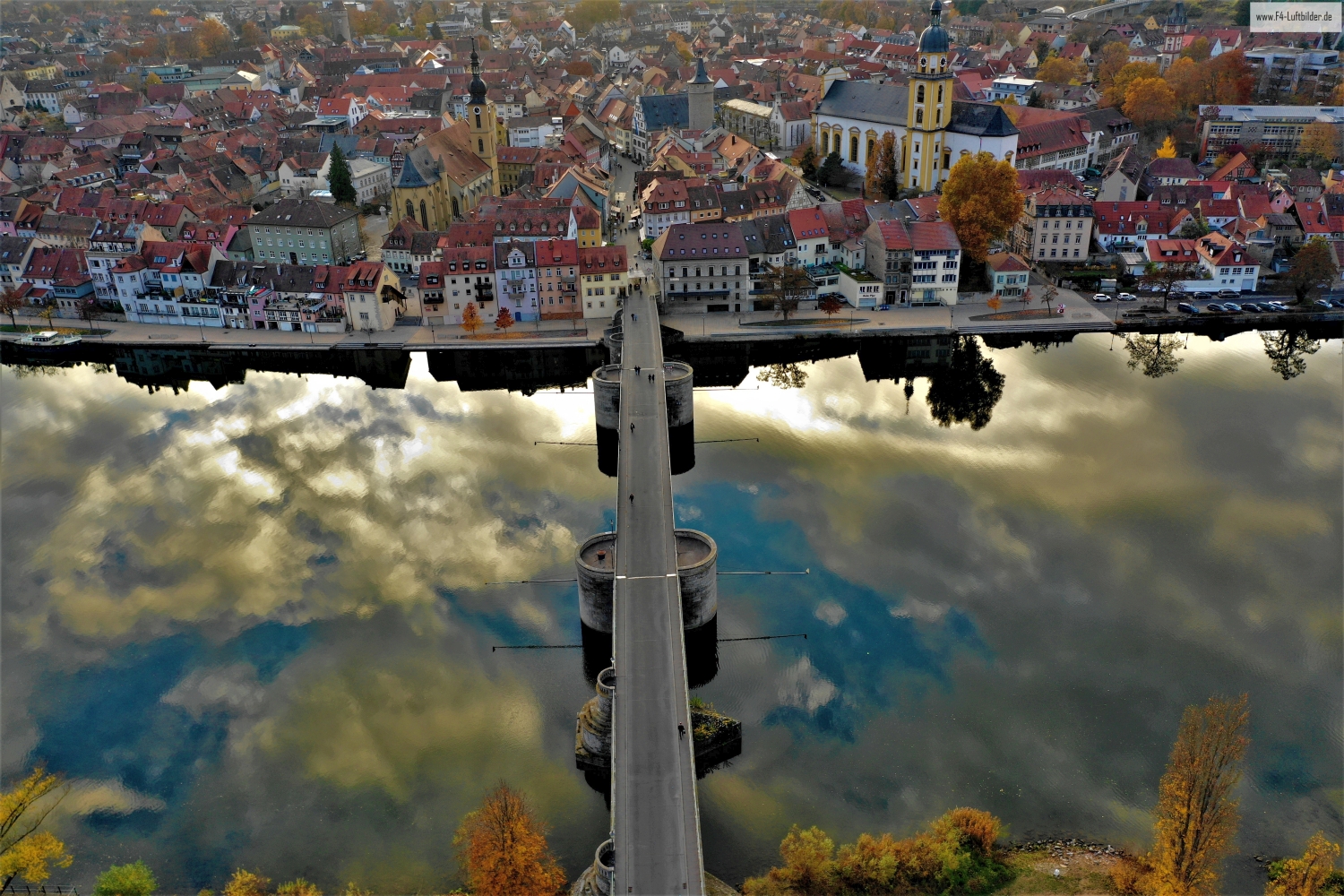
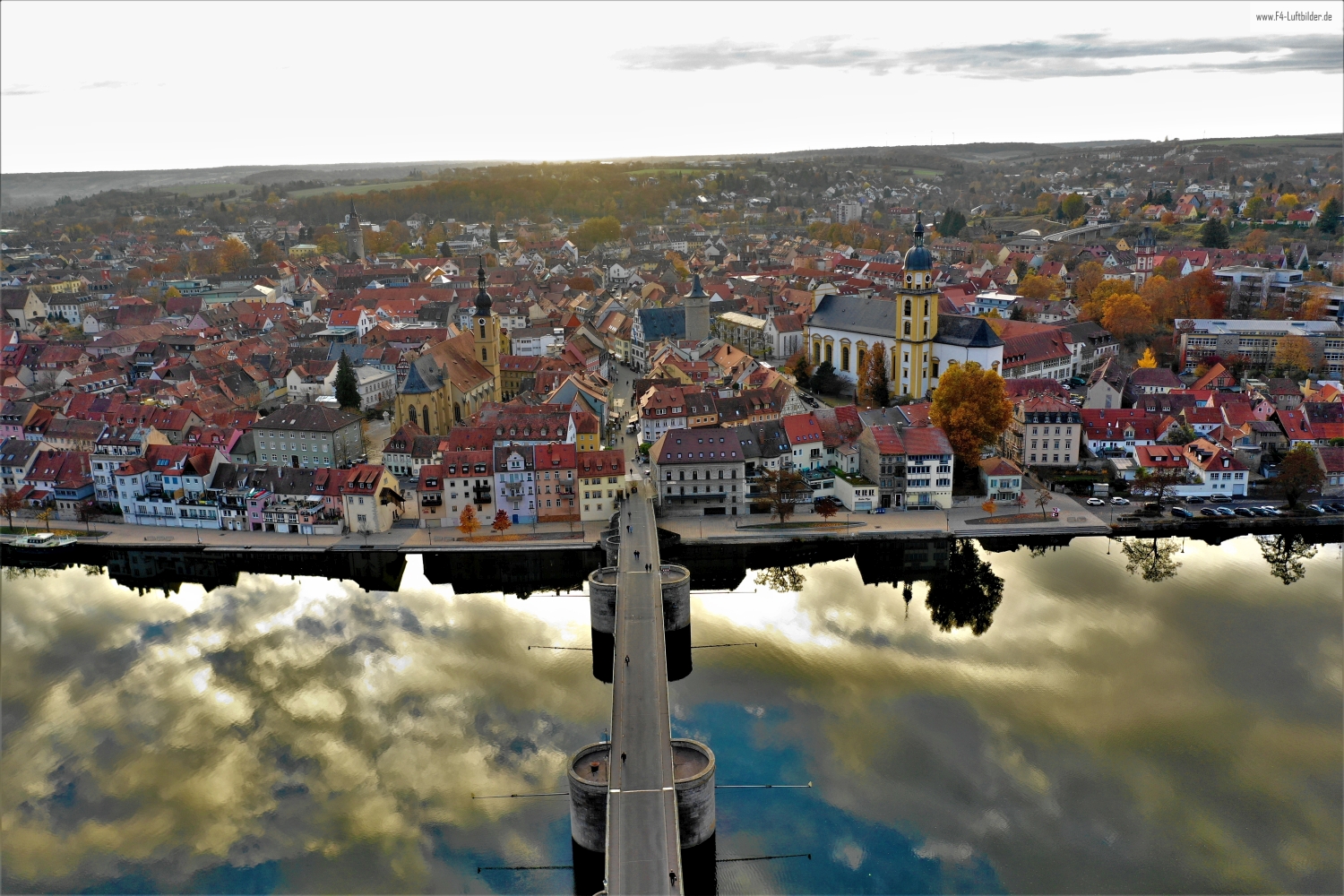
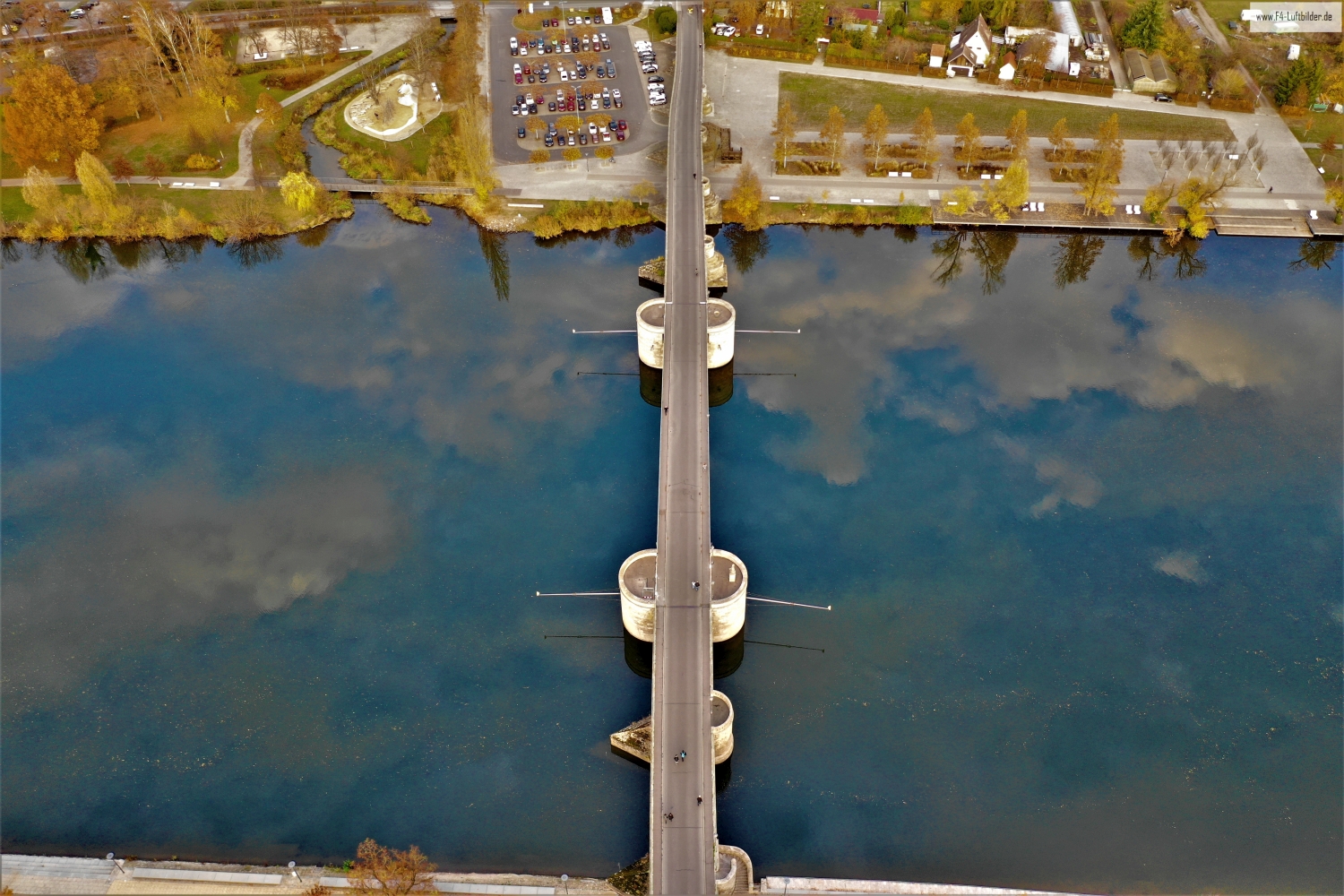
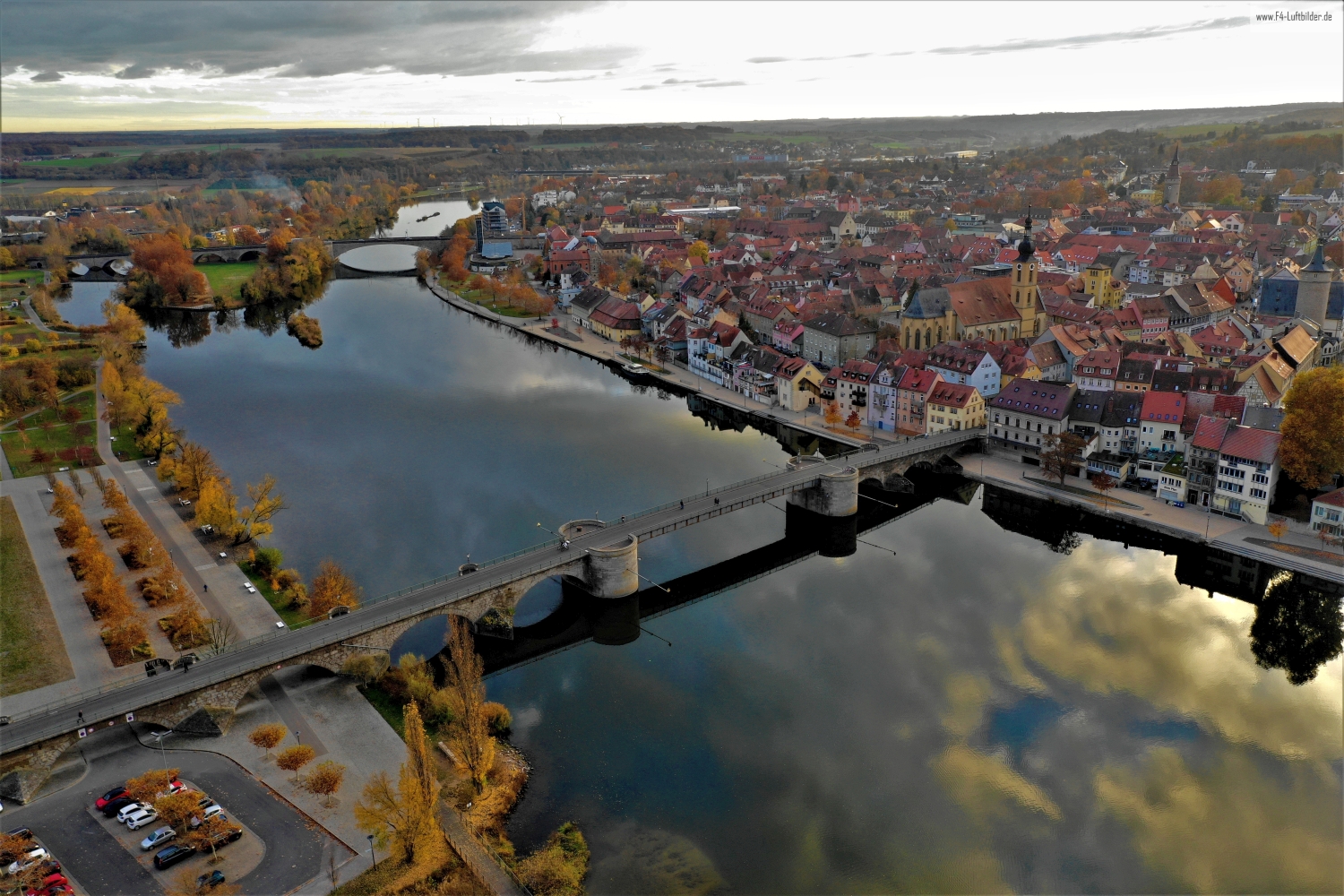
In Kitzingen, the Old Main Bridge connects two halves of the picture that appear very different. In the water, pillars, reflections and shadows can be distinguished from one another. A look along the bridge leads to the roofs, a look across it brings the river into focus.
How the bridge divides the image
At the Old Main Bridge in Kitzingen, the two banks give the structure its direction. A section just over the water would lose this urban context.
In the overview, a bridge is initially a line that connects two separate areas. A closer look reveals differences between access, supporting structure and subsequent paths. For a photo series it is therefore worthwhile to include a view of the entire connection as well as a section with one of the bridgeheads. There, the integration into the terrain becomes particularly easy to understand. For comparison, both images can be oriented the same way so that the start and end of the route can be seen without additional explanation.
Follow the watercourse in the picture
A river changes its role with the direction of view. Across the water you can clearly see how close the development is to the bank. A view along the run connects several sections that appear separate from the street. A particularly vivid image is one in which there is a prominent bank in the foreground and a second reference point further back. The eye can then follow the distance between them itself. A picture caption is achieved by indicating which side of the river the main motif is on.
Shadow as an indication of height
In the aerial photo, a shadow lies next to the object that casts it. This makes it possible to perceive the approximate height of a shape in relation to its surroundings, even if its side surface is barely visible. The effect depends heavily on sunlight. When selecting a shot, you can therefore check whether the shadow explains a detail or obscures an important area. A second view from a different direction complements the image where the dark area has little detail.
The distribution of blue tones
Among the 5 photos in the gallery, shot 3 and shot 4 provide a good starting point for the comparison. In the first excerpt, shades of blue play a smaller role. In the second shot, blue areas take up more space. Blue can extend over a large contiguous area or only appear in individual parts. What also counts for the effect is whether these areas extend to the edge of the picture or surround the main subject.
The camera captured November 12, 2018 for shot 5 and shot 3. The time interval between these two views is less than a minute. ISO 100 and an exposure time of 1/80 second are recorded for both files.
Explain the course of the river in the picture
For a publication about a river, it is worth explicitly naming the bank side if it is known. The left side of the photo and the left bank of the river are two different details. The photo can look in any direction, the bank name follows the direction of flow. Anyone who describes a desired view to the aerial photographer can therefore orientate themselves on a bridge, a settlement or an easily identifiable section of the bank. The same reference points make it easier for the reader to orient themselves later when the river appears to be going in a different direction in the next shot.
More aerial photos for comparison
Two further articles invite comparison. In the first, Miltenberg, a different detail is in the foreground. Miltenberg stretches between the Main and a wooded slope. After that, Passau is a good option. Passau's old town lies on a narrow headland between the Danube and the Inn.