 F4LUFTBILDER


The bright shore arch of Potamos Beach
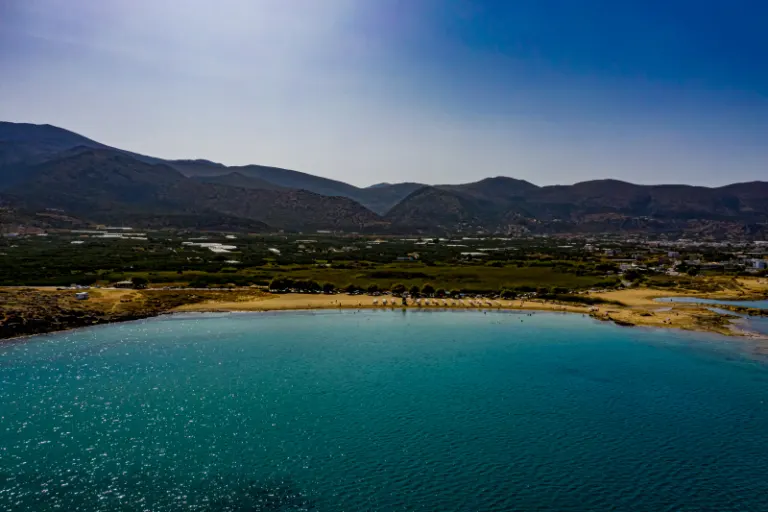
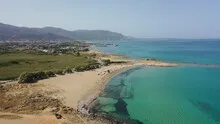
At Potamos Beach in Crete, light sand creates a curved edge around the shallow water. Behind the beach are more open areas, further out there are darker shades of blue. A steep look shows the contour of the bay almost like a floor plan.
The beach on the shallow bay
On Potamos Beach, the bright beach line helps with orientation. The open water area on one side and the built-up or green edge on the other side give the arch depth.
From a low angle, a beach often looks like a narrow, light fringe. The bird's eye view reveals its actual shape and shows where it widens or ends at a protrusion. In addition, connections to the hinterland emerge. The section where a path or buildings reach the beach can be particularly interesting for a townscape. There the location can be specifically named and the individual motif can be found within a longer stretch of coast.
How the bay opens
The two sides of a bay do not have to take up the same amount of space in an aerial photo. Often the closer headland obscures part of the opposite bank. A higher view opens up the space in between and shows the transition to open water. This makes a second view particularly valuable for depicting the location. While one image explains the location on the coast, the other can show the sheltered interior area, where the course of the shore and the use of the land are more clearly visible.
What becomes visible on the edge of town
On the edge of town, several scales come together in a small section. On one side there are individual buildings with gardens and driveways. On the other hand, a single open area sometimes takes up as much space as several streets. This change can be shown in the picture over a common edge. A section in which the border between the two areas remains visible even when displayed narrowly is suitable for a website. The motif then retains its local reference even in the mobile view.
The distribution of blue tones
If you browse through the 6 aerial photos, you can stay at shot 4 and shot 1 for a comparison. In the first excerpt, shades of blue play a smaller role. In the second shot, blue areas take up more space. Blue can extend over a large contiguous area or only appear in individual parts. What also counts for the effect is whether these areas extend to the edge of the picture or surround the main subject.
For Shot 1 and Shot 6, the same day is noted in the image files, October 6th, 2020. The recording times recorded are about 3 minutes apart. The exposure time was 1/800 second for the first of the images mentioned and 1/320 second for the second.
A moving view is also available. The clip “Potamos Beach” can be found under Aerial Videos. The linked preview leads to inclusion in the aerial photographer's portfolio on Adobe Stock.
Select the coastal view for a photo series
In a coastal view, water is both a motif and an open space. Whether a large piece of sea remains in the picture depends on the story. When reporting on the shoreline, it holds different landforms together. For a portrait of a coastal town, the development may need more space. An aerial photographer can take this difference into account when choosing the angle of the image. When publishing, it's worth taking a final look at the final format so that a headland or riverside path at the edge isn't accidentally cut off.
Related motifs in the aerial photo archive
If you are looking for related motifs, you can start with Agia Pelagia – Crete. At Agia Pelagia the houses follow the bay that extends deep into the land. It's worth taking a second look at Mades – Crete. In front of Mades, rocky outcrops divide the Cretan coast into small bays.
Buy now >>>