 F4LUFTBILDER
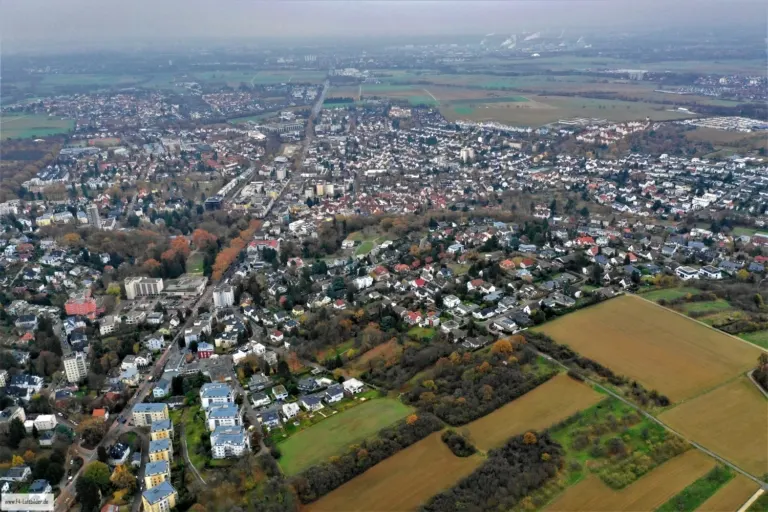
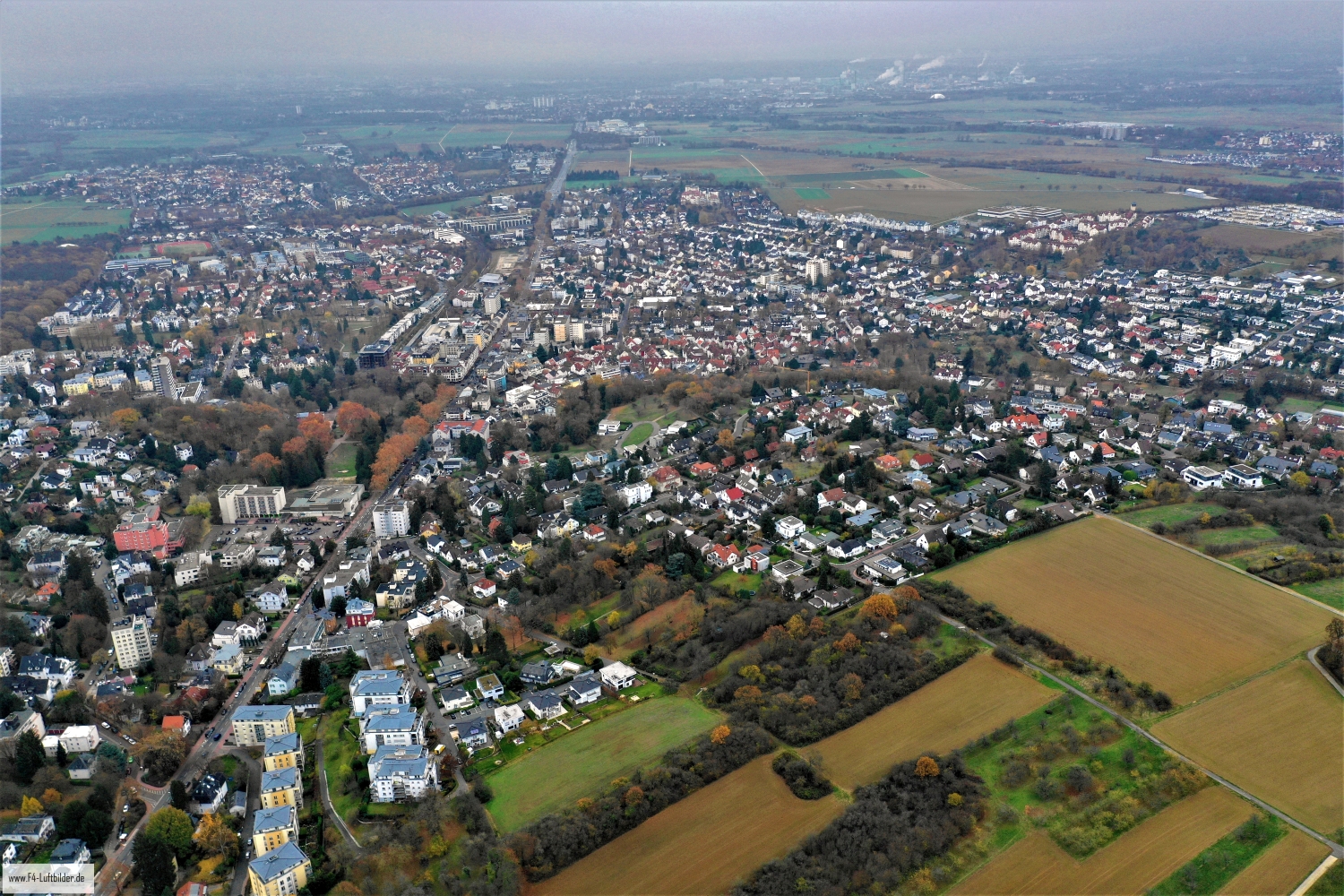
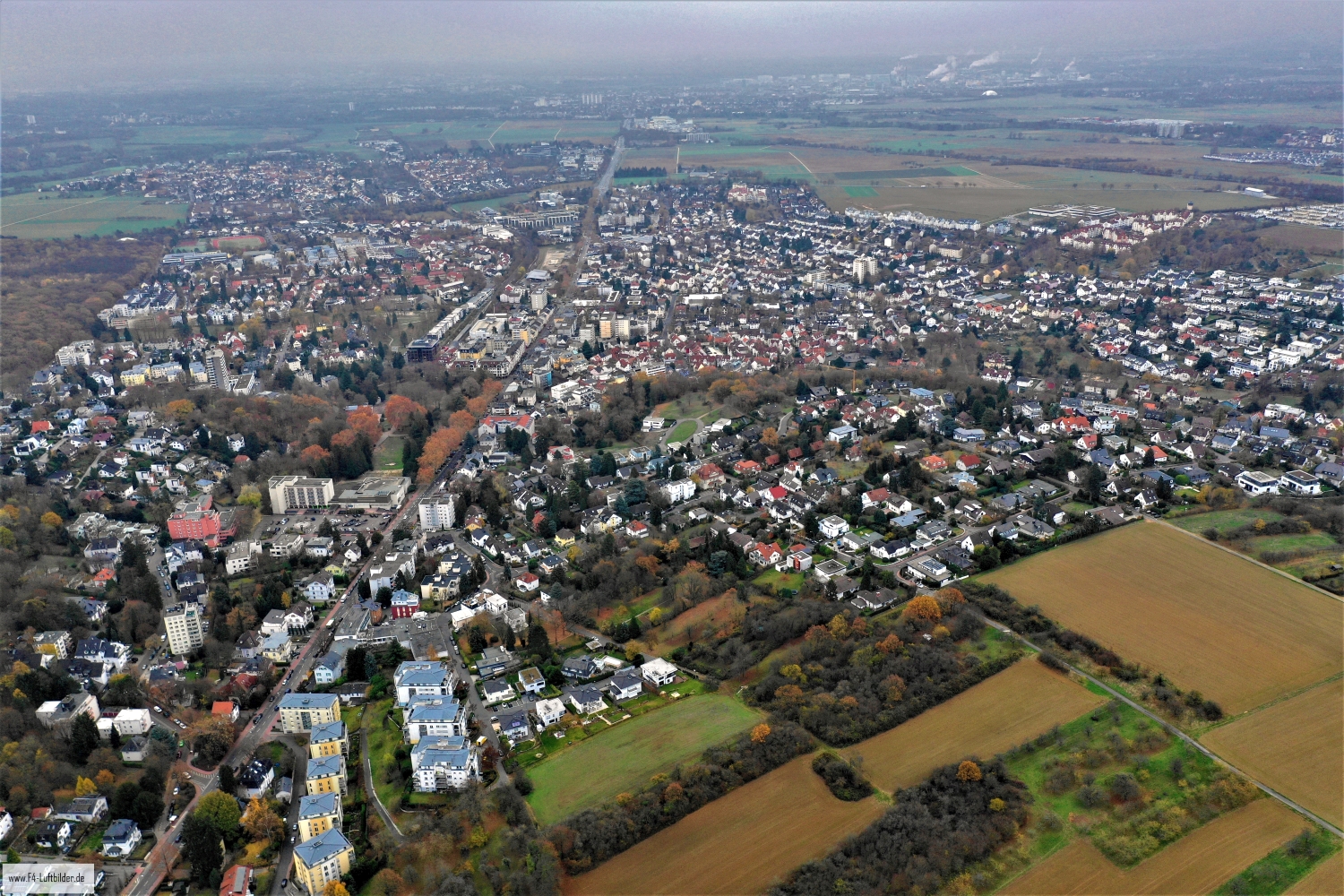
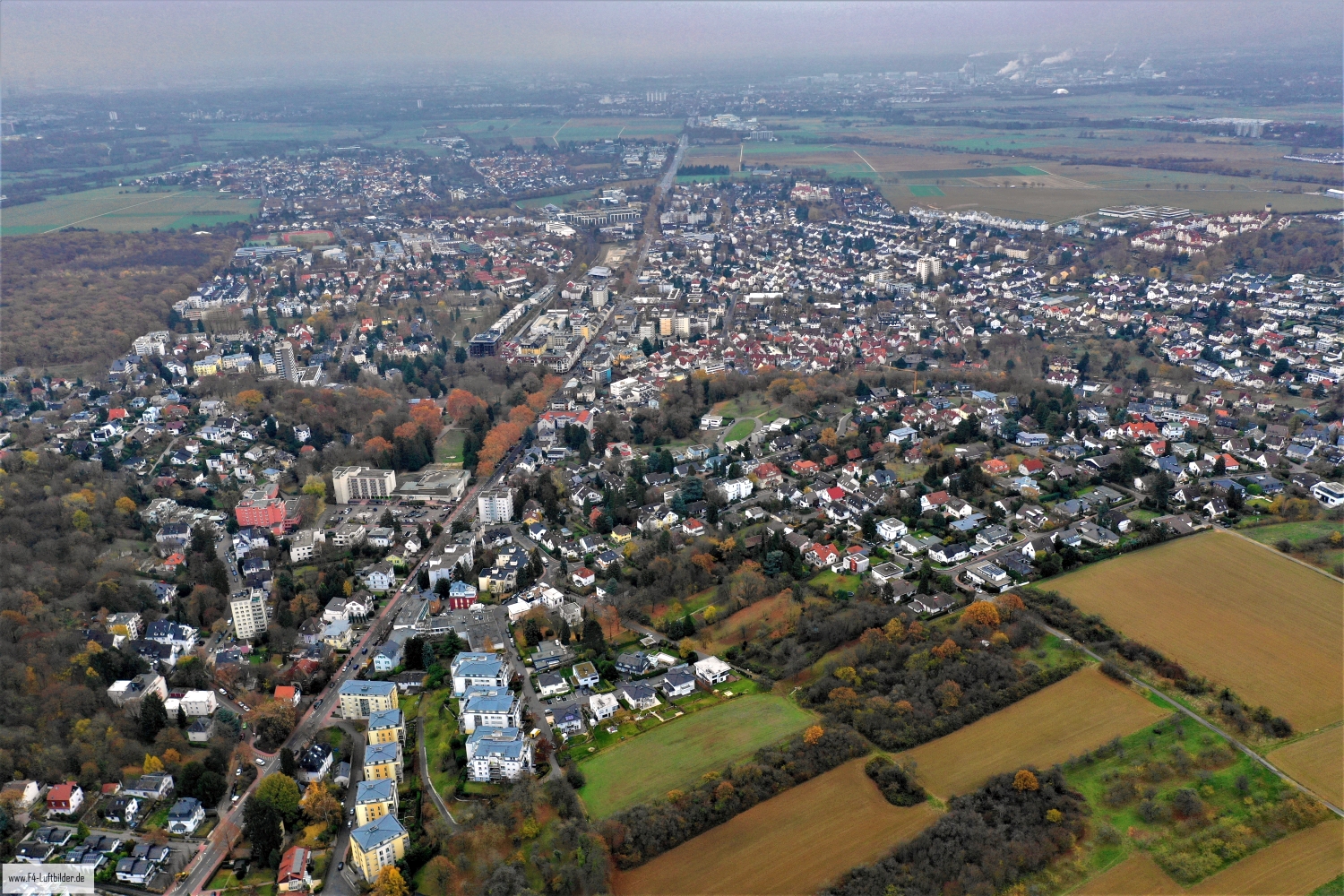
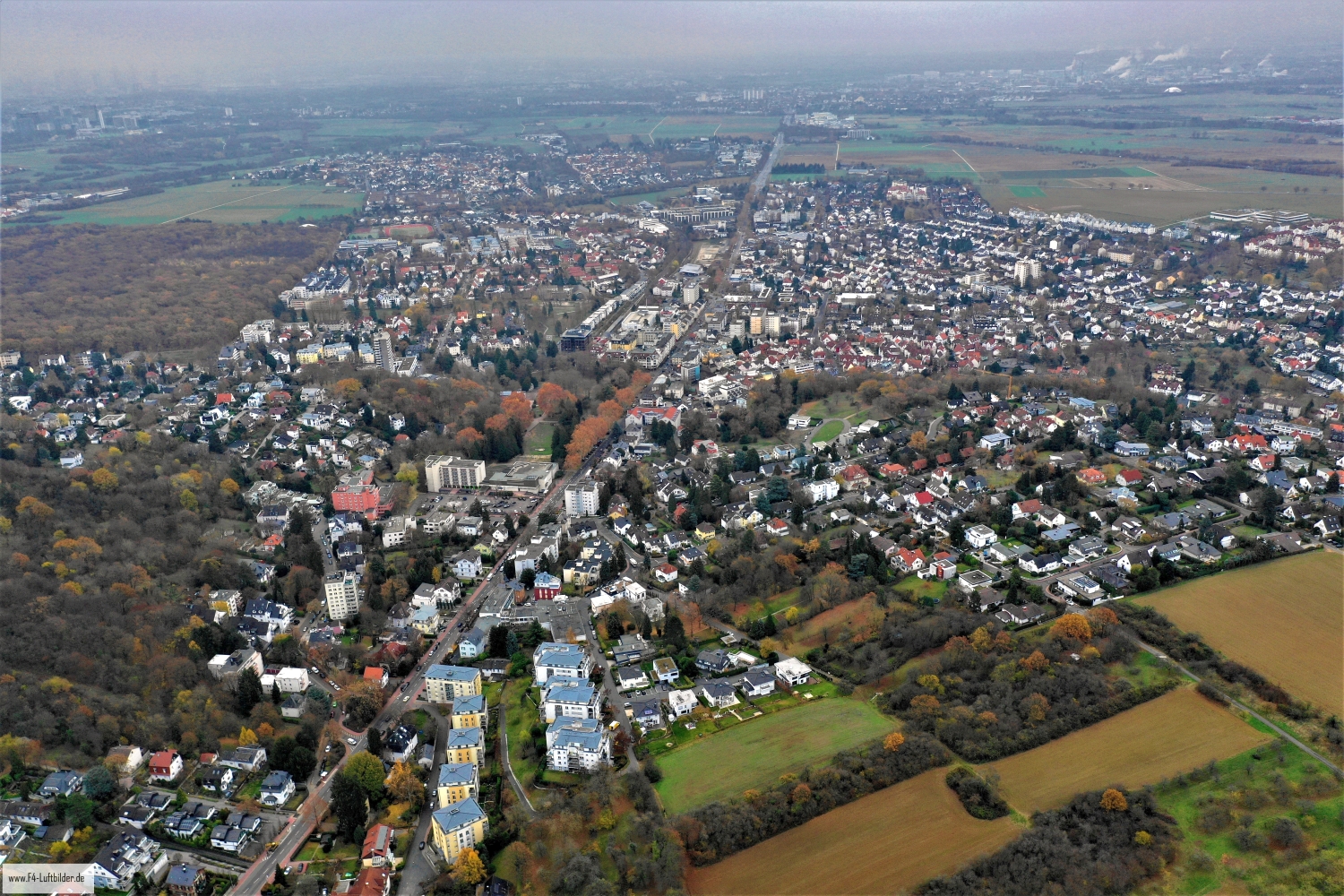
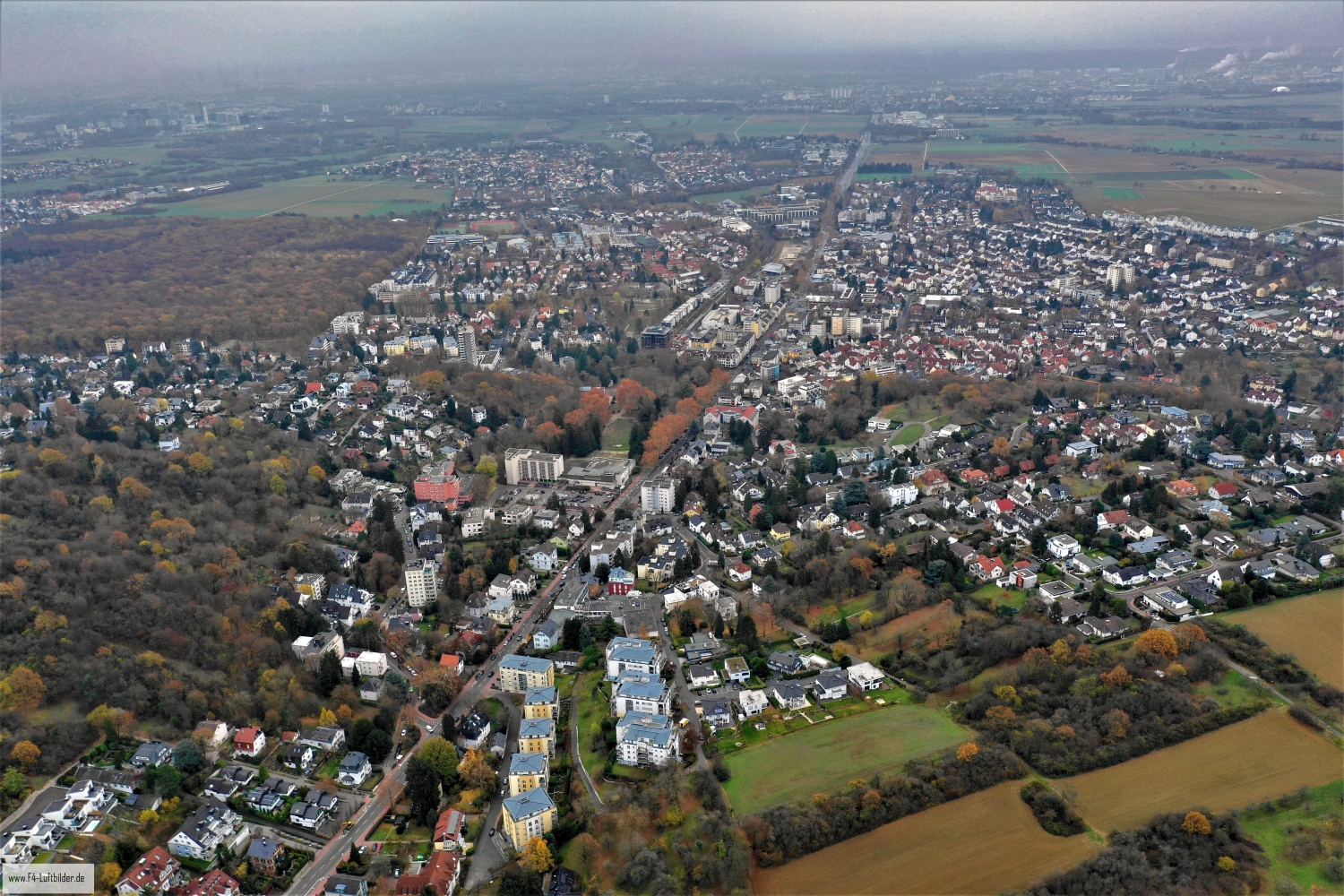
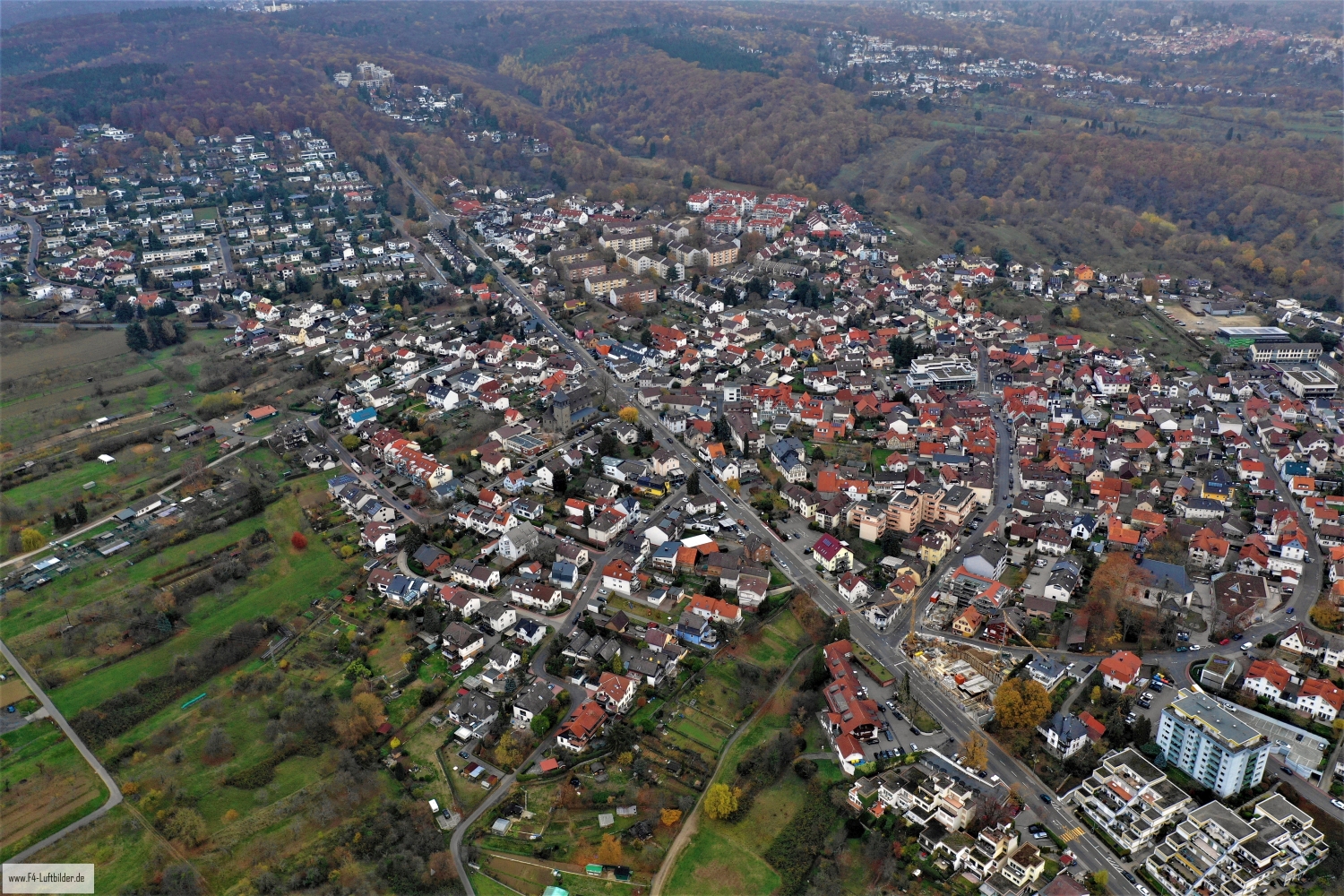
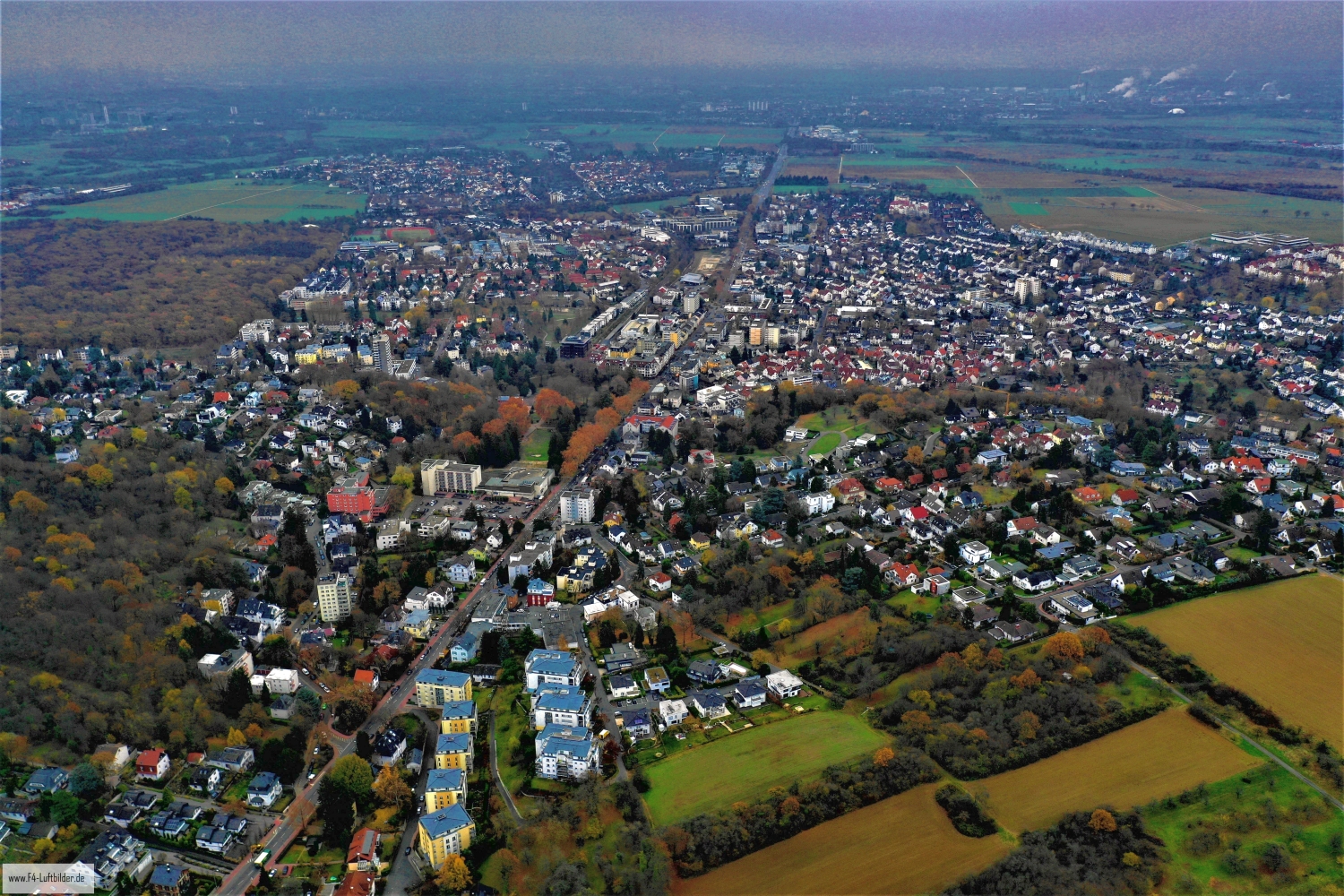
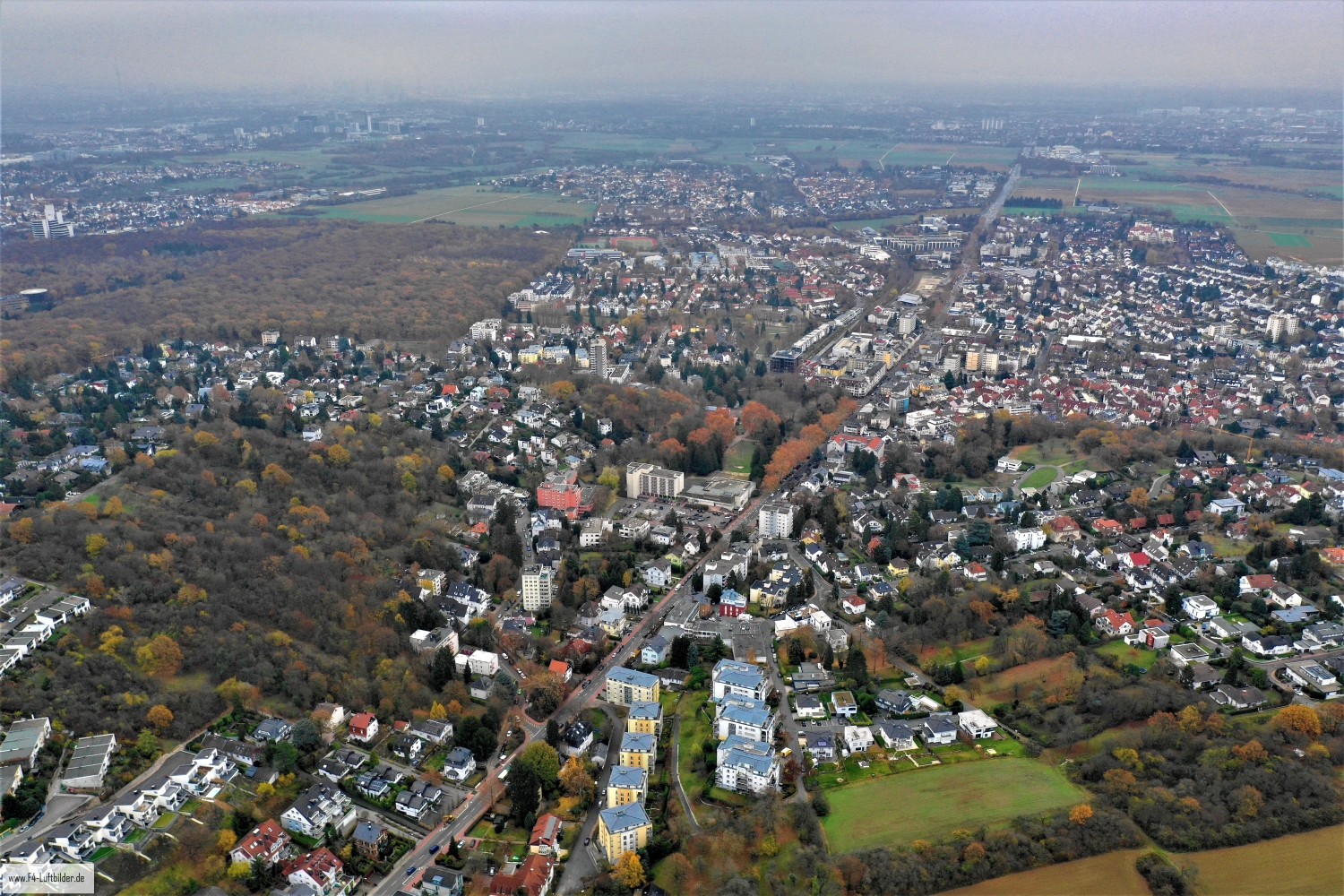
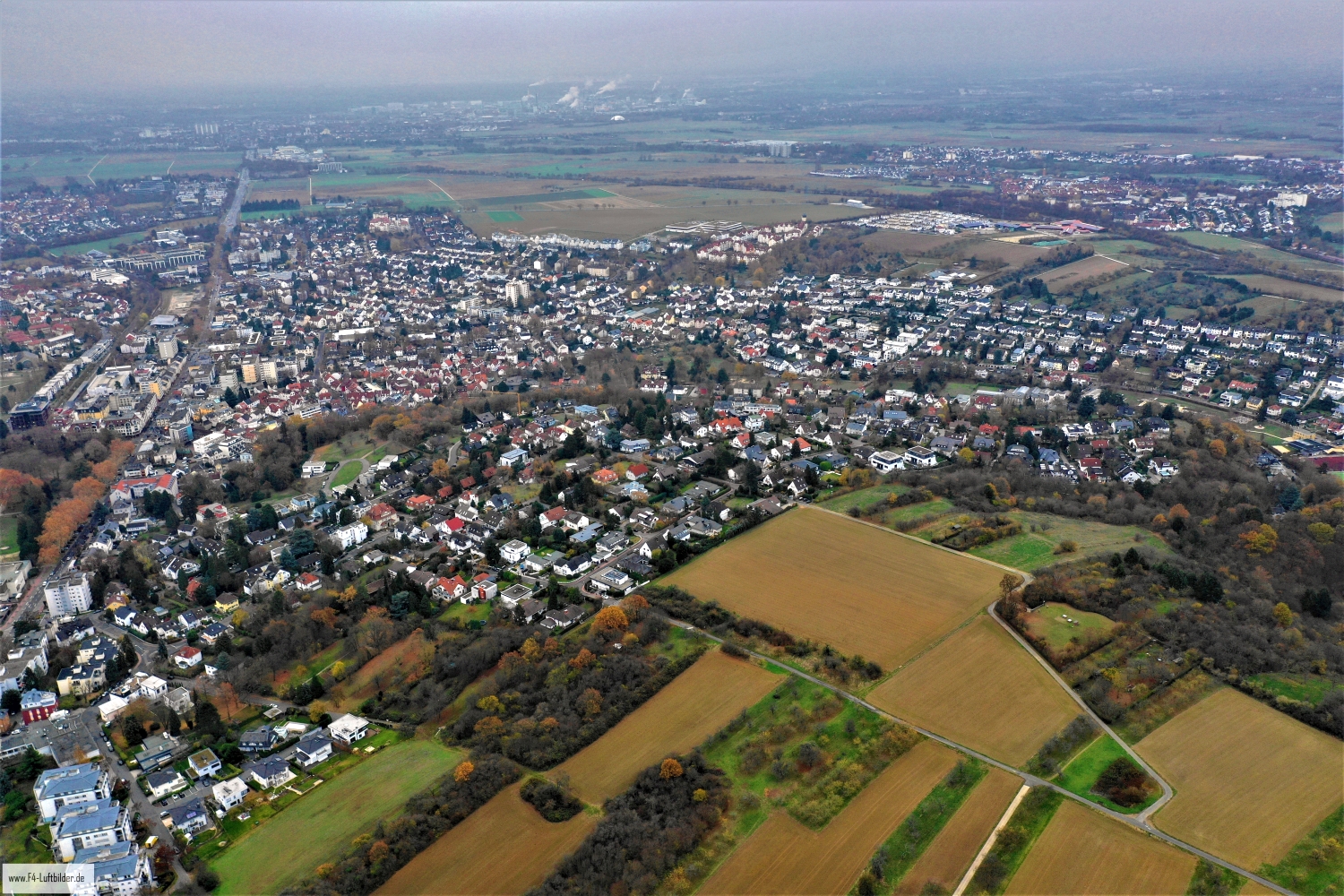

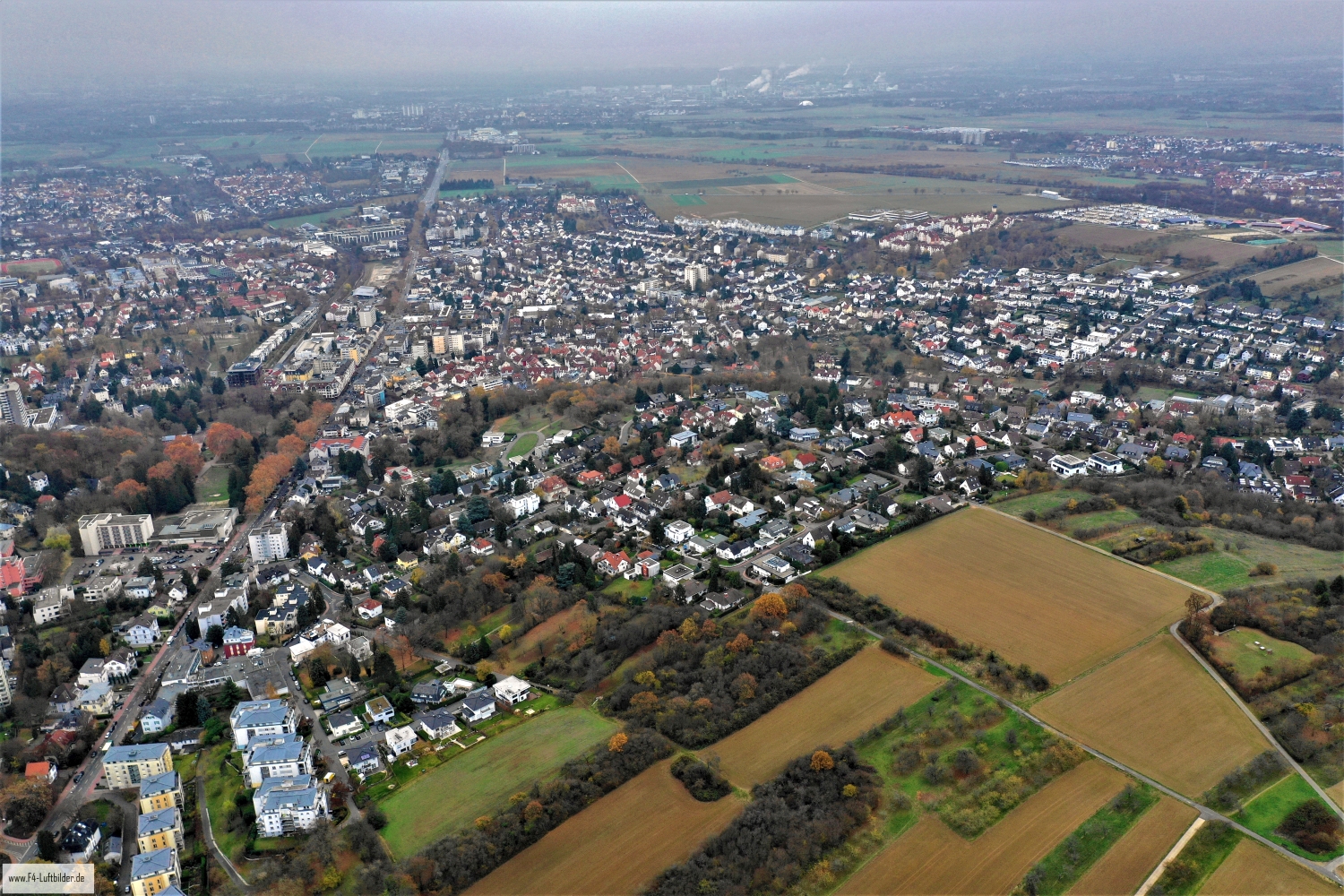
Bad Soden between the edge of the field and dense development
Above Bad Soden, the distant buildings are lost in the haze, but the houses in the foreground remain easily distinguishable. The adjacent fields provide a quiet area in front of which the edge of the town is visible. It is precisely on this edge that the view over the sea of houses gains spatial depth.
The transition from the field to the city
On the Bad Soden views in the Taunus, the development can be followed far into the hazy distance. In the foreground, more clearly drawn field boundaries provide a scale. It's easier to observe there than with the barely distinguishable buildings on the horizon.
On the edge of town, several scales come together in a small section. On one side there are individual buildings with gardens and driveways. On the other hand, a single open area sometimes takes up as much space as several streets. This change can be shown in the picture over a common edge. A section in which the border between the two areas remains visible even when displayed narrowly is suitable for a website. The motif then retains its local reference even in the mobile view.
Field boundaries as a benchmark
On a map, fields become similar areas. In the aerial photo they differ in color, structure and processing direction. A bright dirt path divides two plots, a row of trees interrupts the straight lines. In such places, the size of the open hallway is better understood than by just looking at the horizon. Color changes should initially be left as an observation. Which crop is growing in a field or when it was cultivated can often only be determined from a single photo with additional local knowledge.
What role does visibility play?
When haze or clouds weaken the distance, the closer landscape stands out all the more. Colors and contrasts change with distance. For a calm landscape portrait, this may be exactly what you want. When it comes to the spatial assignment of a specific motif, at least one prominent point should remain clearly recognizable. A caption can indicate the visibility conditions. It makes it understandable why part of the landscape is only hinted at and where the view can begin.
Light and dark areas of the image
For a direct image comparison, use shot 6 and shot 8 from the gallery with 11 aerial photos. In the first photo, light and dark areas are closer together in tonal value. In the second shot the contrast is more pronounced. When switching between photos, it is worth looking from the lightest area to the dark areas. The greater the distance, the more individual contours can stand out, even in a small preview.
According to camera data, Shot 11 and Shot 6 were taken on November 27, 2018. There is a gap of less than a minute between the two images. The exposure time was 1/120 second for the first of the images mentioned and 1/100 second for the second.
A townscape for chronicle and community
For a local chronicle, the outer edge of the development is just as interesting as the middle. That's often where things change first. A meadow becomes a building site, a driveway is given a new route, a single house disappears behind the larger trees. If you want to talk about the same place again later, a dated overall view is helpful. You can agree with the aerial photographer on a point that should remain in the image when repeated. A street intersection is usually better suited for this than a moving object on the side of the road.
Related motifs in the aerial photo archive
The article Altenstadt offers another perspective. In the aerial photos of Altenstadt, the transition to open fields is clearly defined. In the gallery Bad Emstal there is a different focus. The Hessian community of Bad Emstal is seen from above as a series of built-up areas between fields and forest.
Aerial photos of Bad Soden
Request a quoteWhy Bad Soden is so great
The location of Bad Soden
Bad Soden is located in the Taunus, a low mountain range in Hesse. The city is only about 20 kilometers from Frankfurt am Main and is therefore perfect for a trip to the big city. At the same time, Bad Soden also offers many opportunities for recreation and relaxation in nature. Numerous hiking and cycling trails run through the region and invite you to take long walks and bike rides. In winter you can let off steam on the numerous cross-country ski trails and slopes on the Feldberg.
The history of Bad Soden
Bad Soden am Taunus is a town in the Main-Taunus district in Hesse. The city is located in the western Taunus, on the border with Rhineland-Palatinate. Bad Soden is the largest city in the municipality of Glashütten im Taunus and the second largest city in the Hochtaunuskreis. The city is known for its thermal bath, the “Sodinger Männle”, which is located in a natural spring.
The history of Bad Soden goes back to the 11th century. The first documented mention comes from the year 1074, when Emperor Henry IV granted city rights. In the 13th century, the city belonged to the Duchy of Nassau before falling to Hesse-Kassel in 1444. In the 16th century, Bad Soden was a center of the Reformation, as the Hessian landgrave Philip I of Hesse-Kassel had his court here. In the 17th century there were wars between the French and the Hessian troops, with Bad Soden being destroyed several times.
In the 19th century, Bad Soden became a popular health resort after the “Sodinger Männle” thermal bath was discovered. Since then, the city has been a popular destination for spa guests from all over the world. Today Bad Soden is a modern city with many shops, restaurants and cafés. The old town with its narrow streets and the historic town hall invites you to stroll and linger.
The sights in Bad Soden
Bad Soden is best known for its beautiful sights. The most popular attractions include the Kurhaus, the Kurpromenade and the Kurpark. But the numerous museums, galleries and historical buildings are also worth a visit.
The Kurhaus is one of the most famous sights in Bad Soden. It was built in the 19th century and now houses a casino, a convention center and a theater. You can relax on the promenade and enjoy the view of the surrounding mountains. In the spa park you can enjoy the beautiful flower beds and fountains.
Other attractions in Bad Soden include the Museum of Natural History, the Museum of Cultural History, Rumpelburg Castle, Kirchheim Castle and Falkenstein Castle. The numerous churches, monasteries and castles are also buildings worth seeing.
Shopping in Bad Soden
Bad Soden is a beautiful city where shopping is a pleasure. The shops are charming and elegant and the people are very friendly. I love shopping in Bad Soden!
Restaurants and cafes in Bad Soden
Bad Soden am Taunus is a beautiful city that is best known for its excellent restaurants and cafés. In this blog article I would like to introduce you to some of the best addresses in Bad Soden.
An absolute highlight is the restaurant “Die Ente”. The Ente is a small, cozy restaurant with a very good price-performance ratio. The dishes are fresh and tasty and the service is very friendly.
The “Café im Garten” café is also highly recommended. This café has a lovely terrace where you can relax in the summer. The cakes and tarts here are particularly delicious and the other dishes are also impressive.
If you are looking for a good Italian restaurant, then I can recommend “Ristorante da Gino”. The pizza is very good here and the pasta dishes are also very tasty.
Finally, I would like to mention the “Zum Goldenen Anker”, which in my opinion is the best hotel restaurant in Bad Soden. Here you can get excellent dishes at very fair prices and the atmosphere is also very pleasant.
I hope that with this article I could give you some good tips for restaurants and cafés in Bad Soden. If you have any further tips, please write them in the comments.
Entertainment options in Bad Soden
Bad Soden is a wonderful place to vacation. There are many entertainment options and attractions to visit here. For example, Bad Soden has some very beautiful parks where you can relax and enjoy nature. The city itself is also very interesting and has a lot of history to tell. Here you can find out a lot about the time in which Bad Soden came into being.