 F4LUFTBILDER
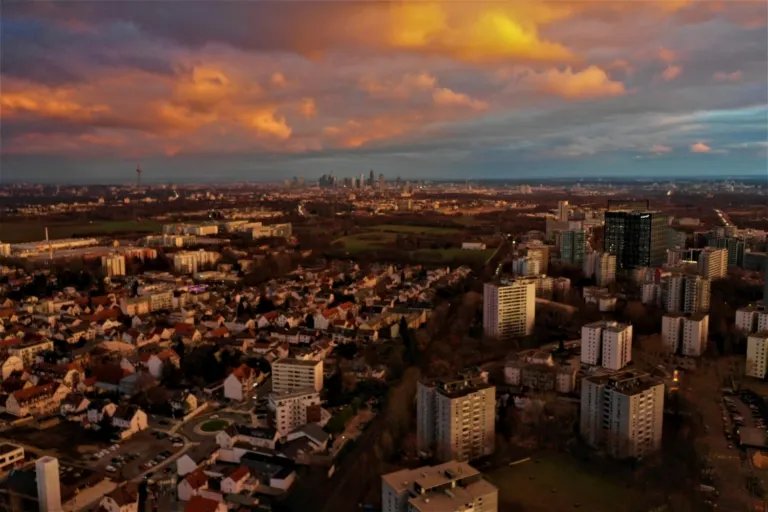
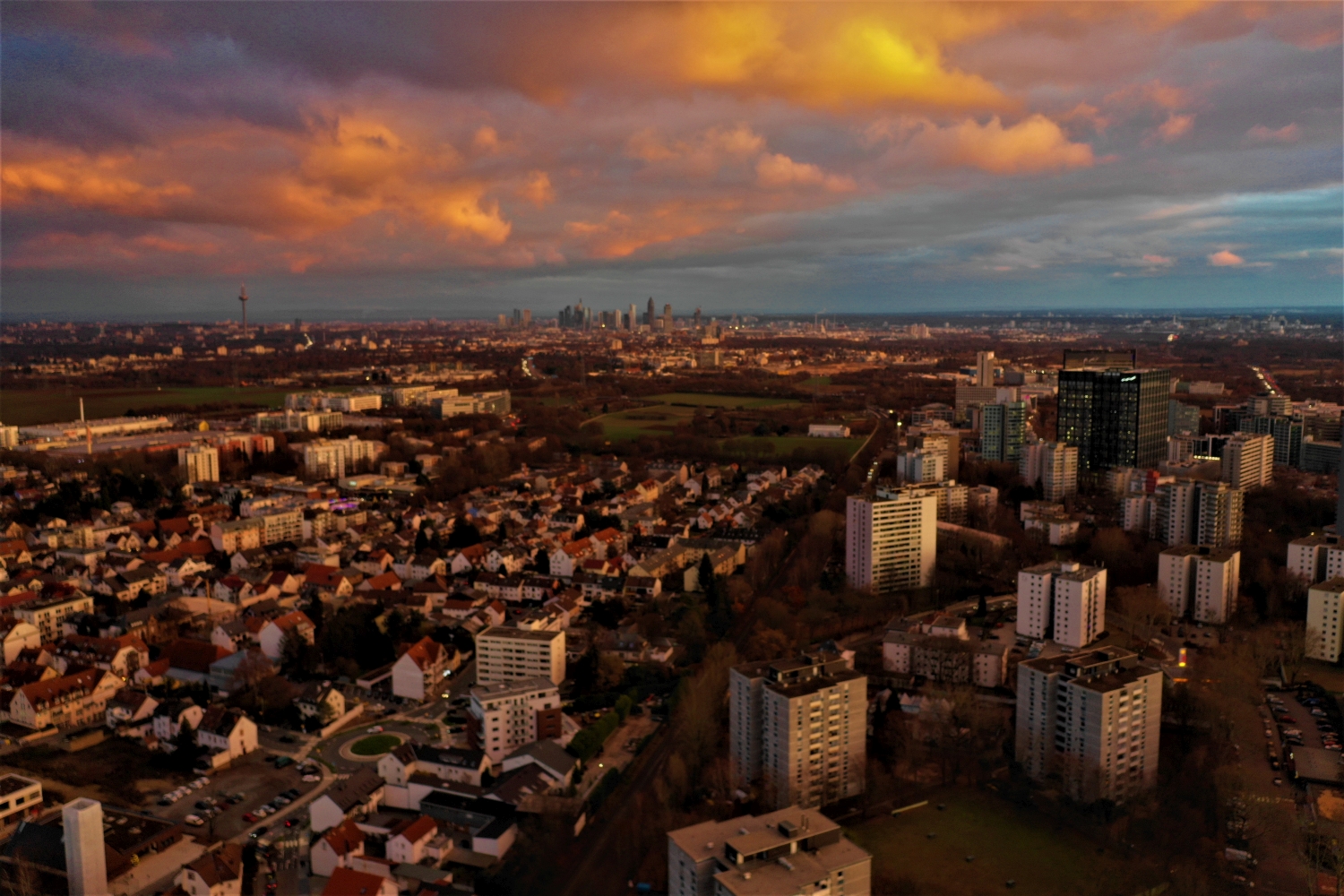
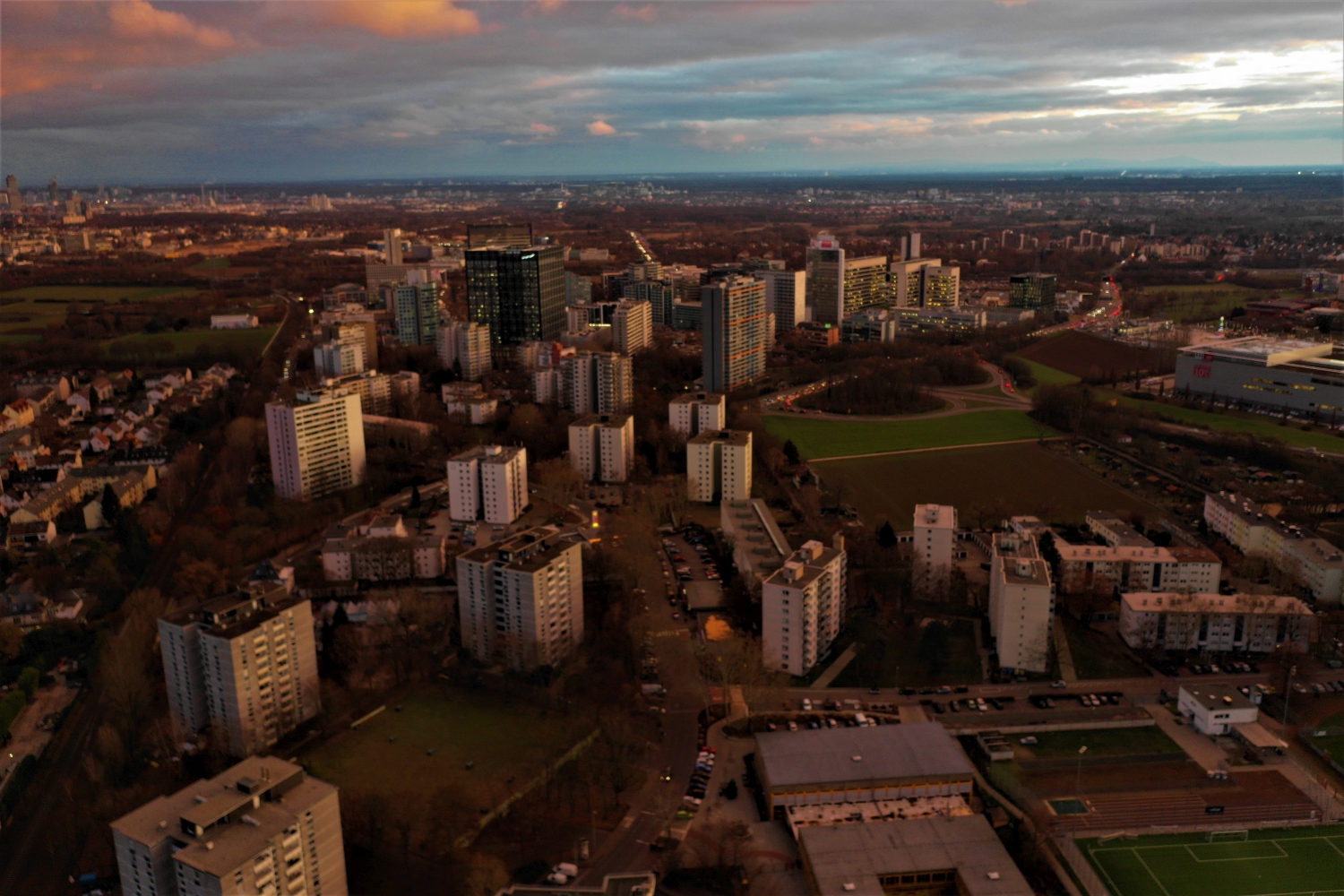
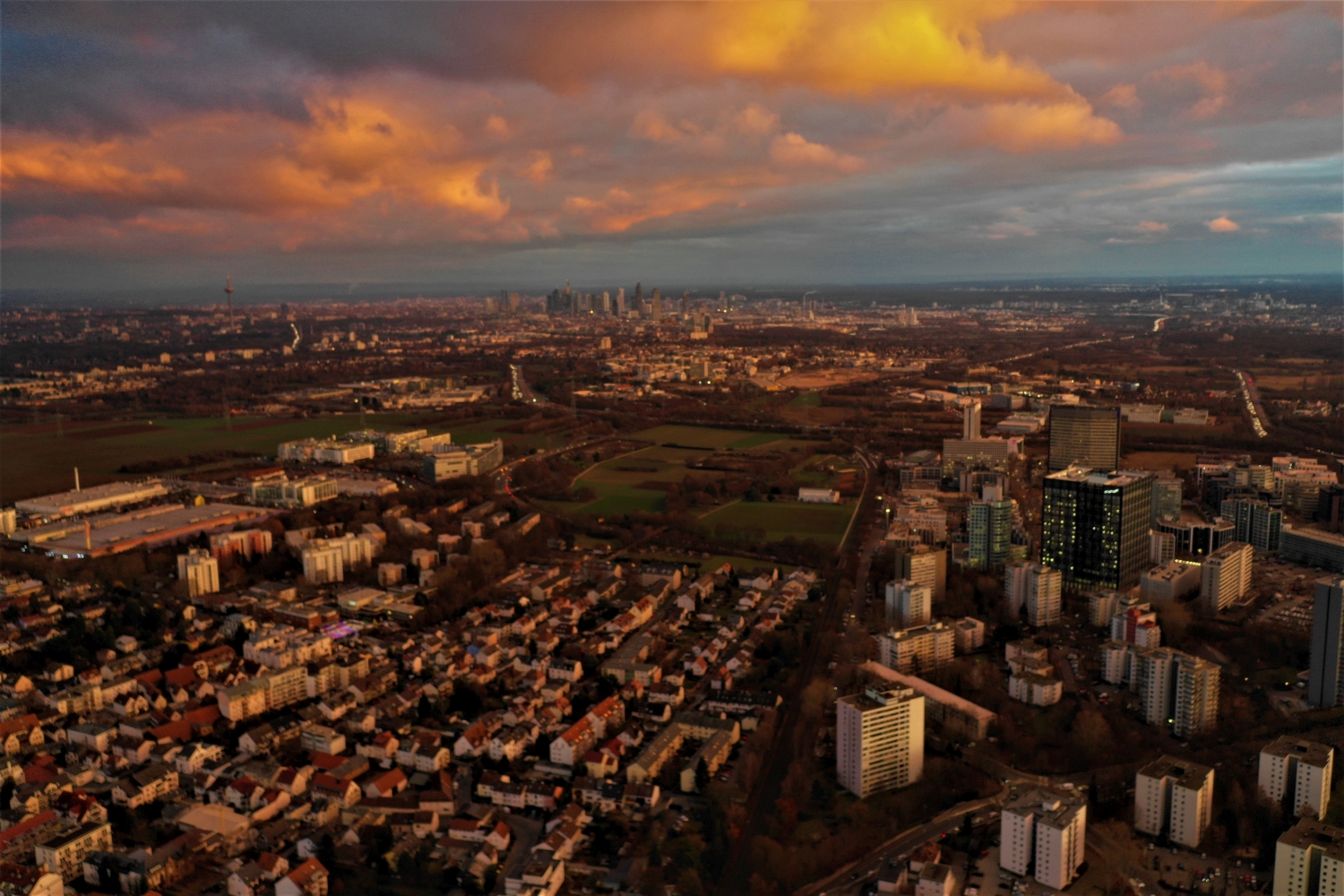
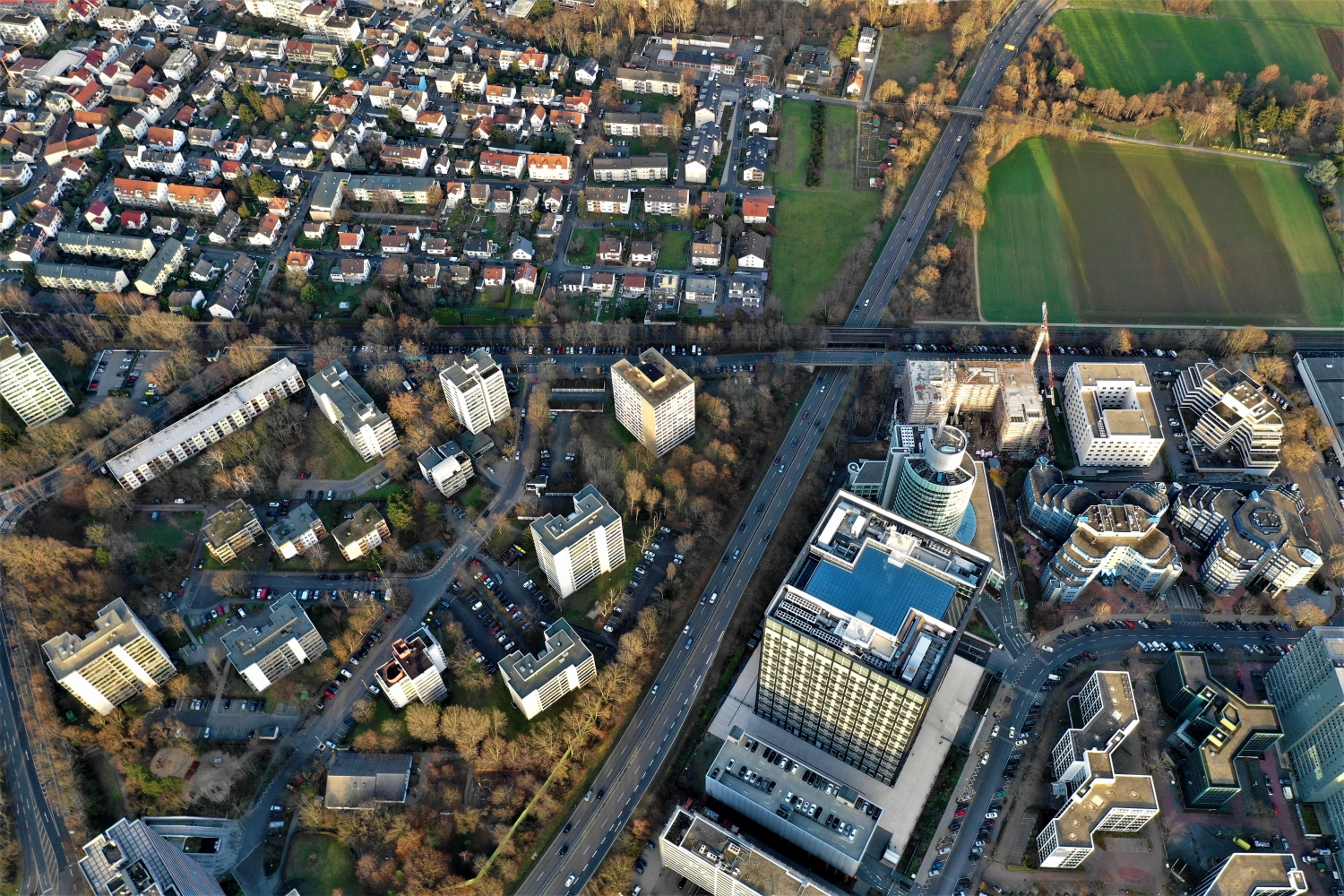
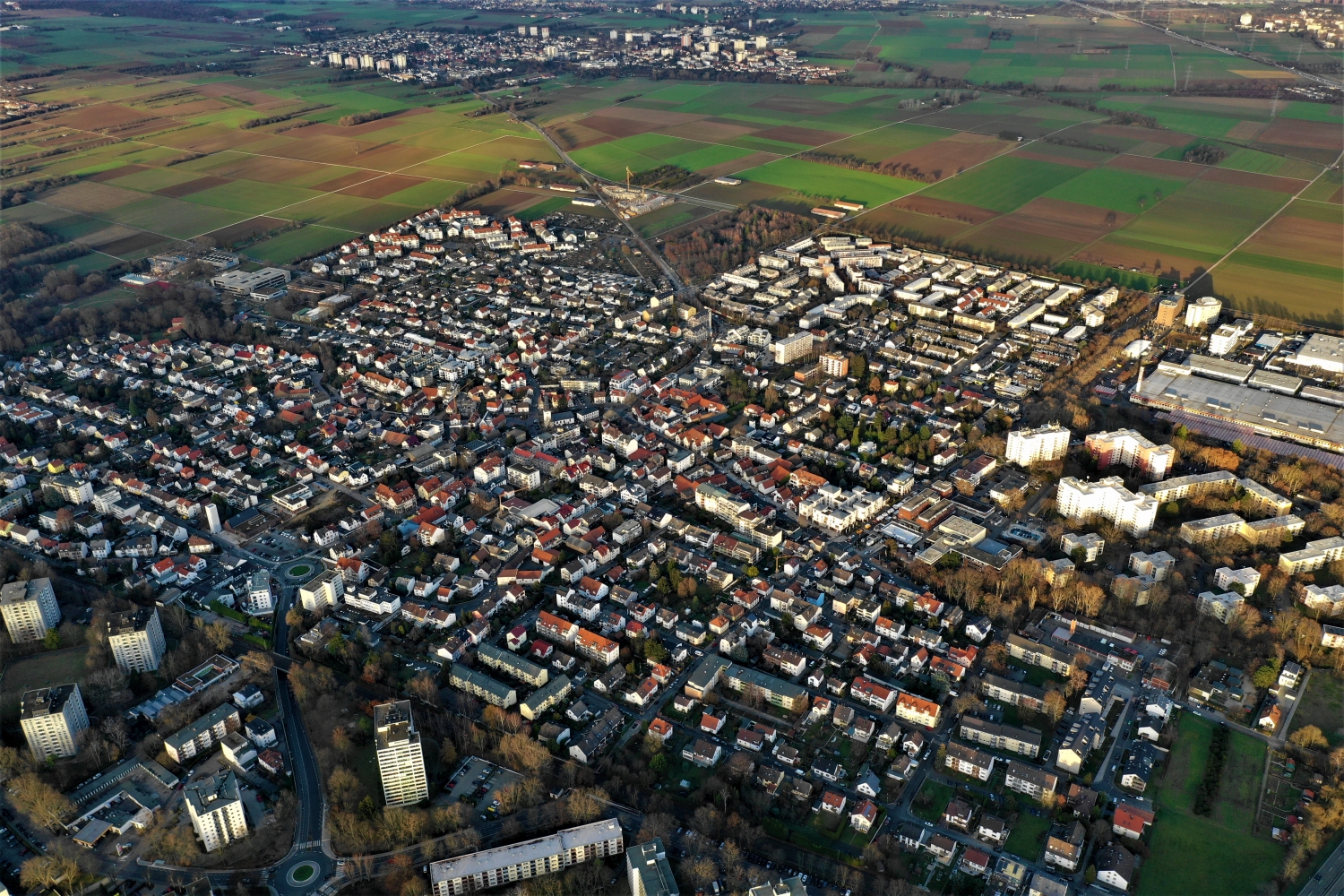
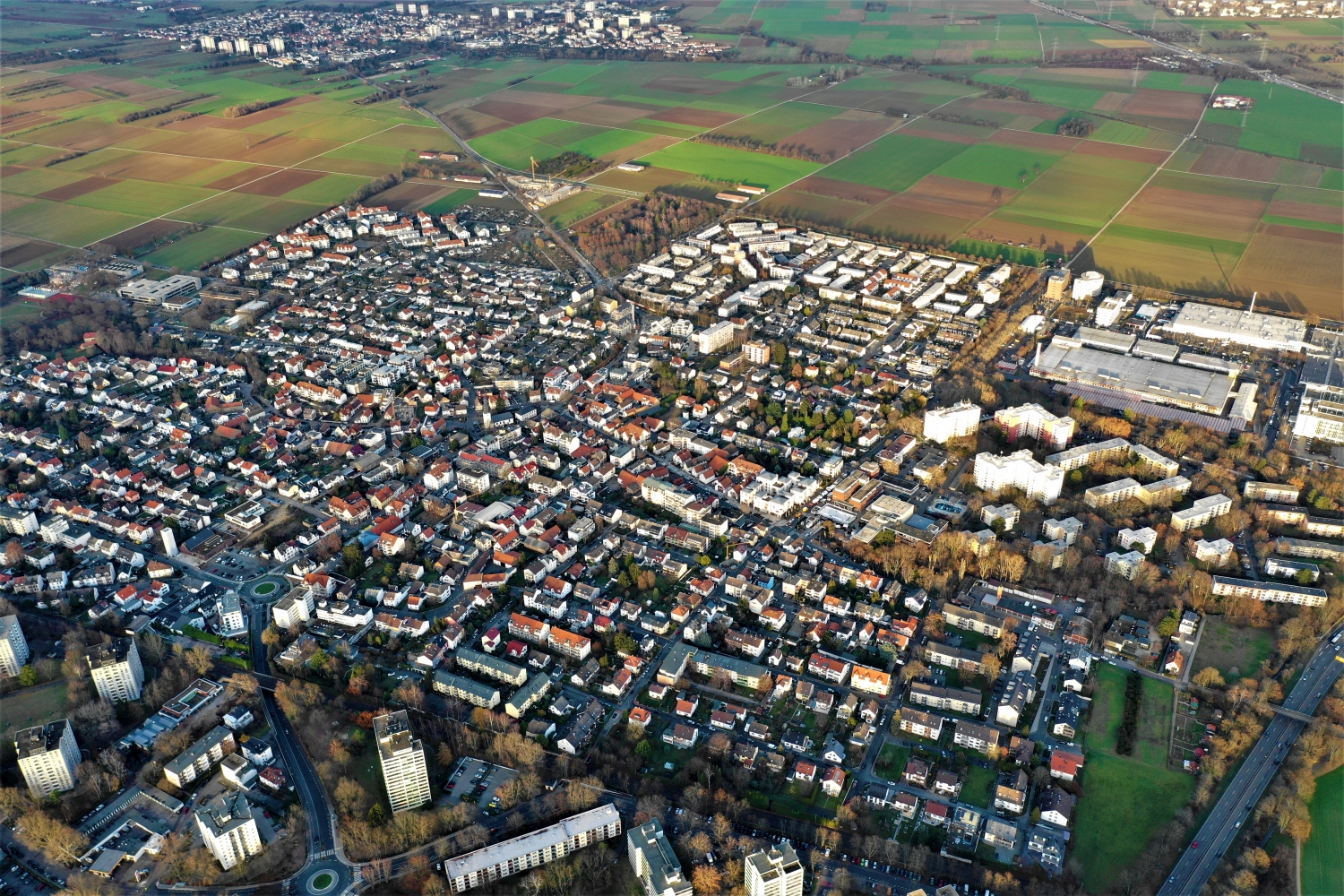
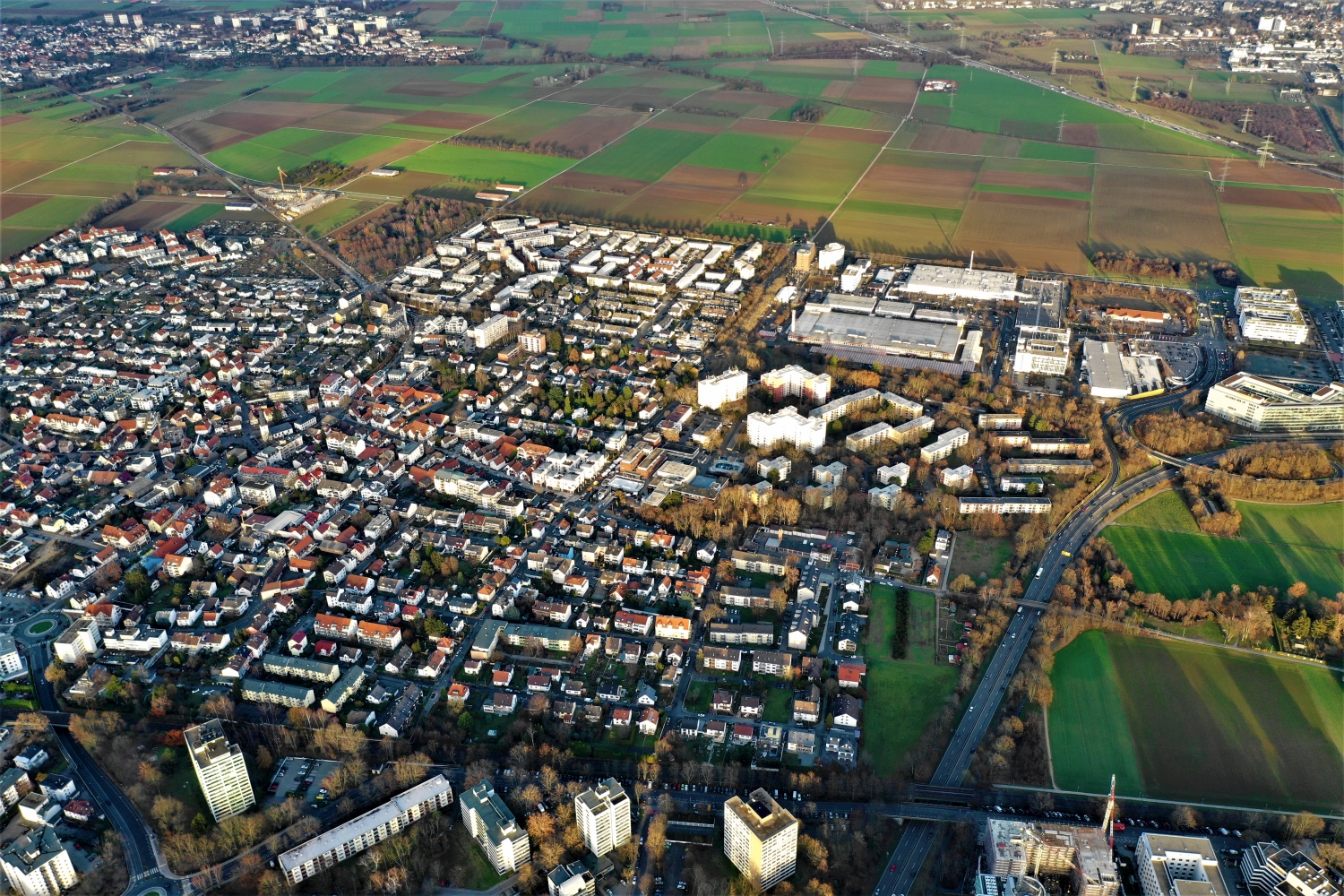
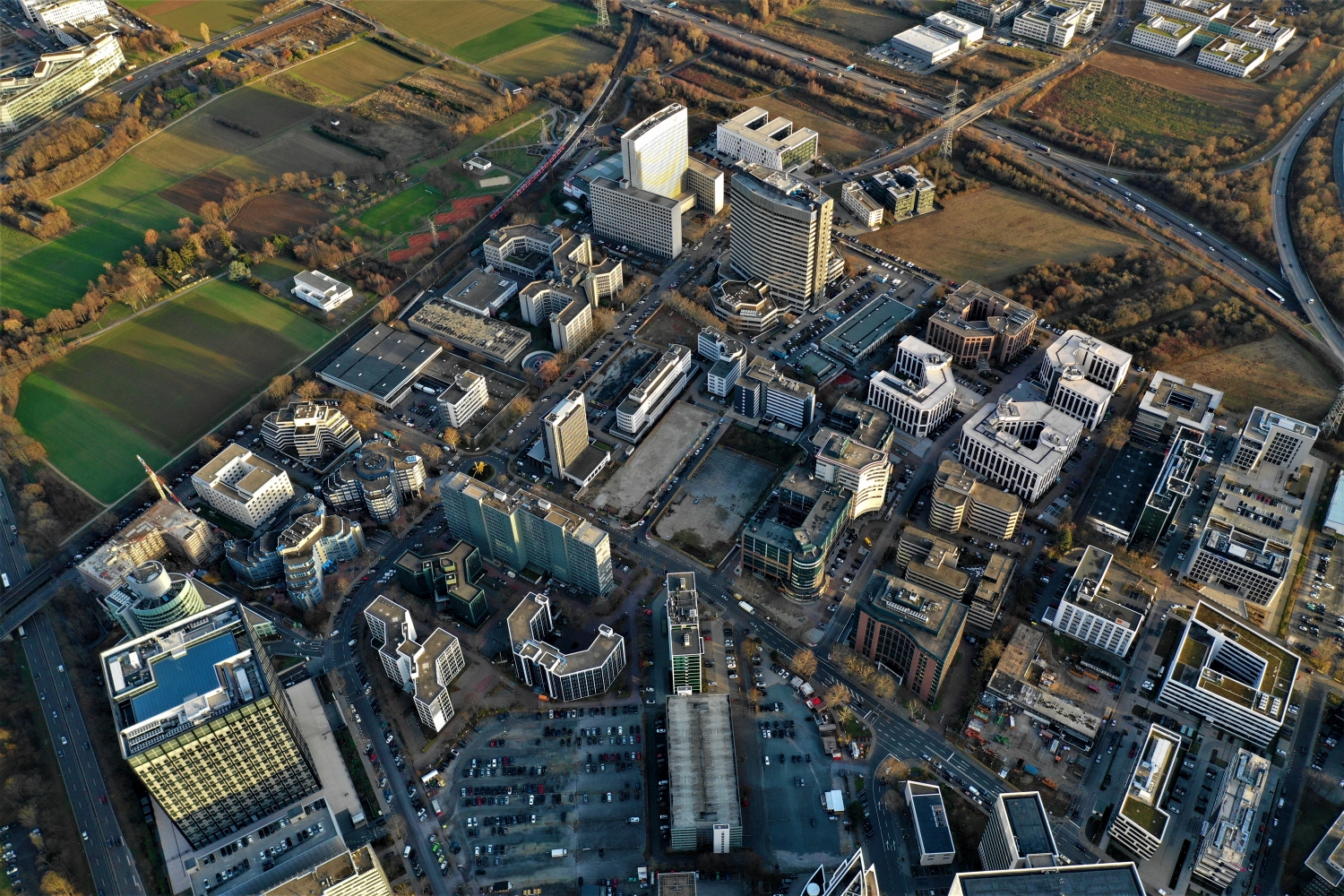
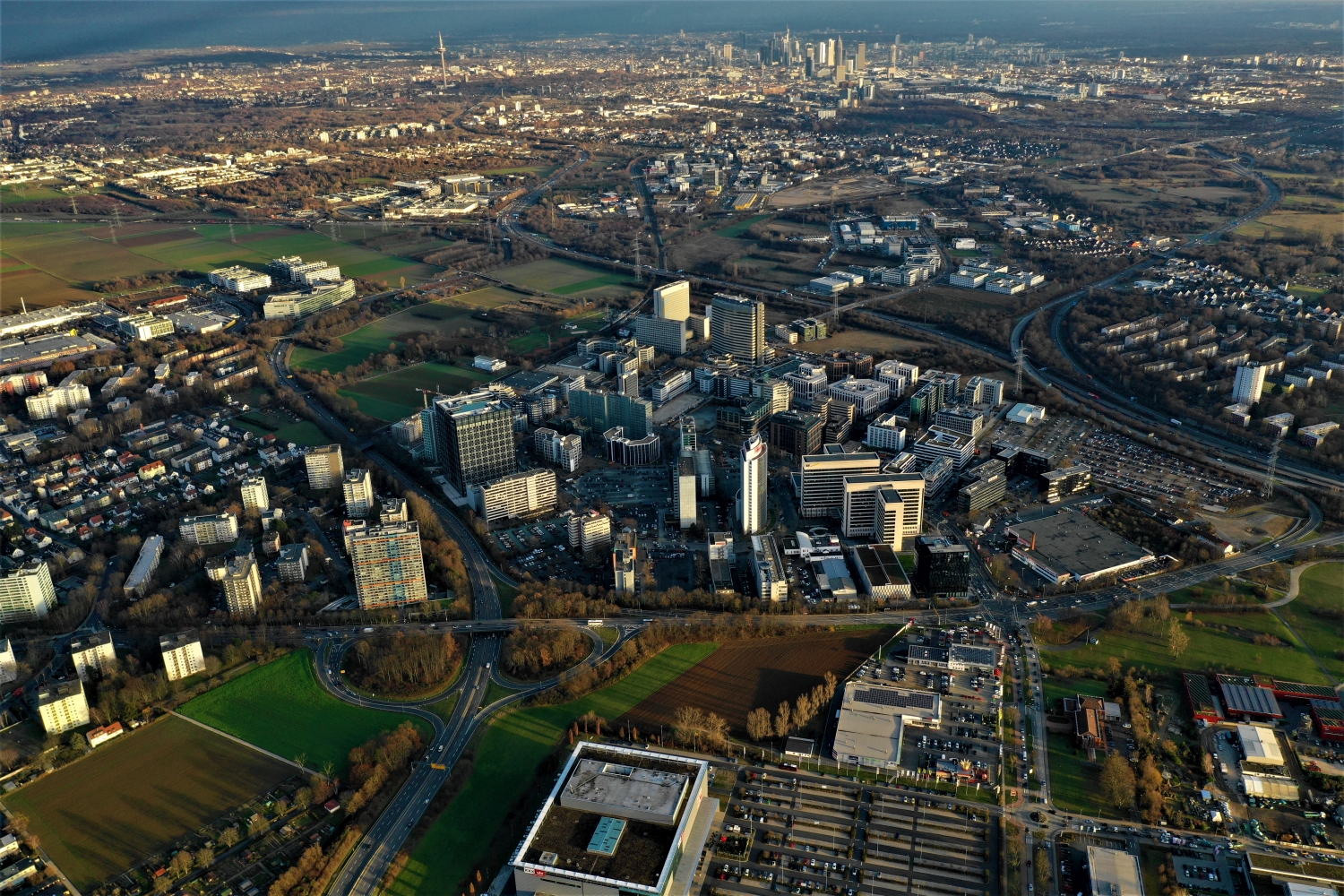
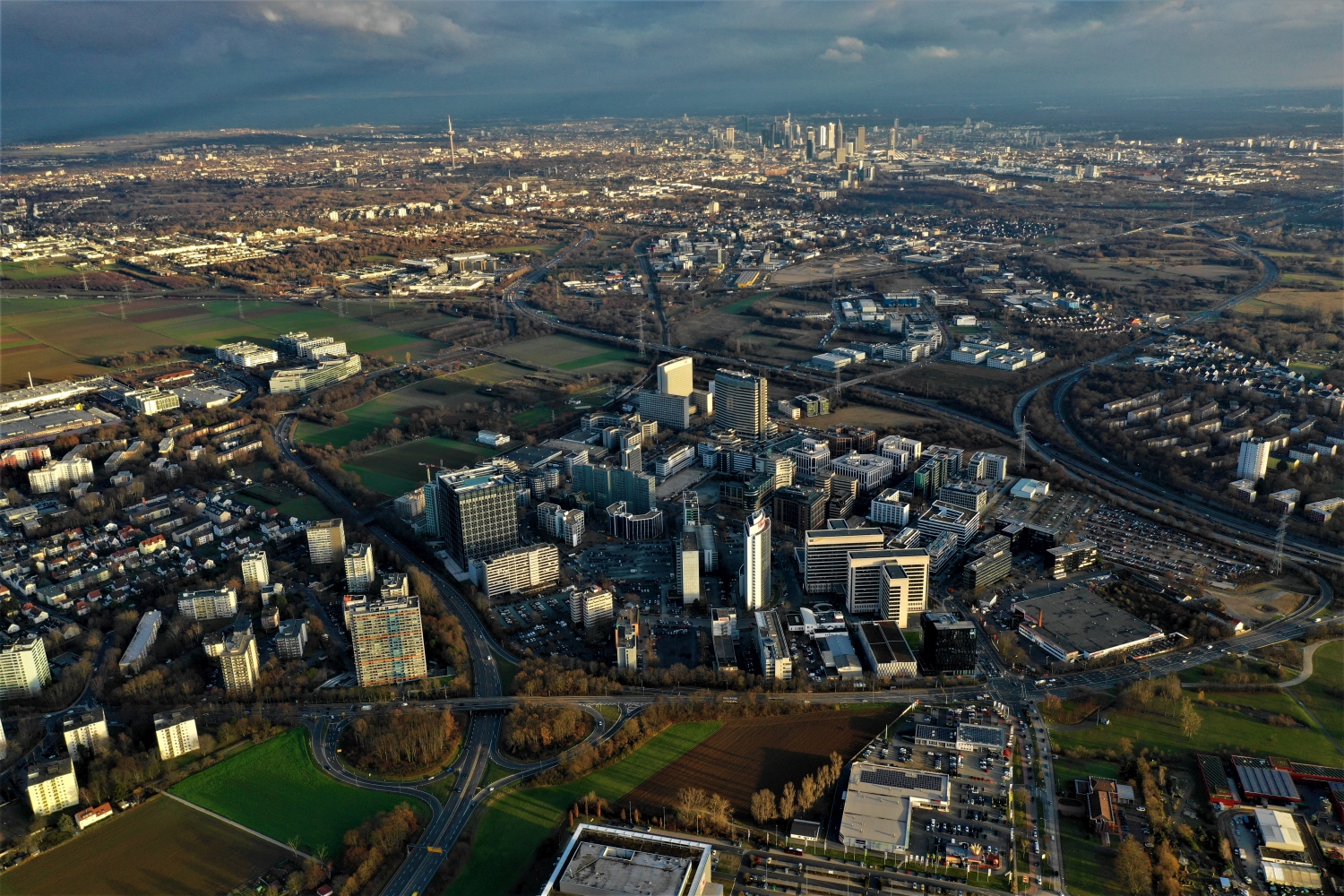
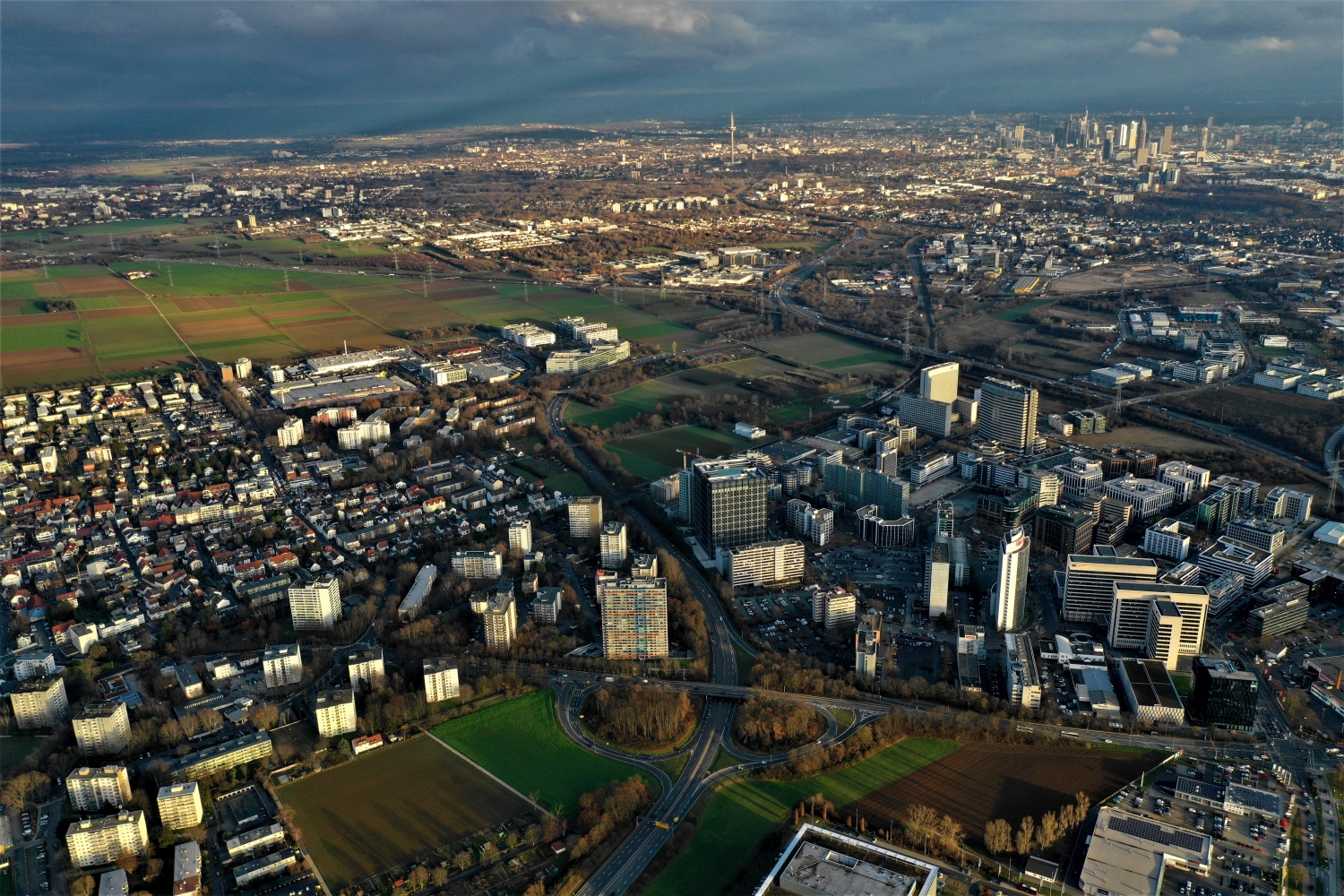
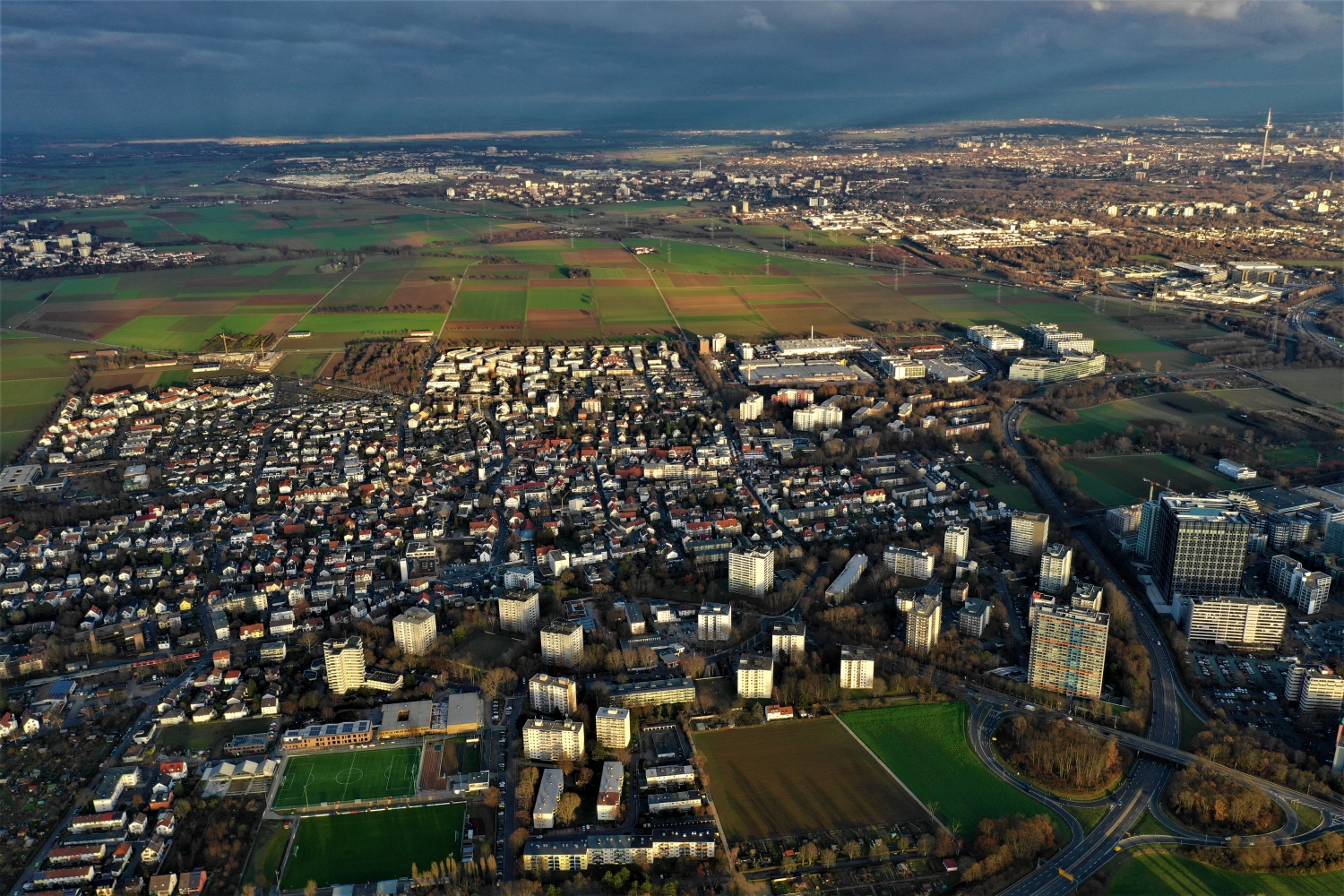
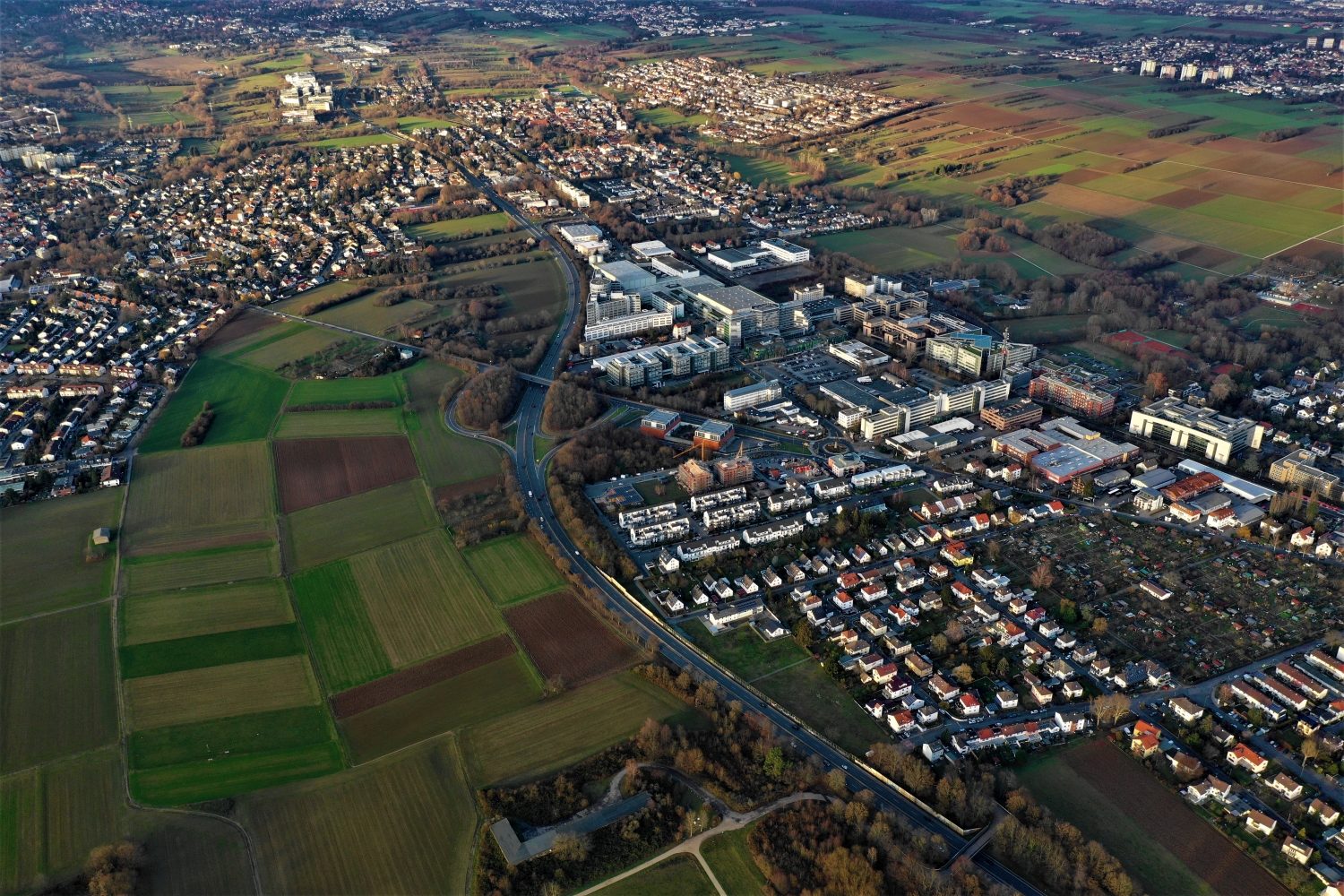
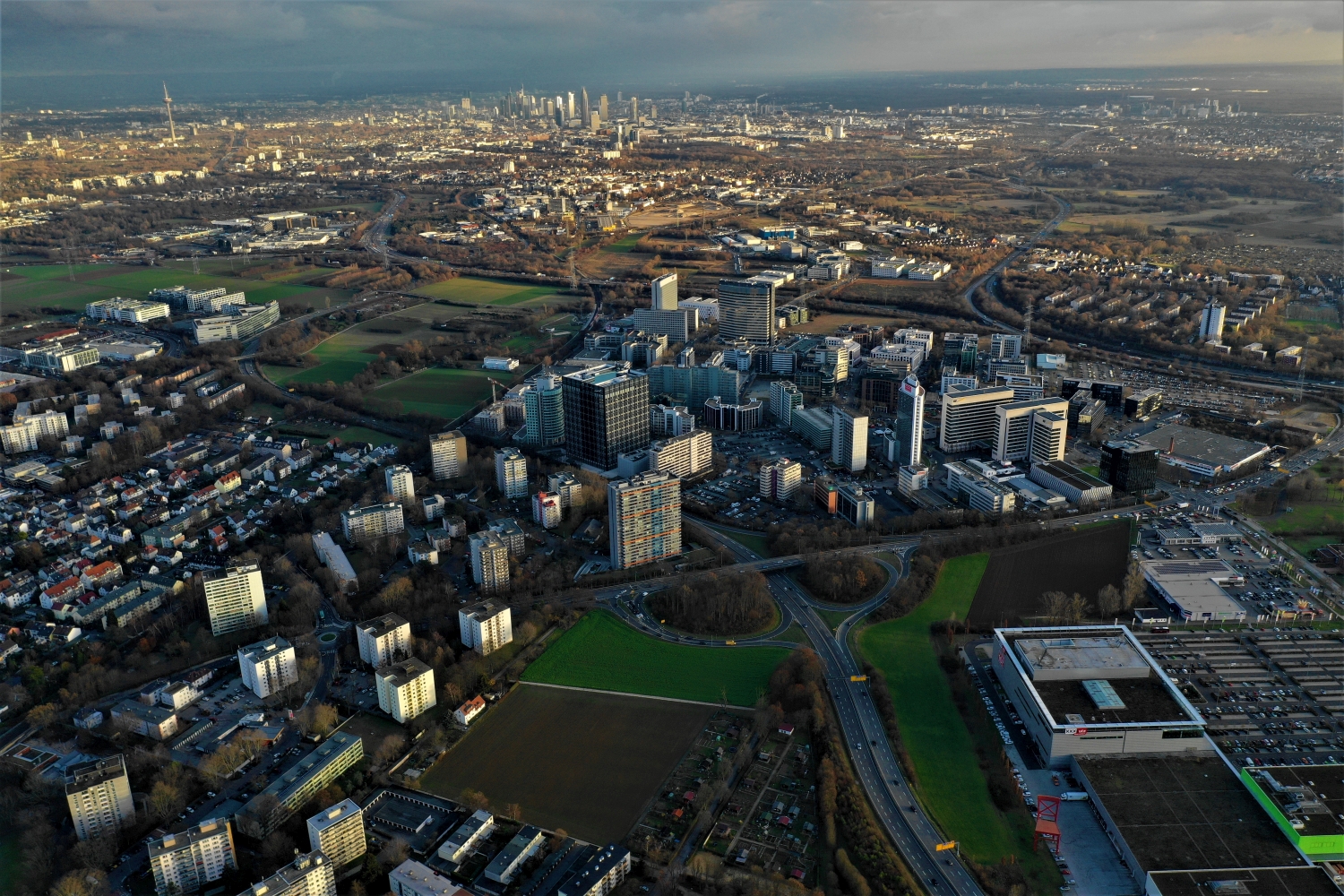
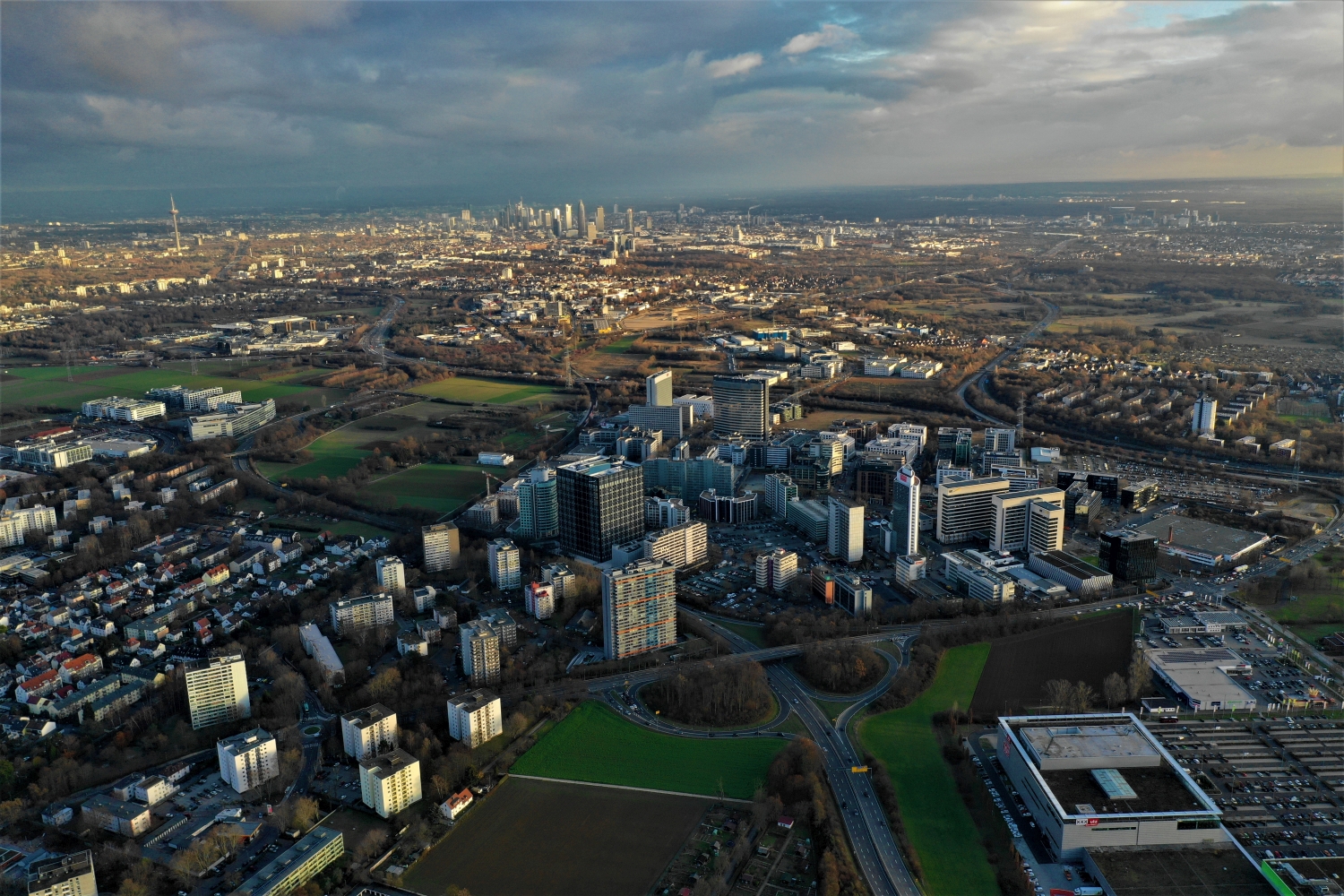
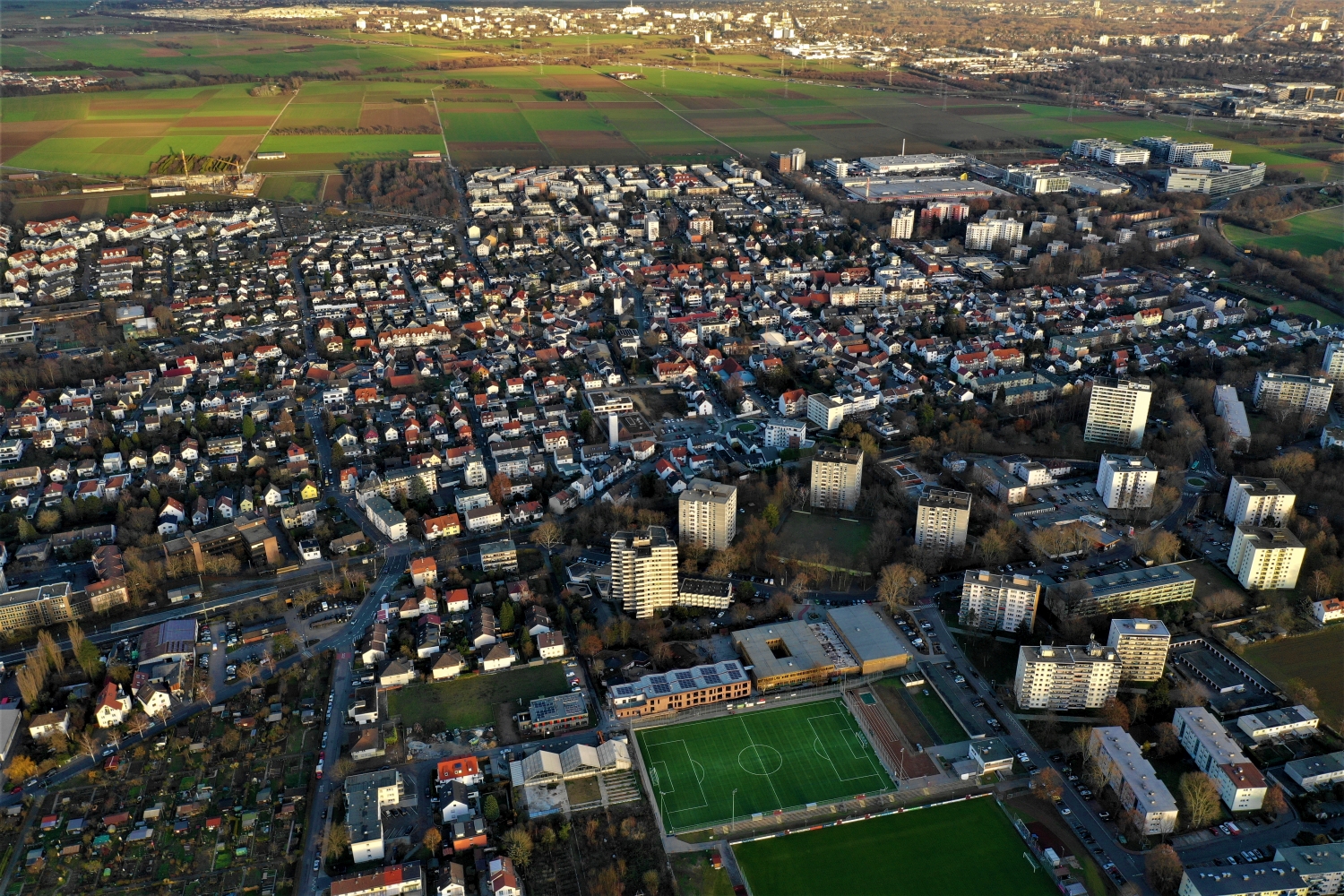
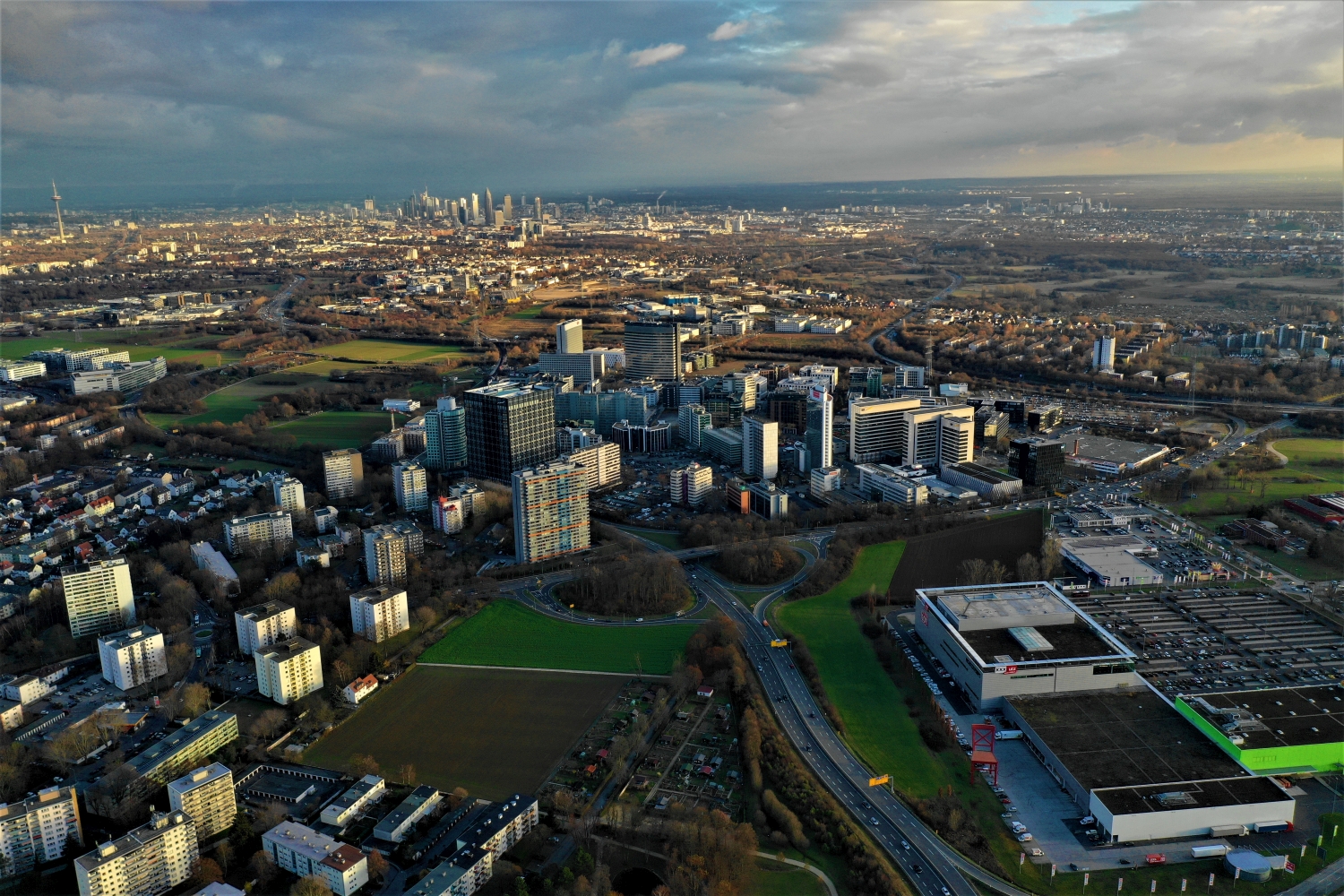
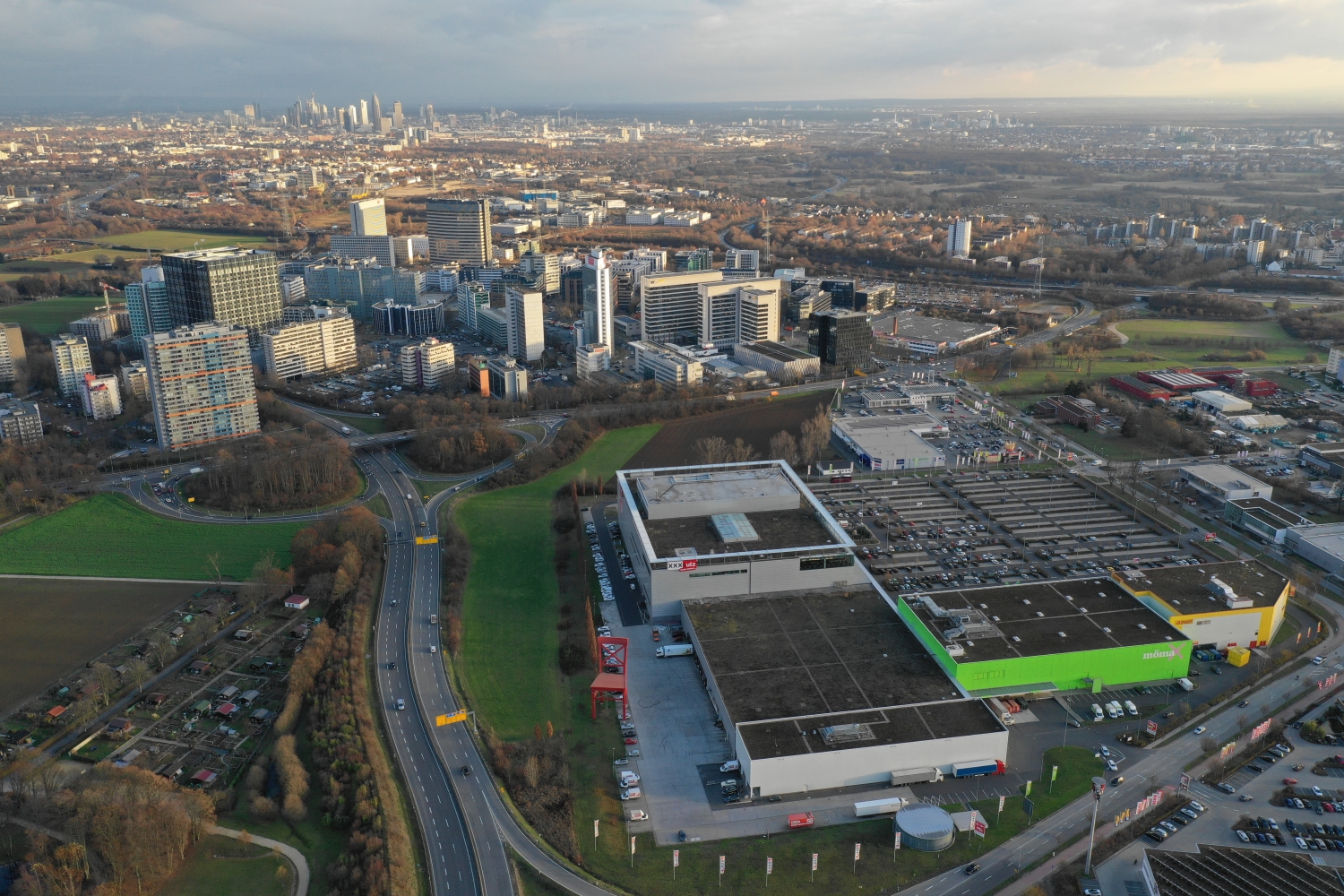
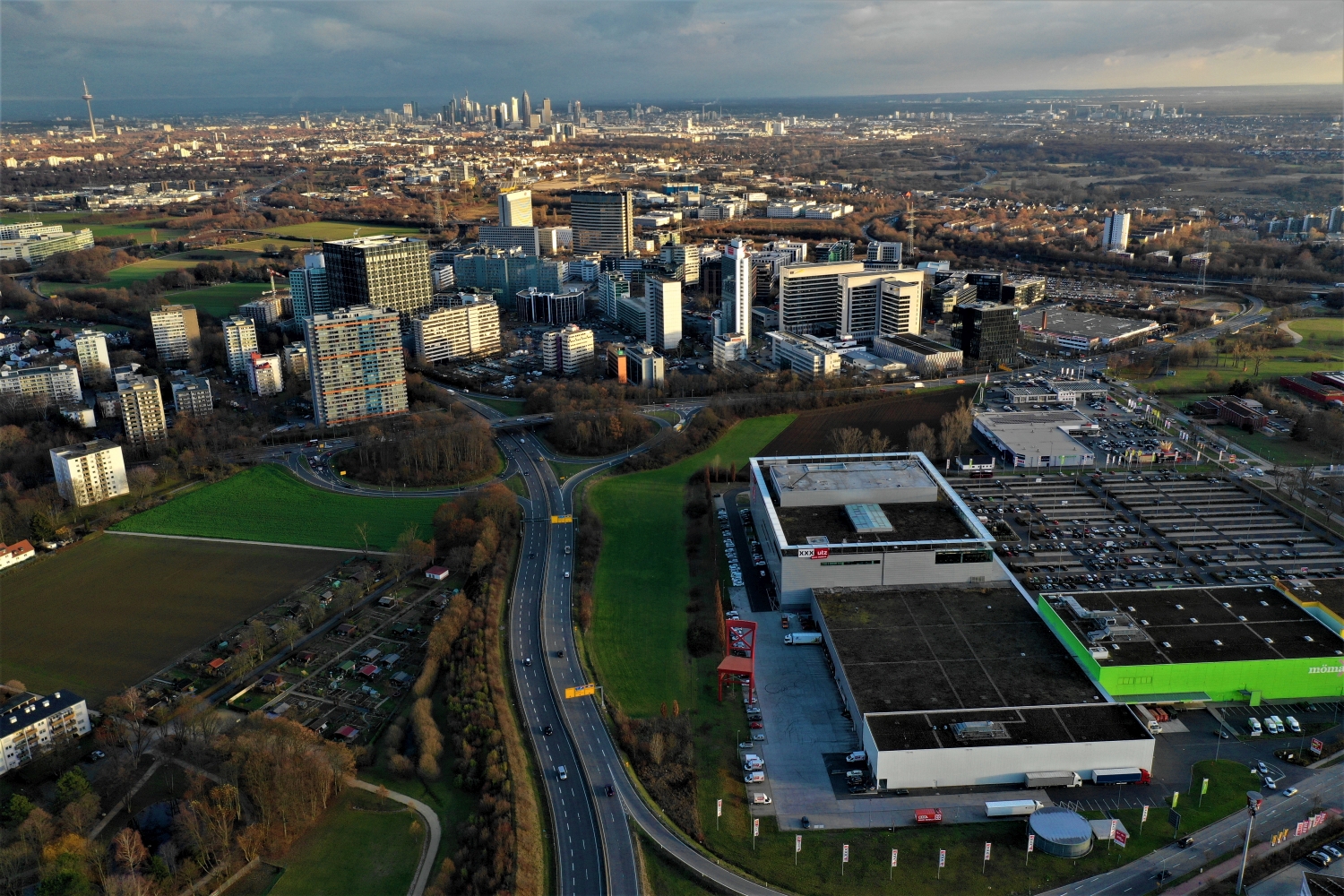

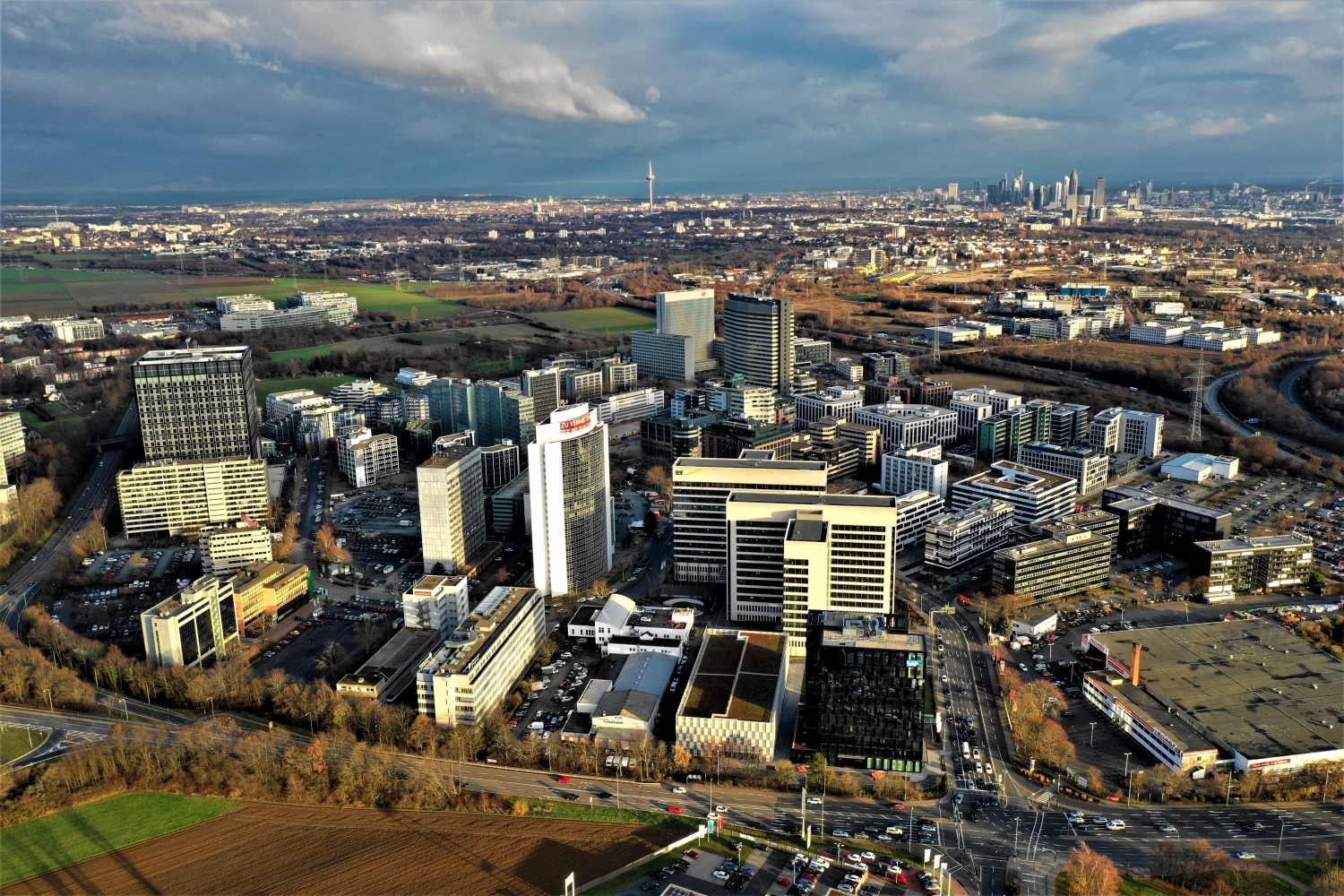
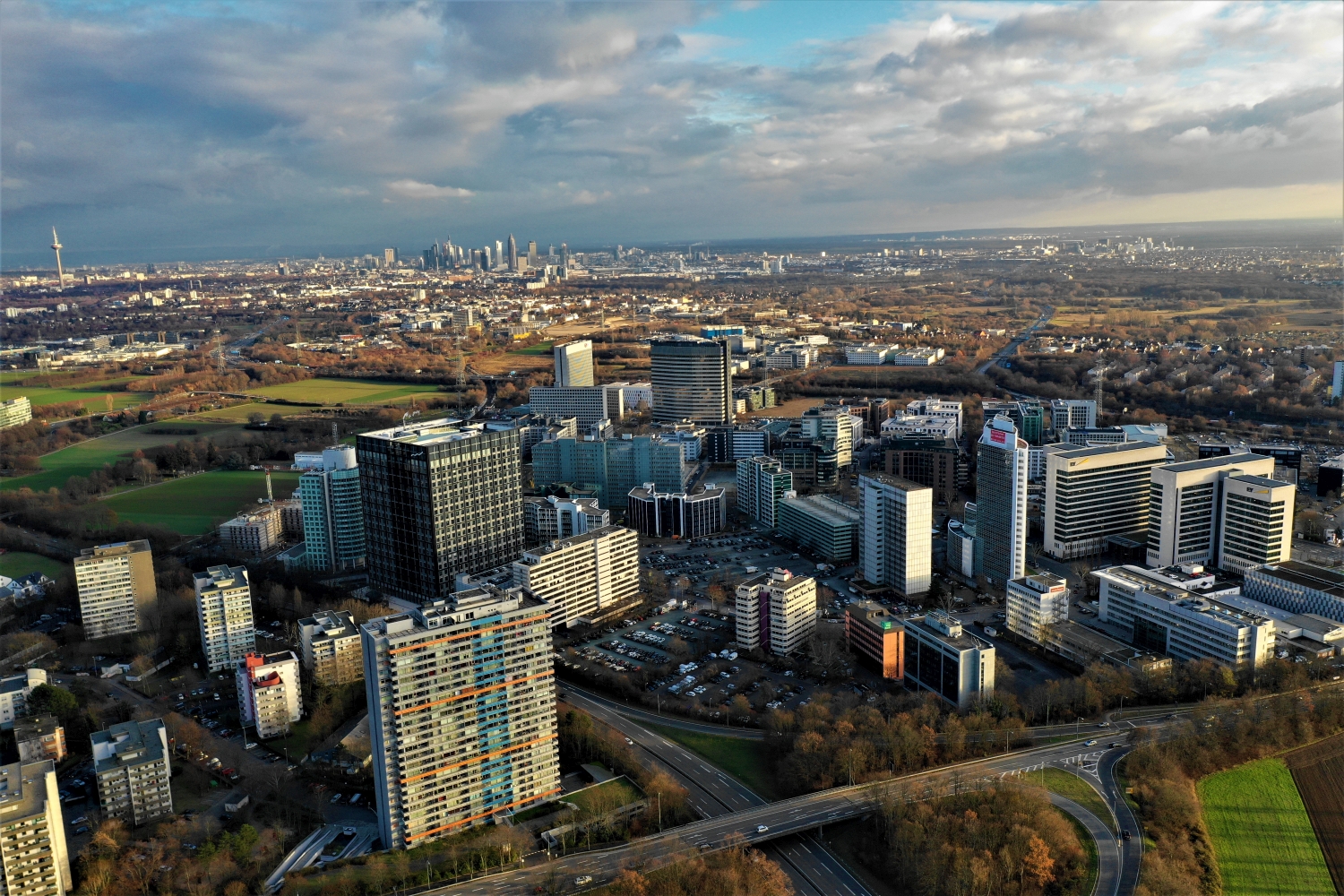
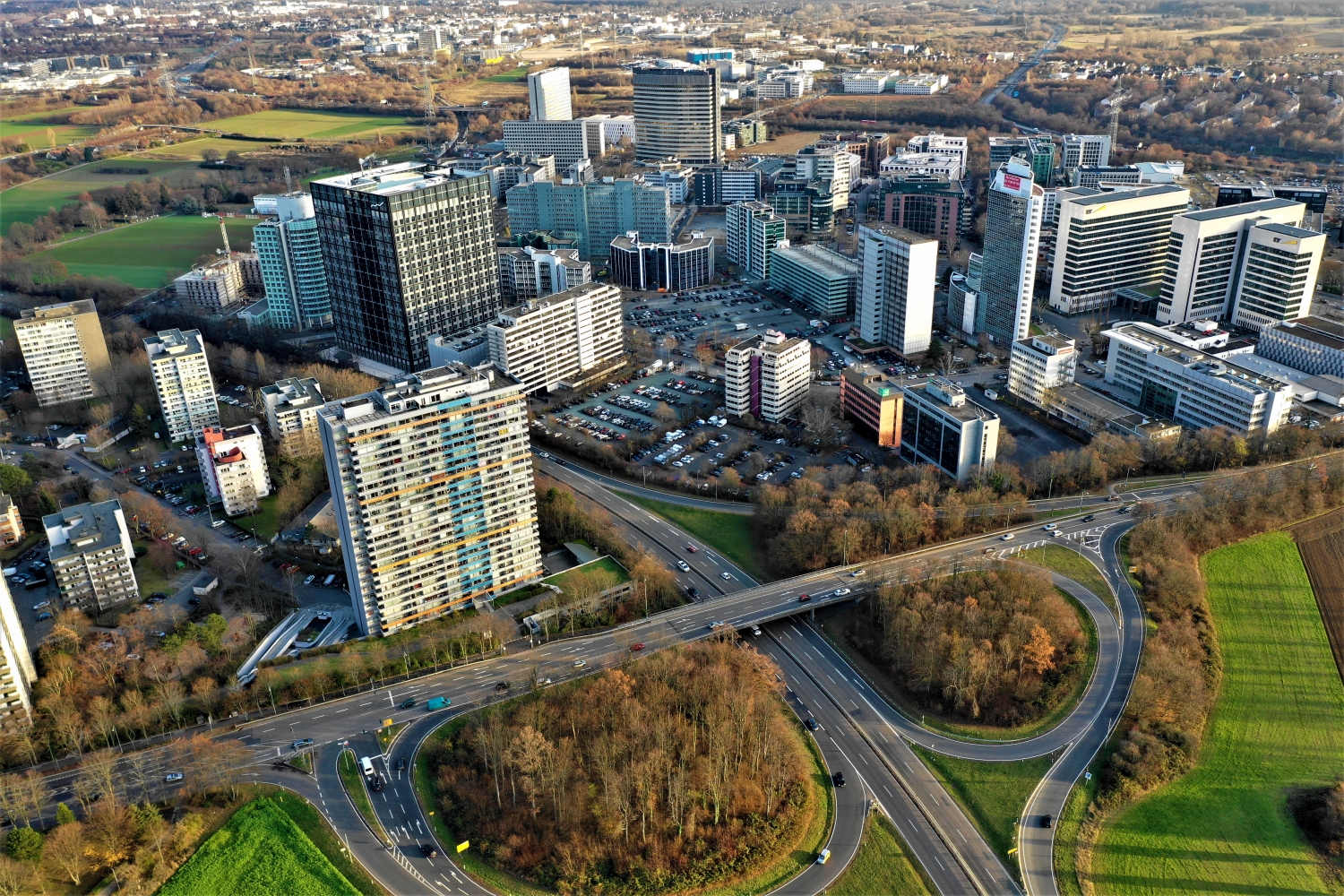
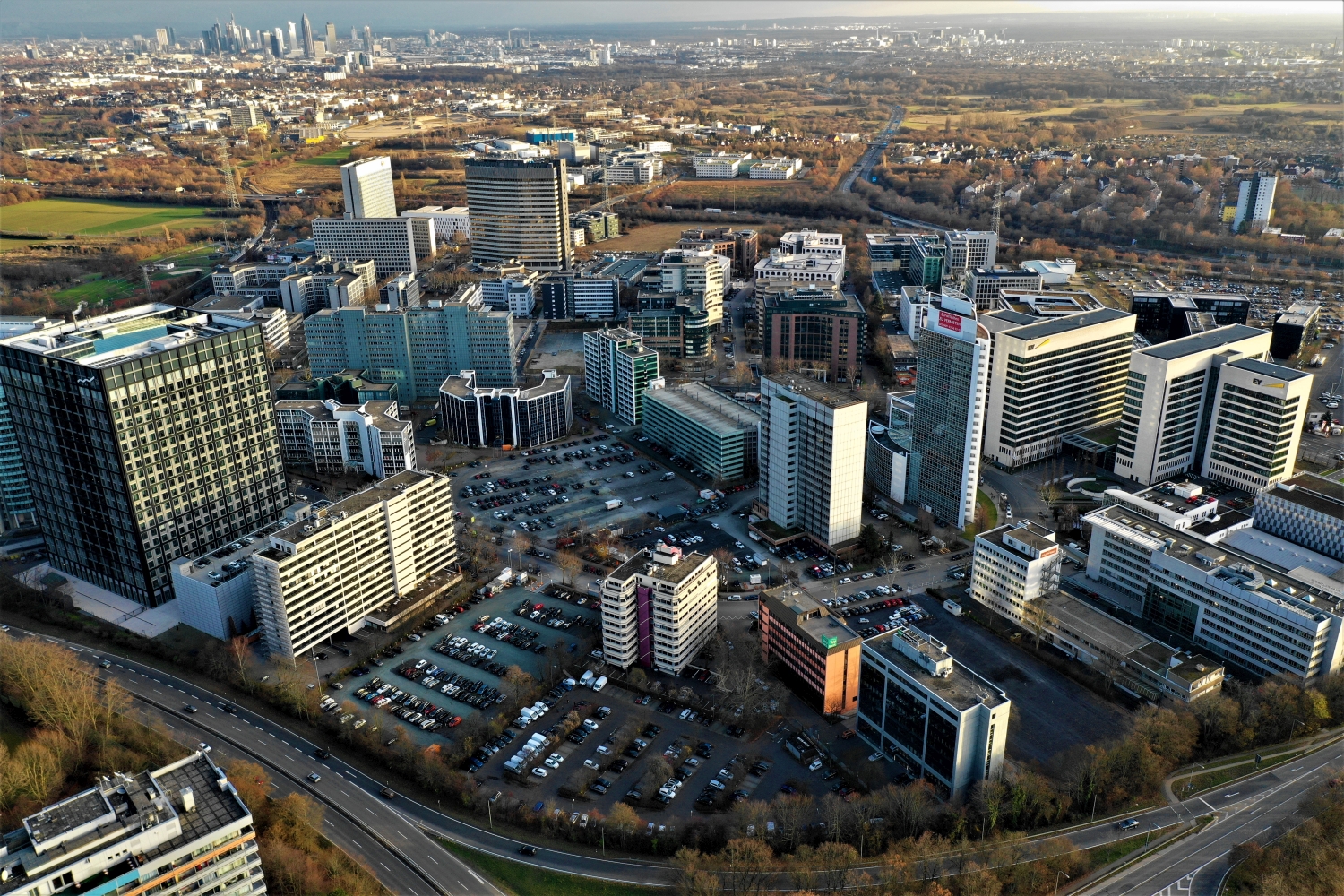
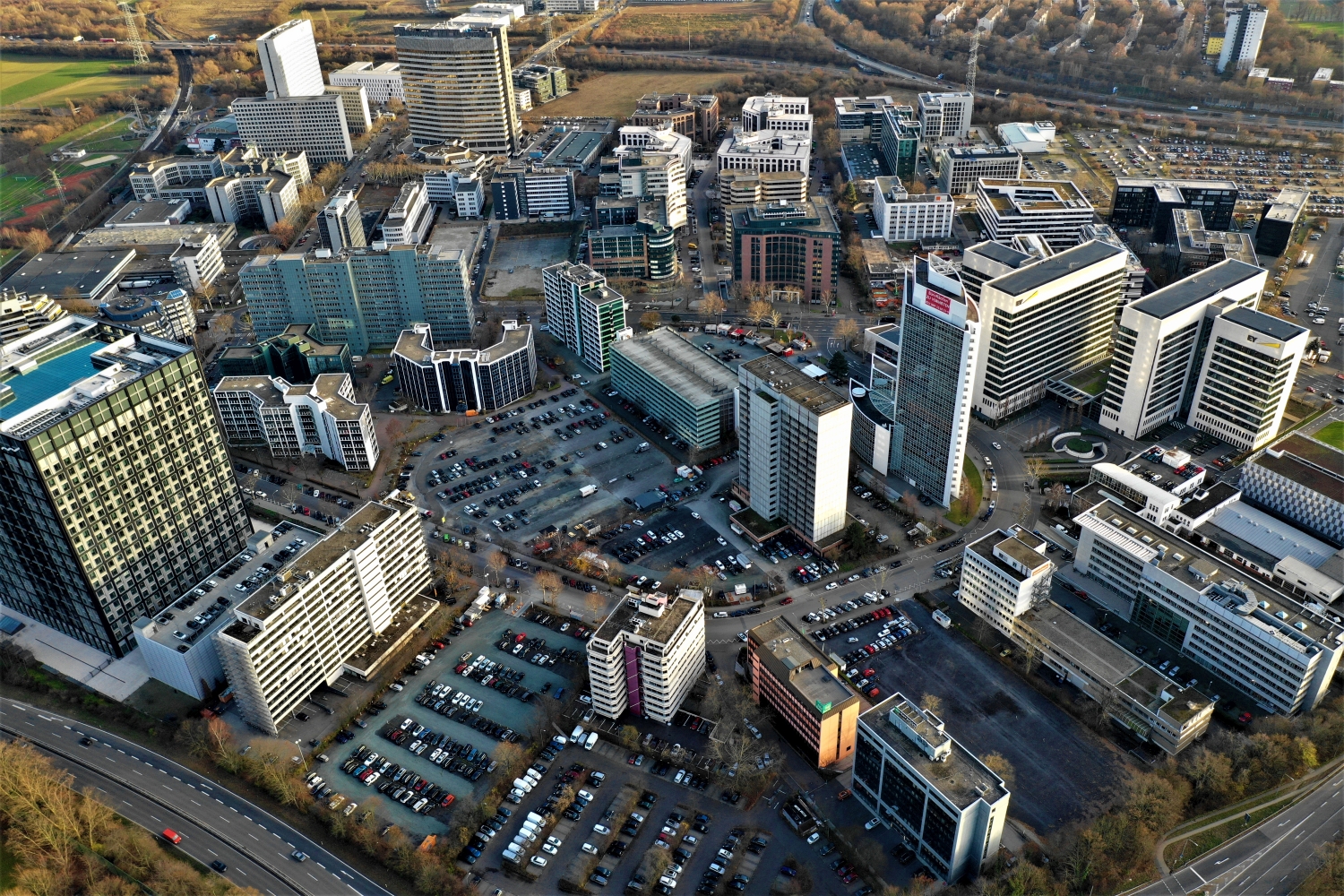
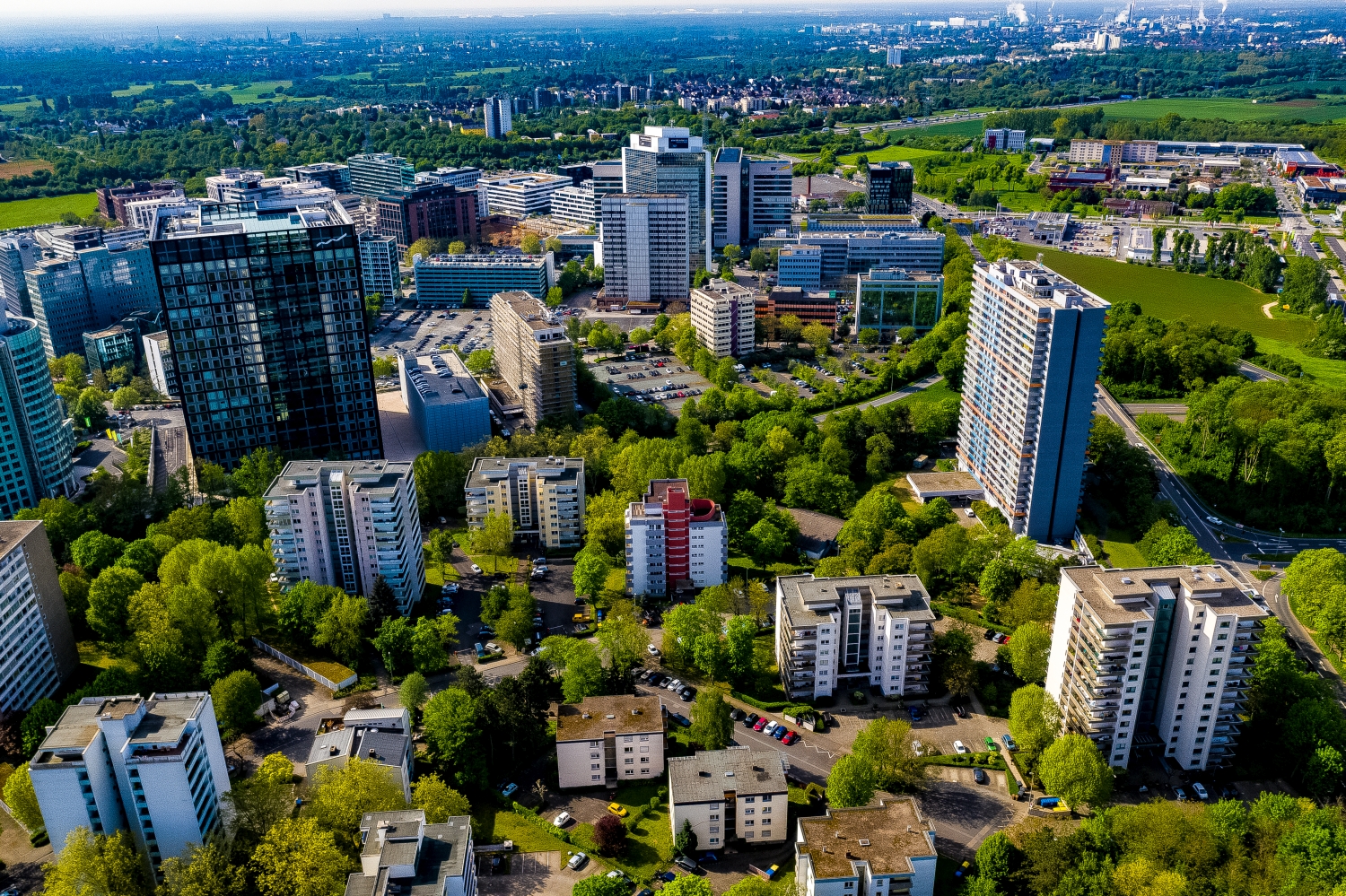
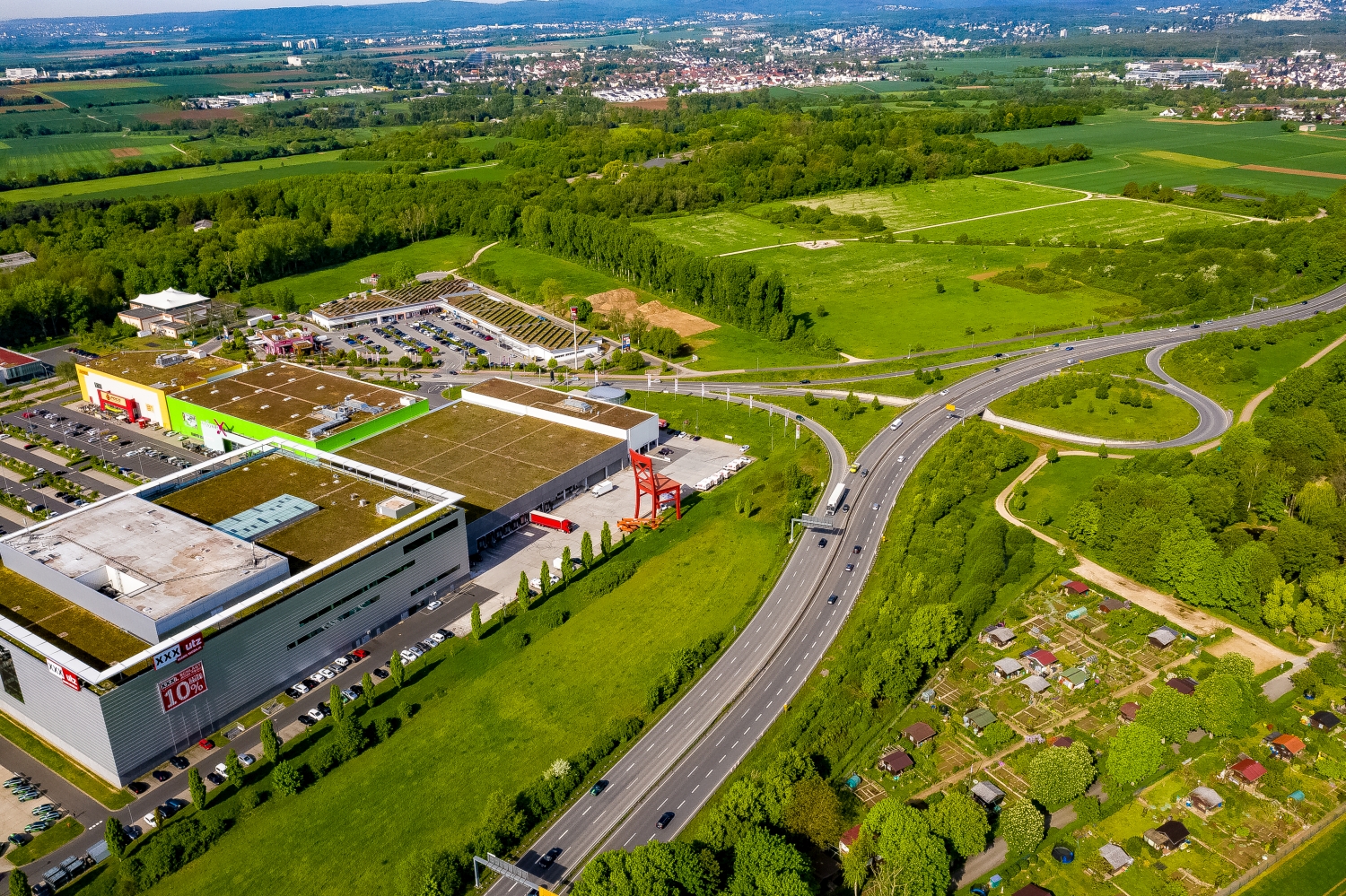
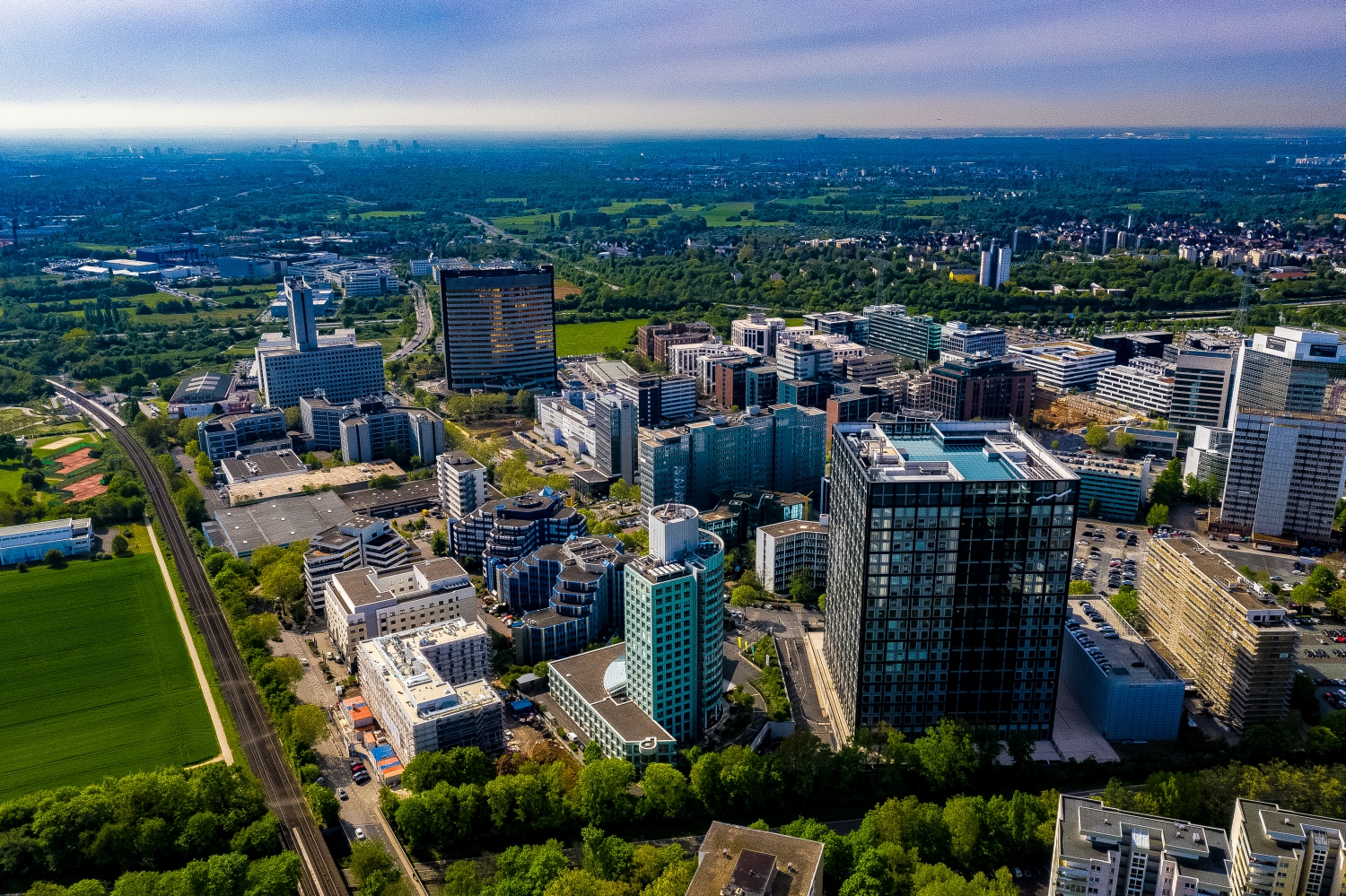
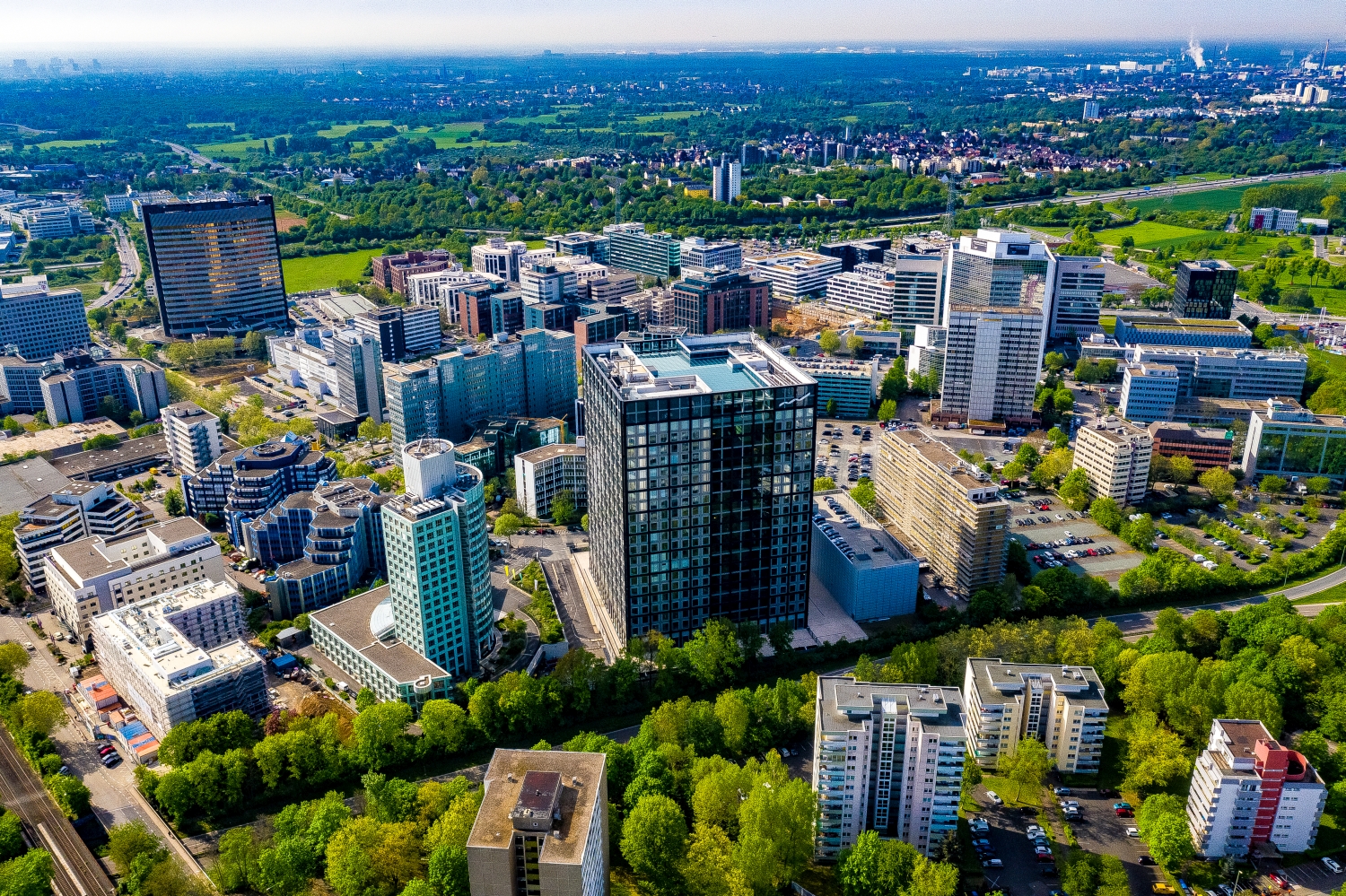
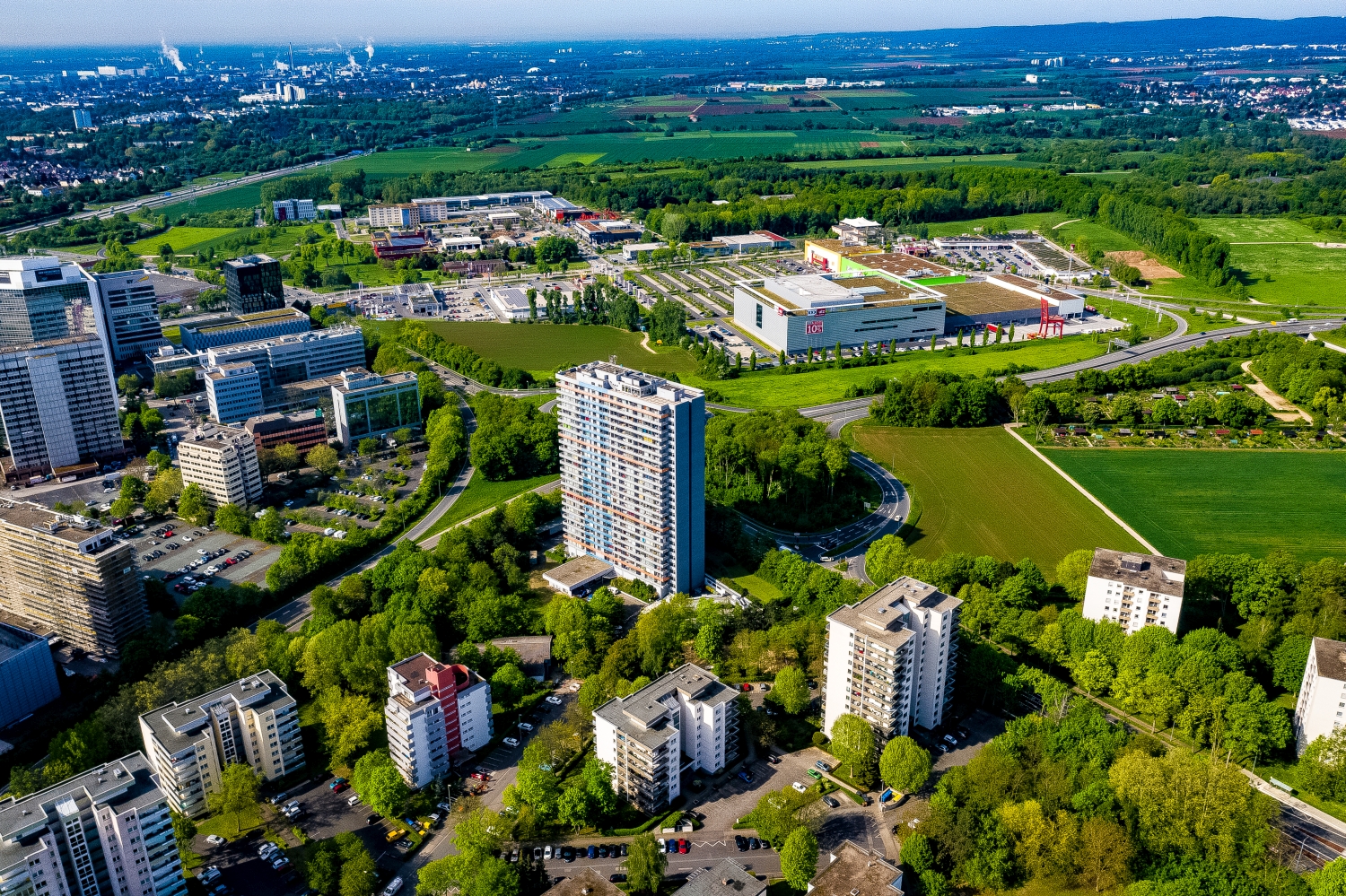

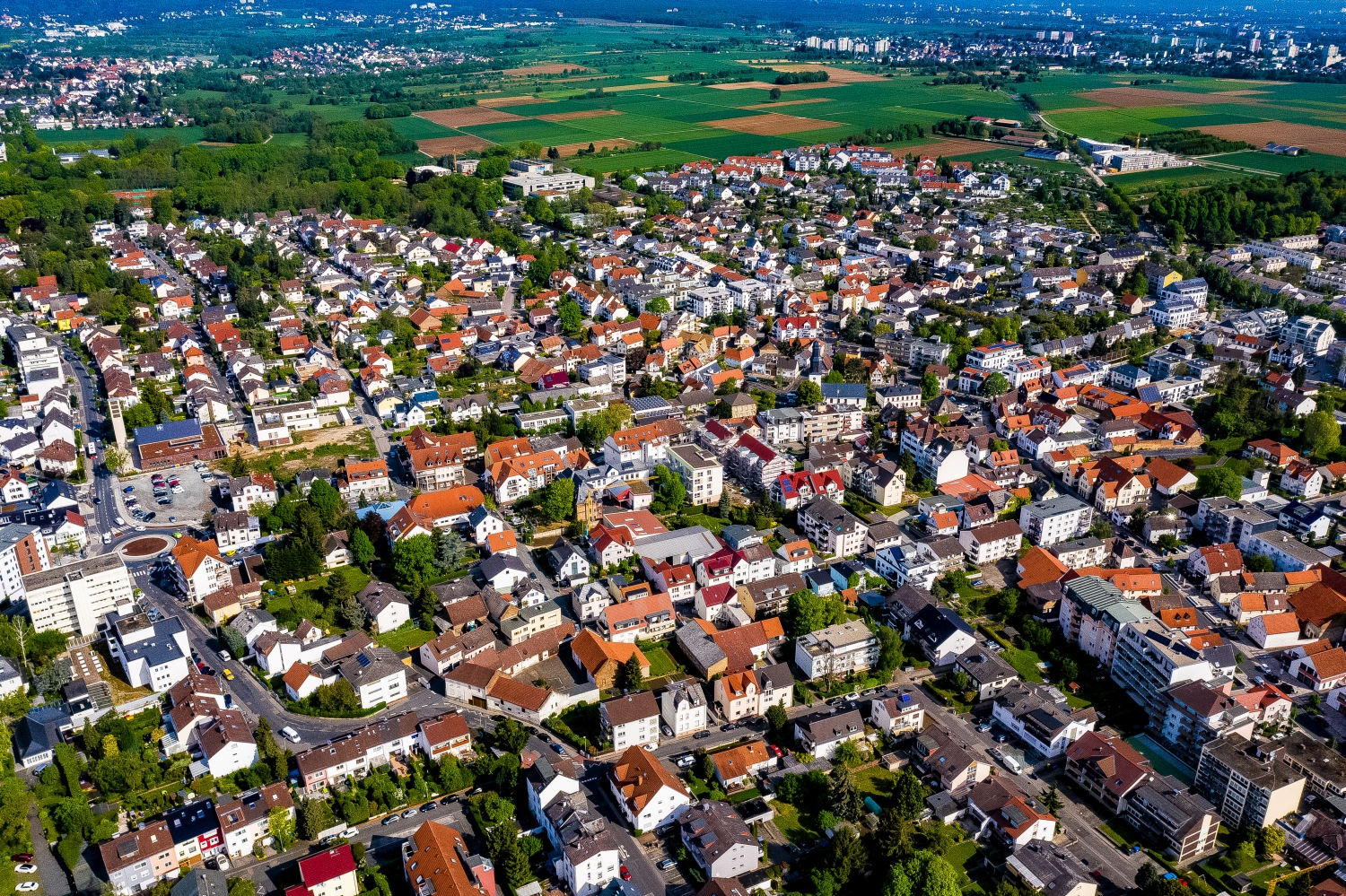
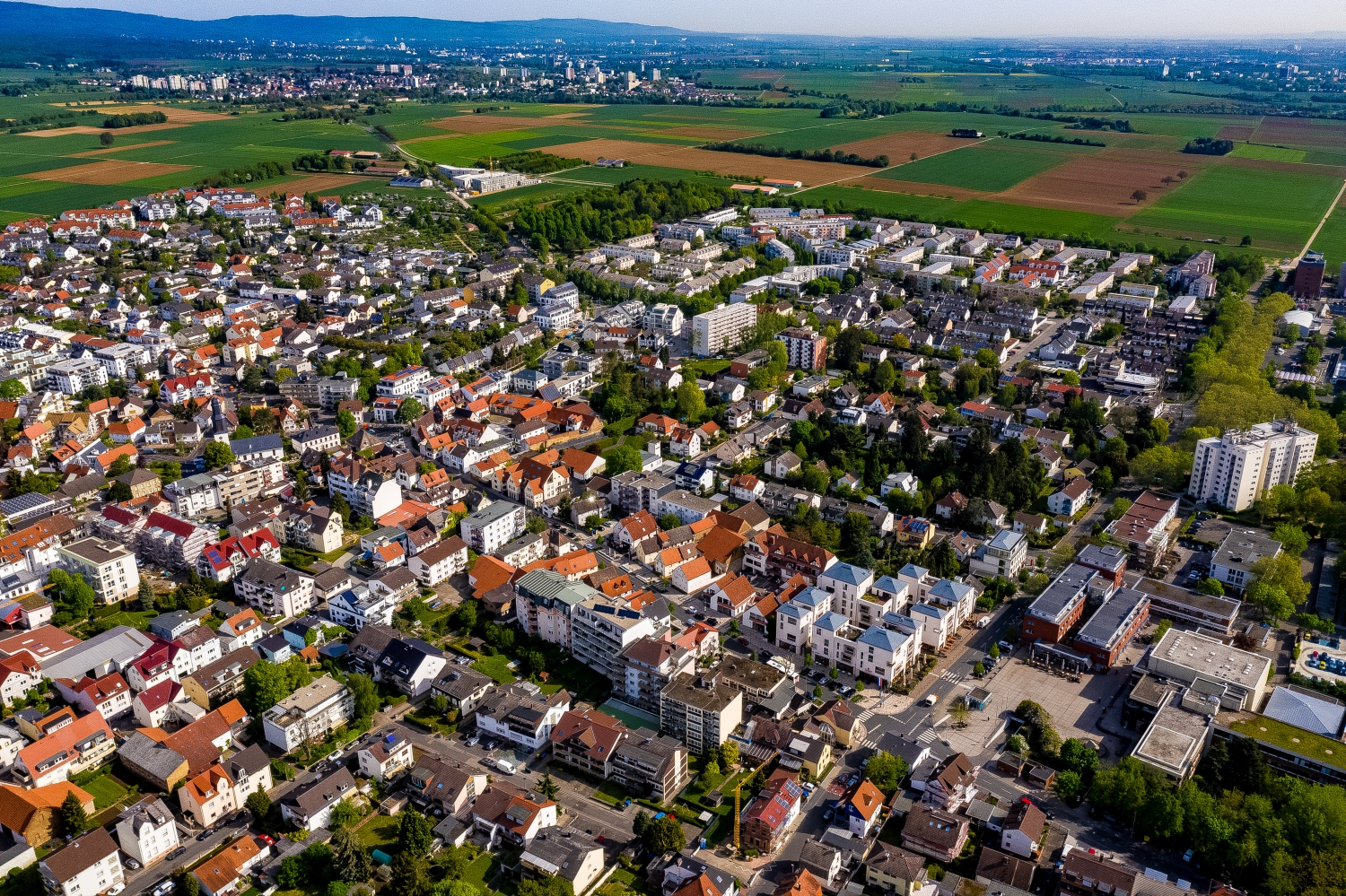
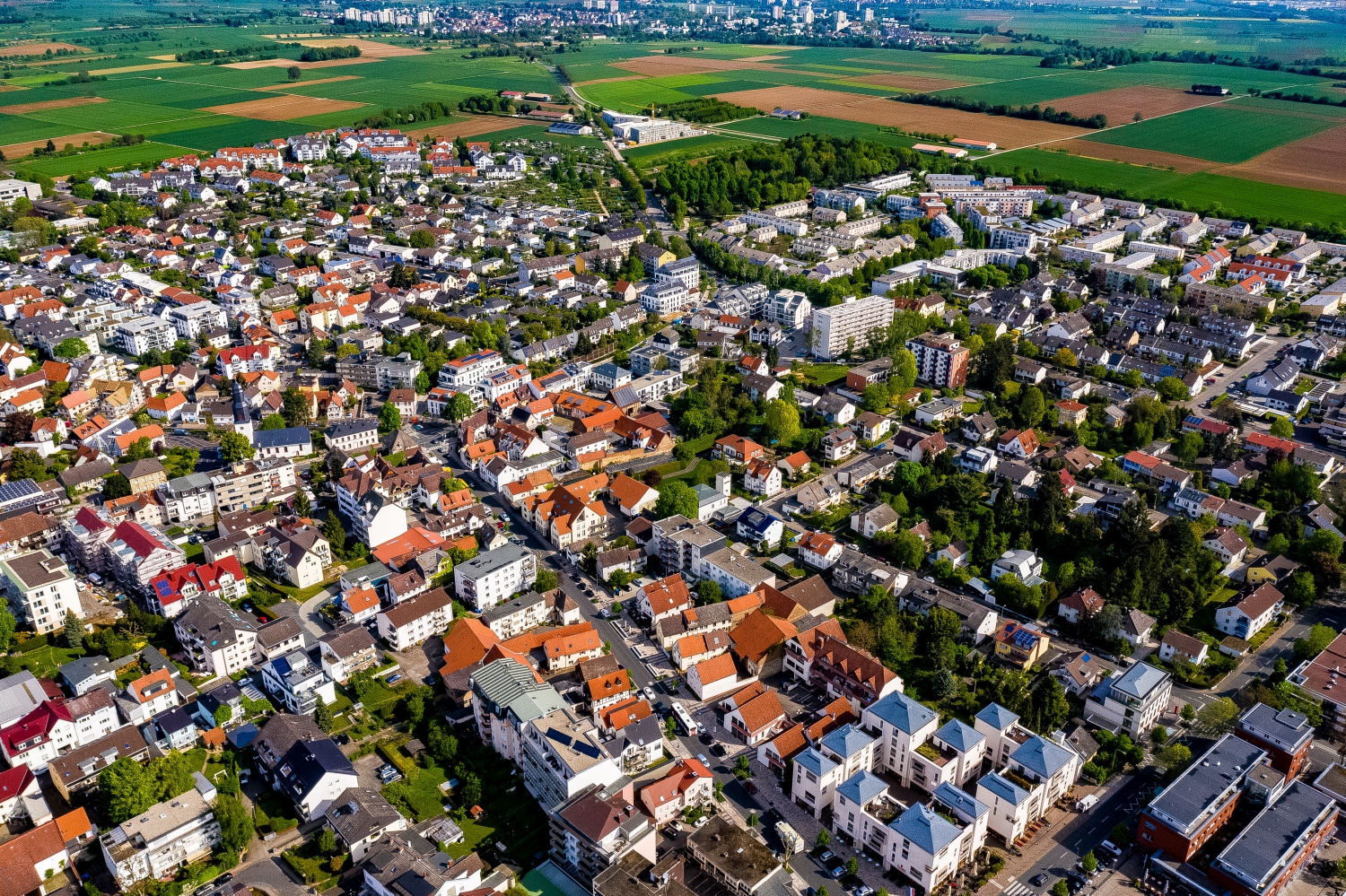
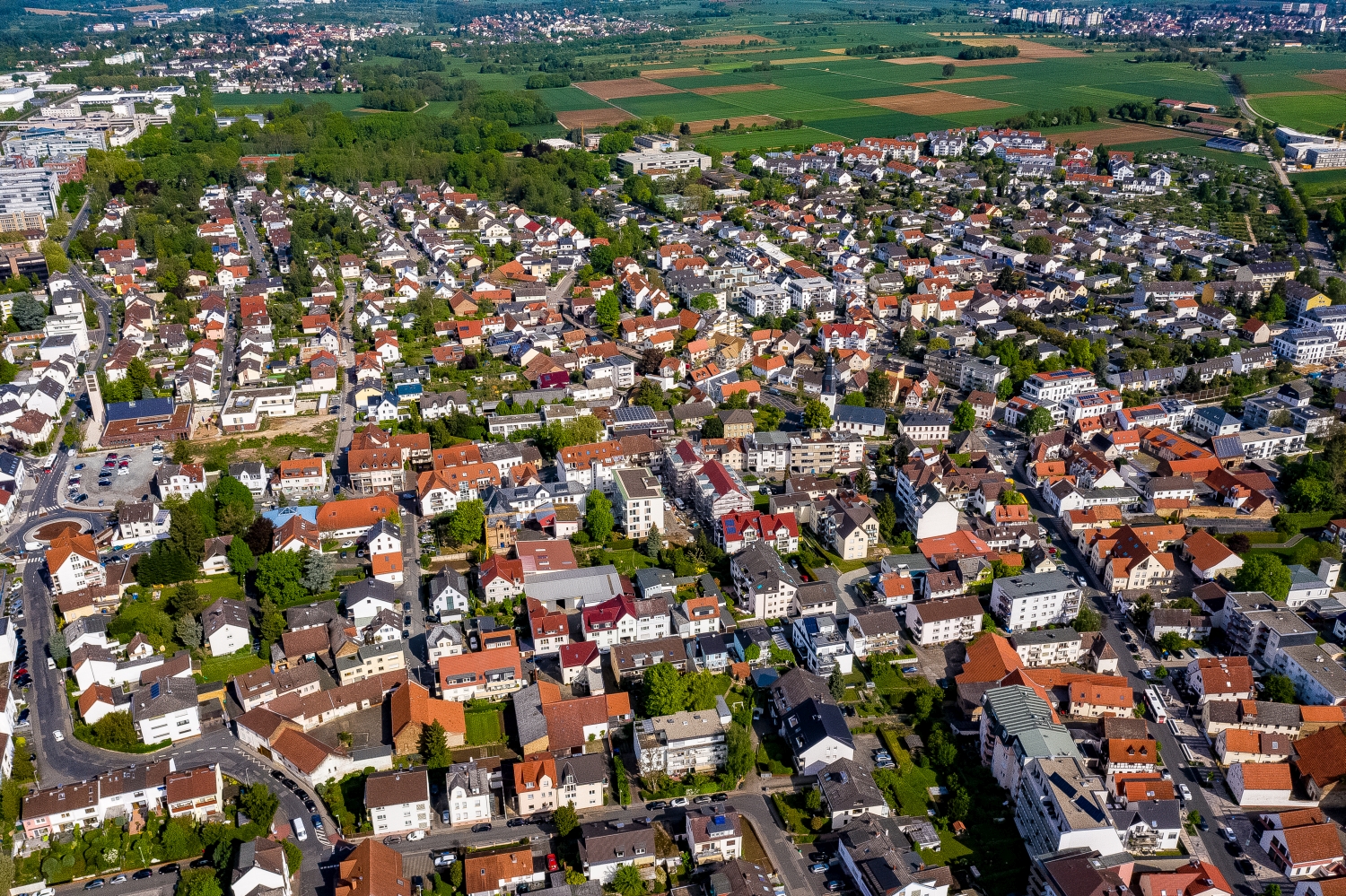
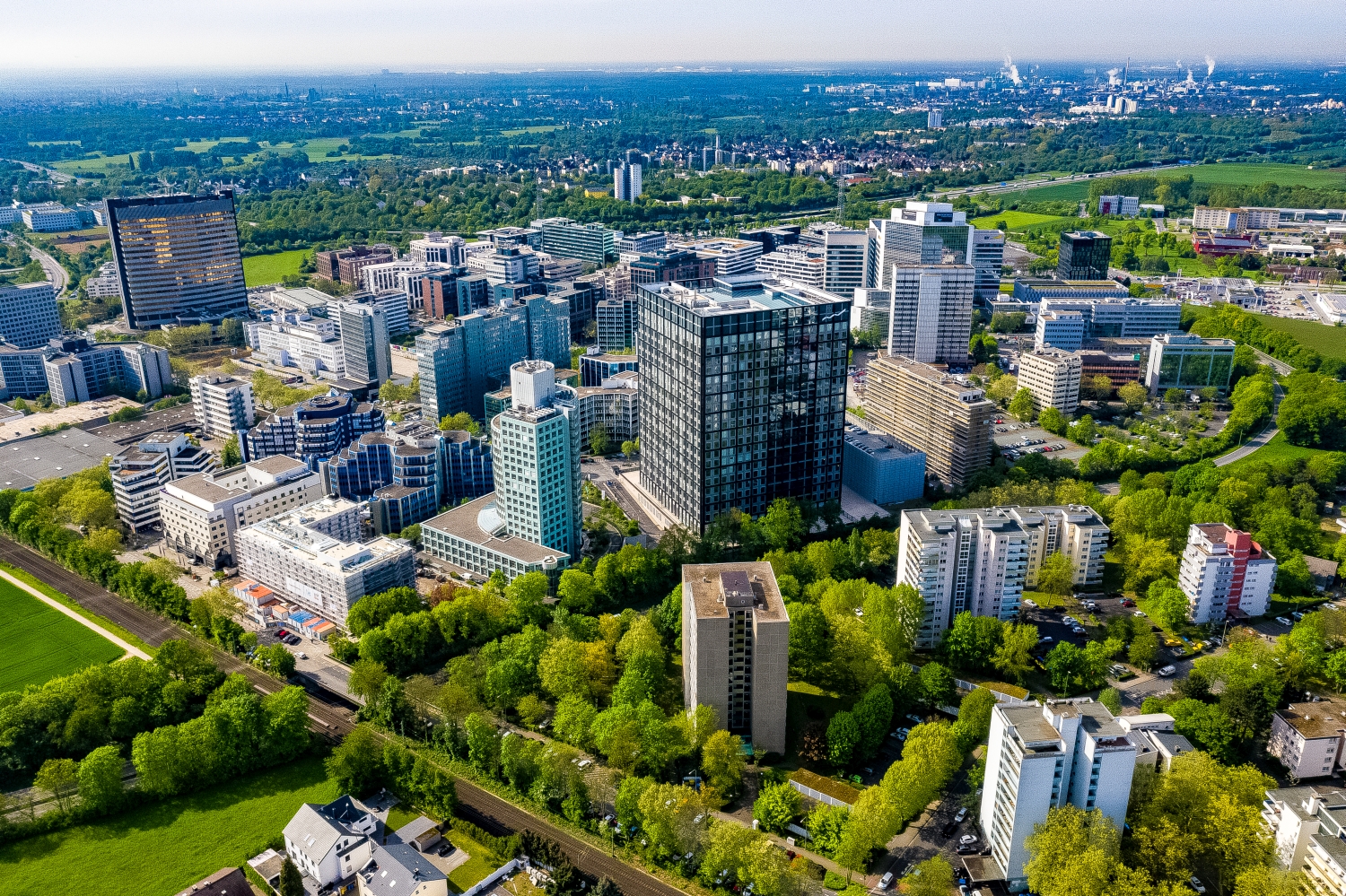
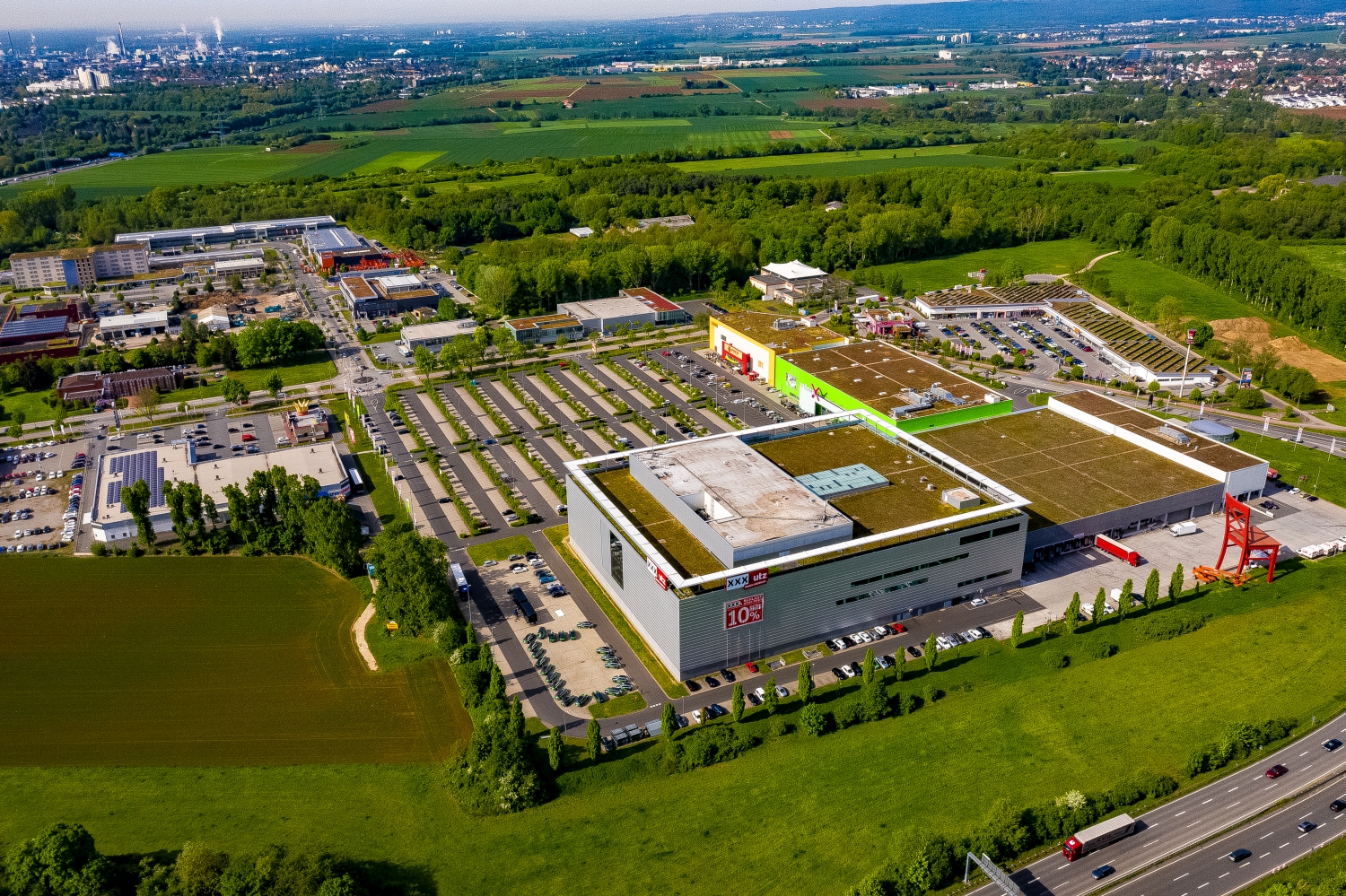
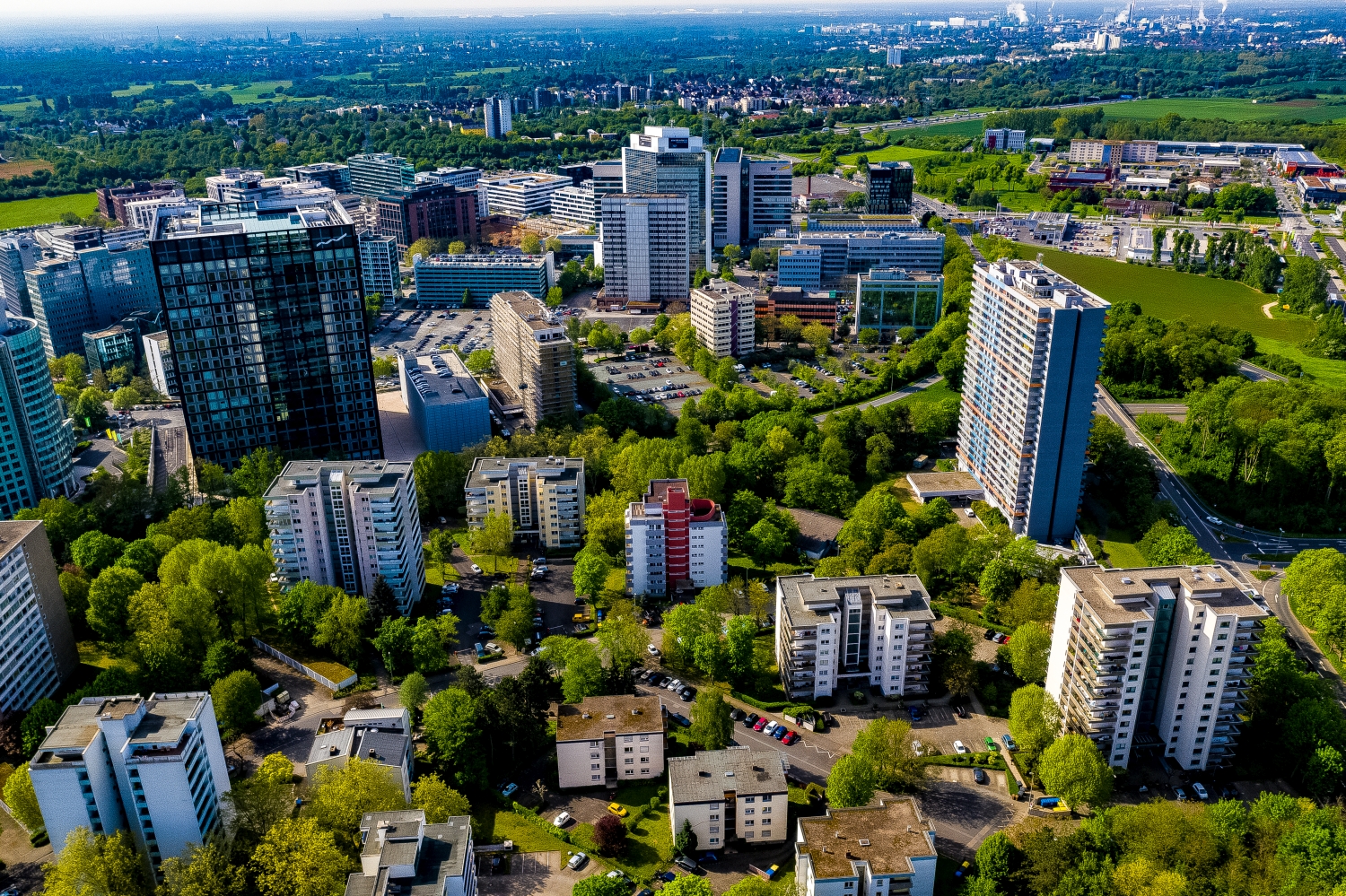


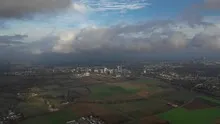
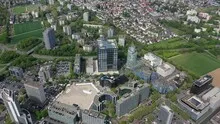
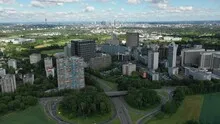
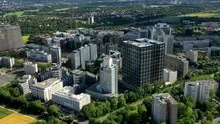
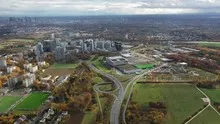
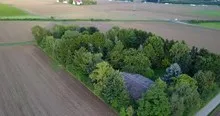
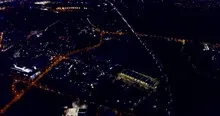
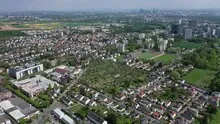
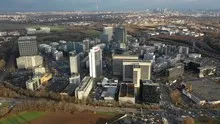
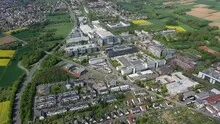
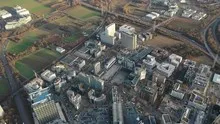
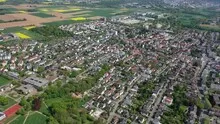
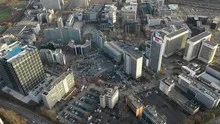
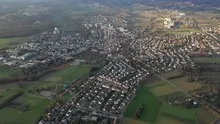
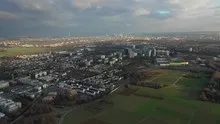
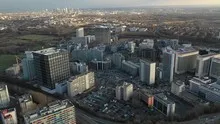
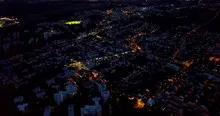
Office buildings between fields and Frankfurt
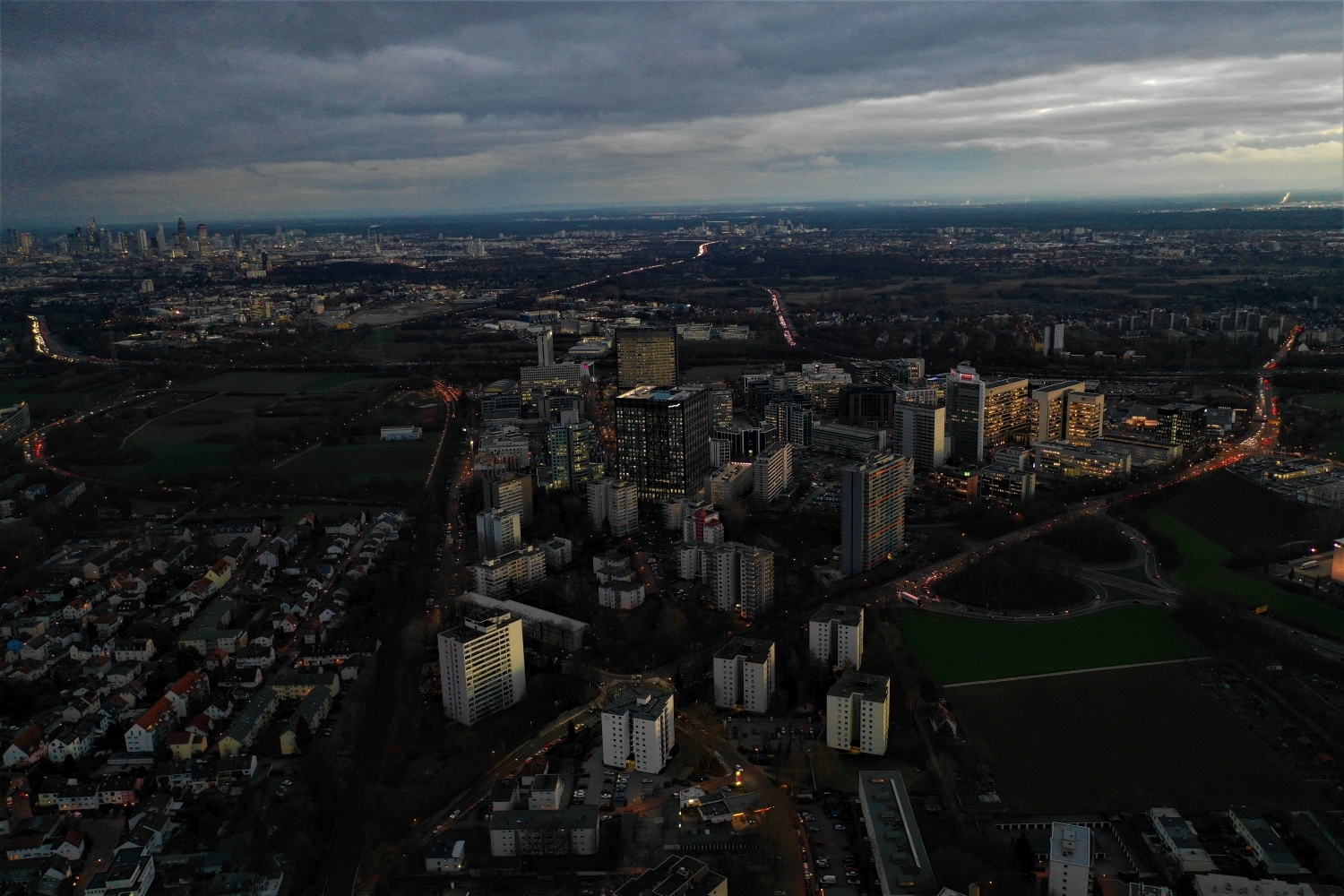
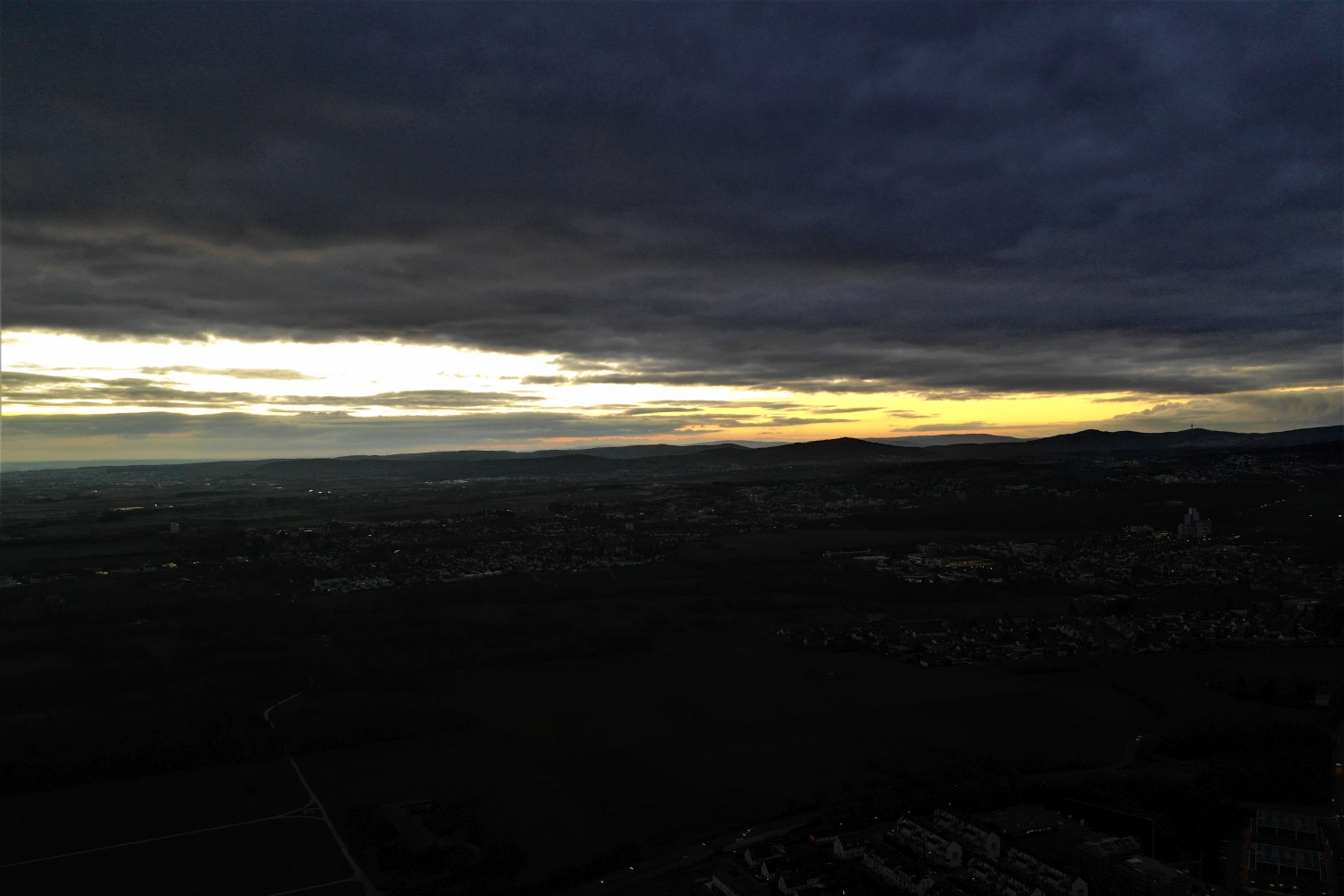
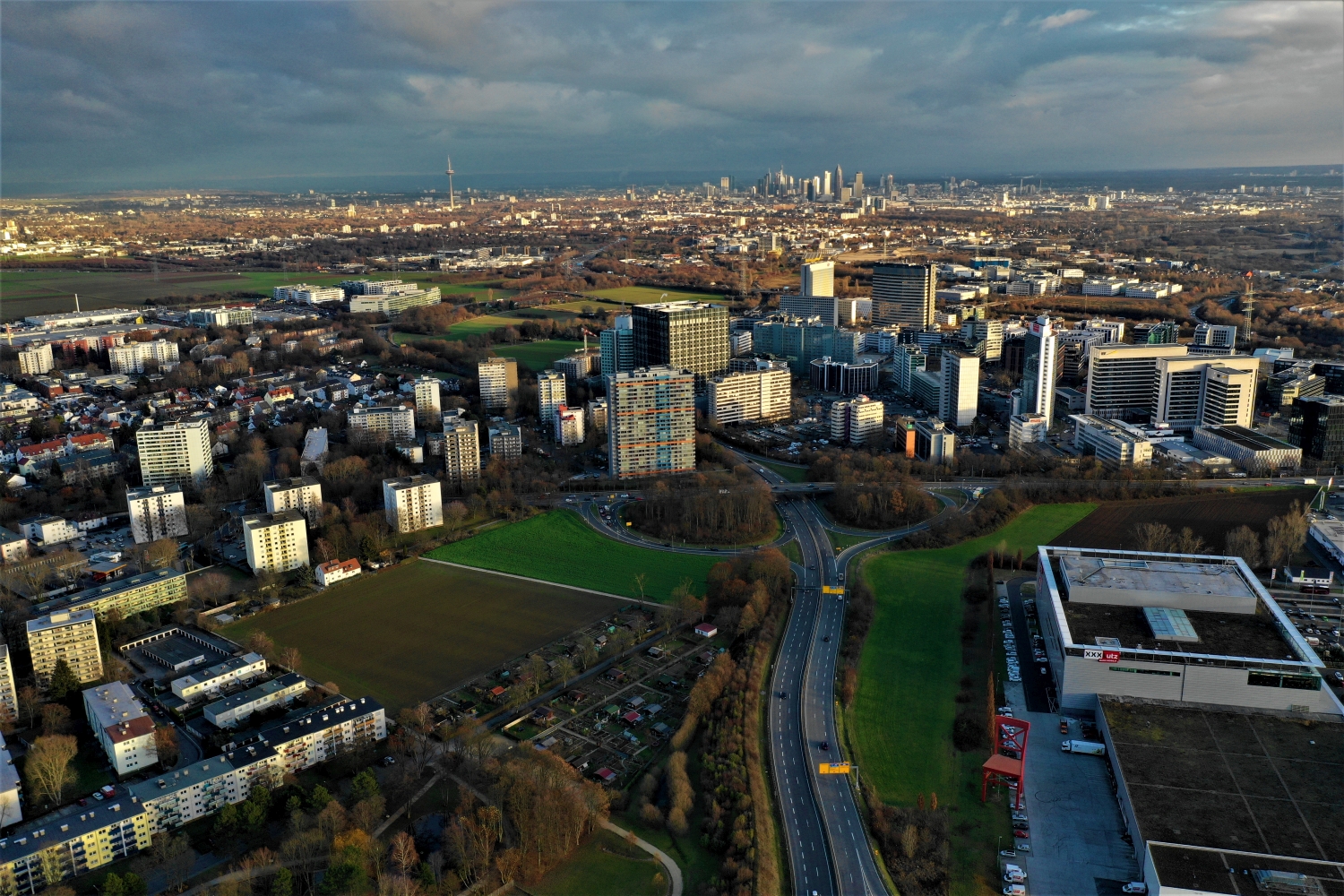
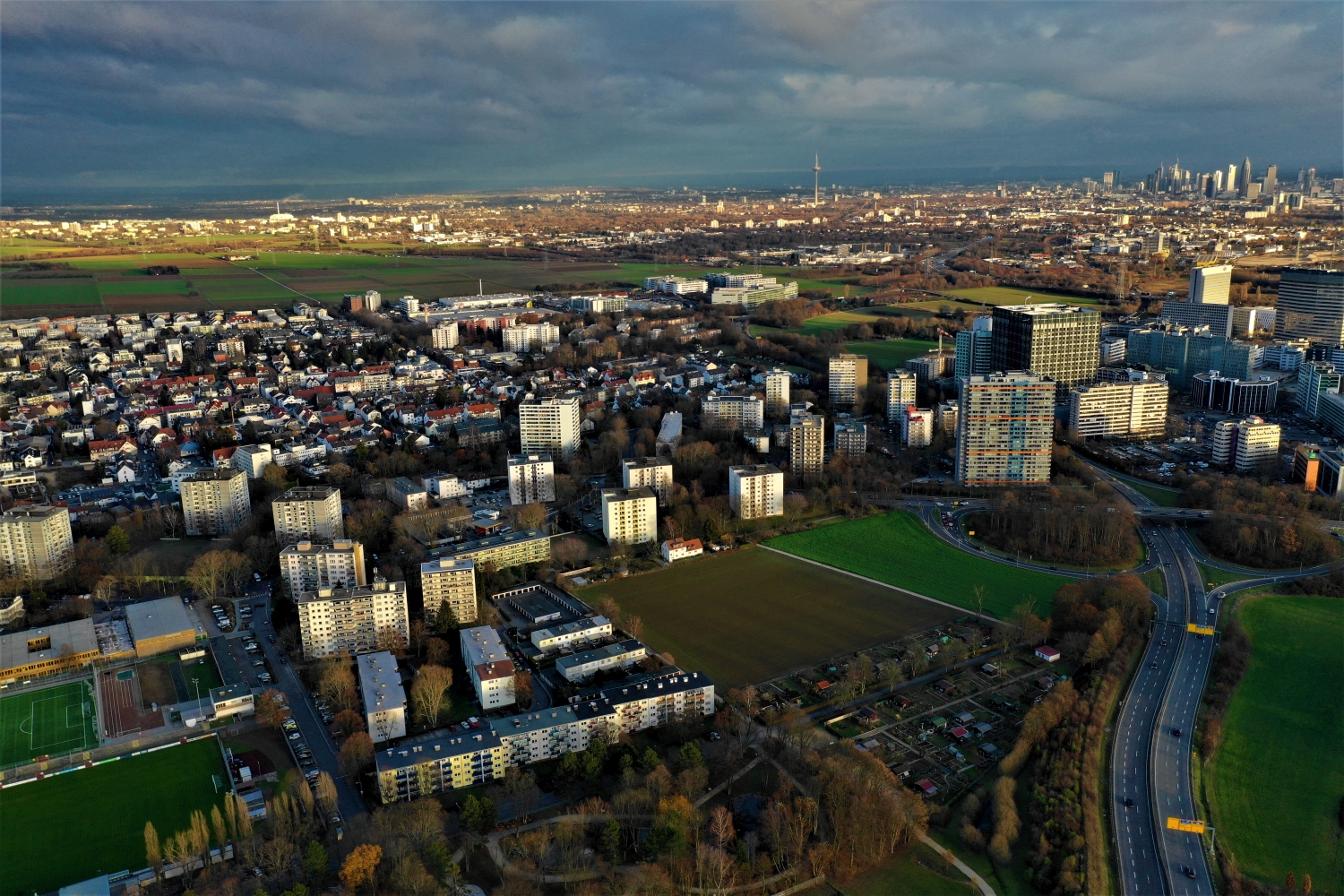
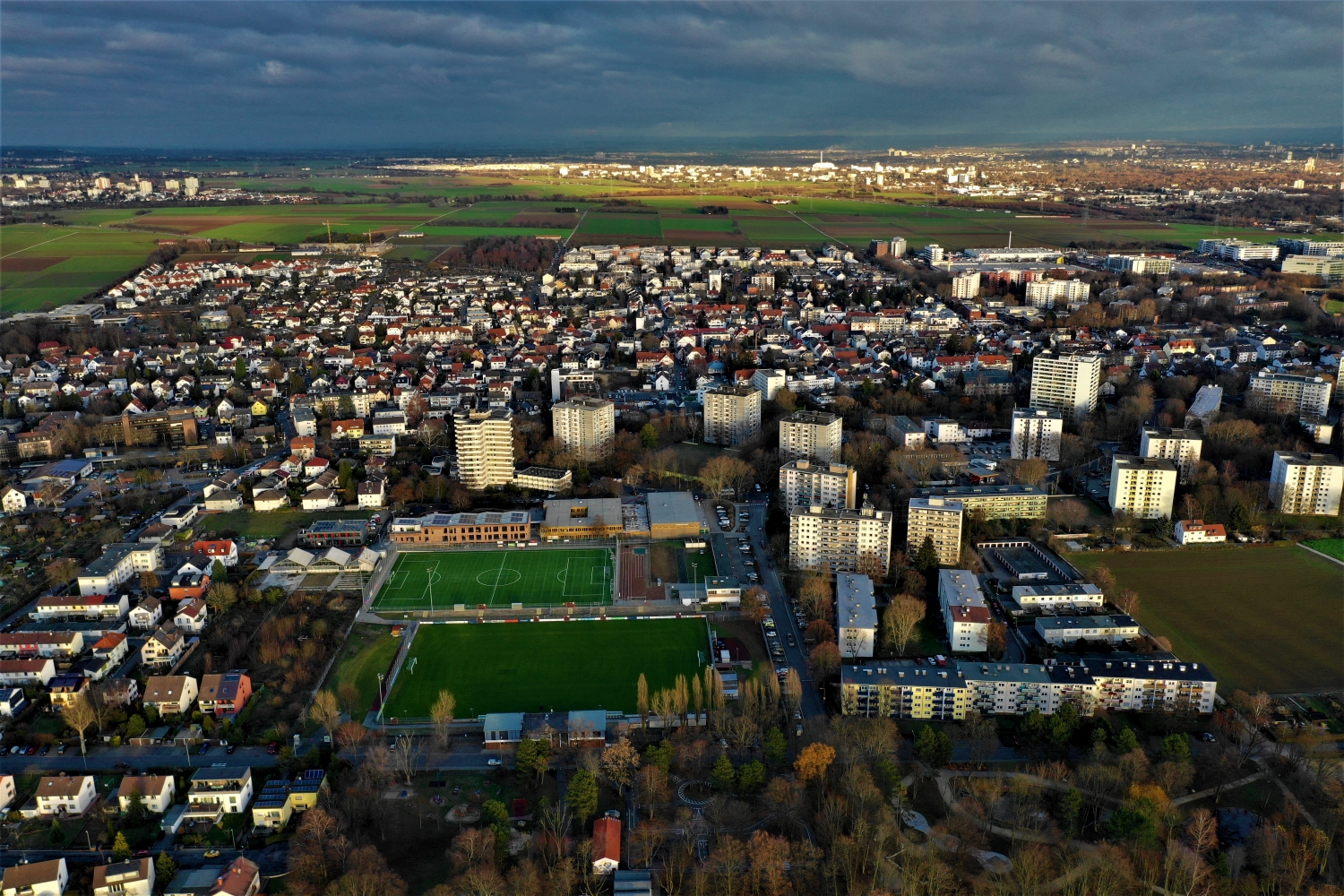
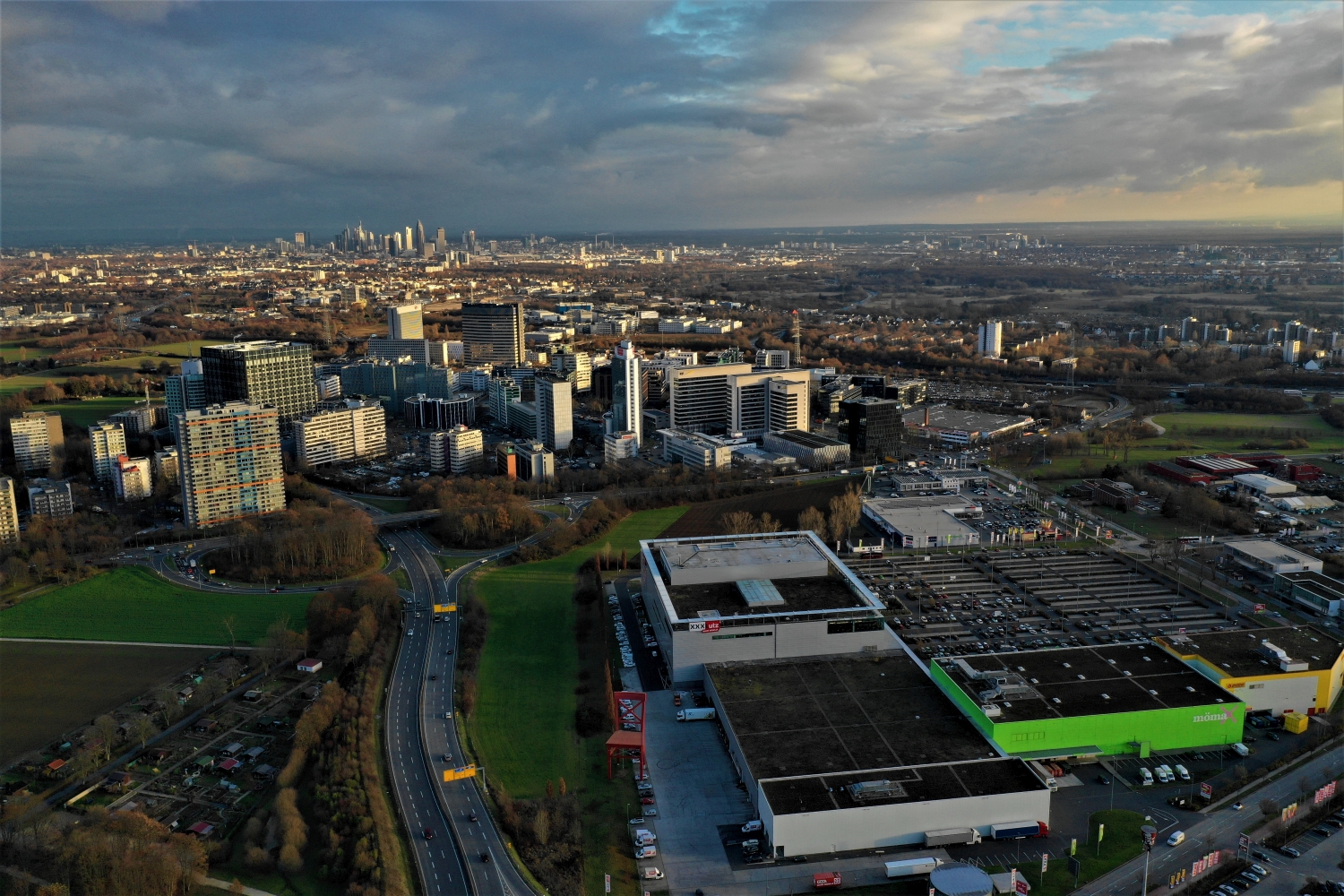
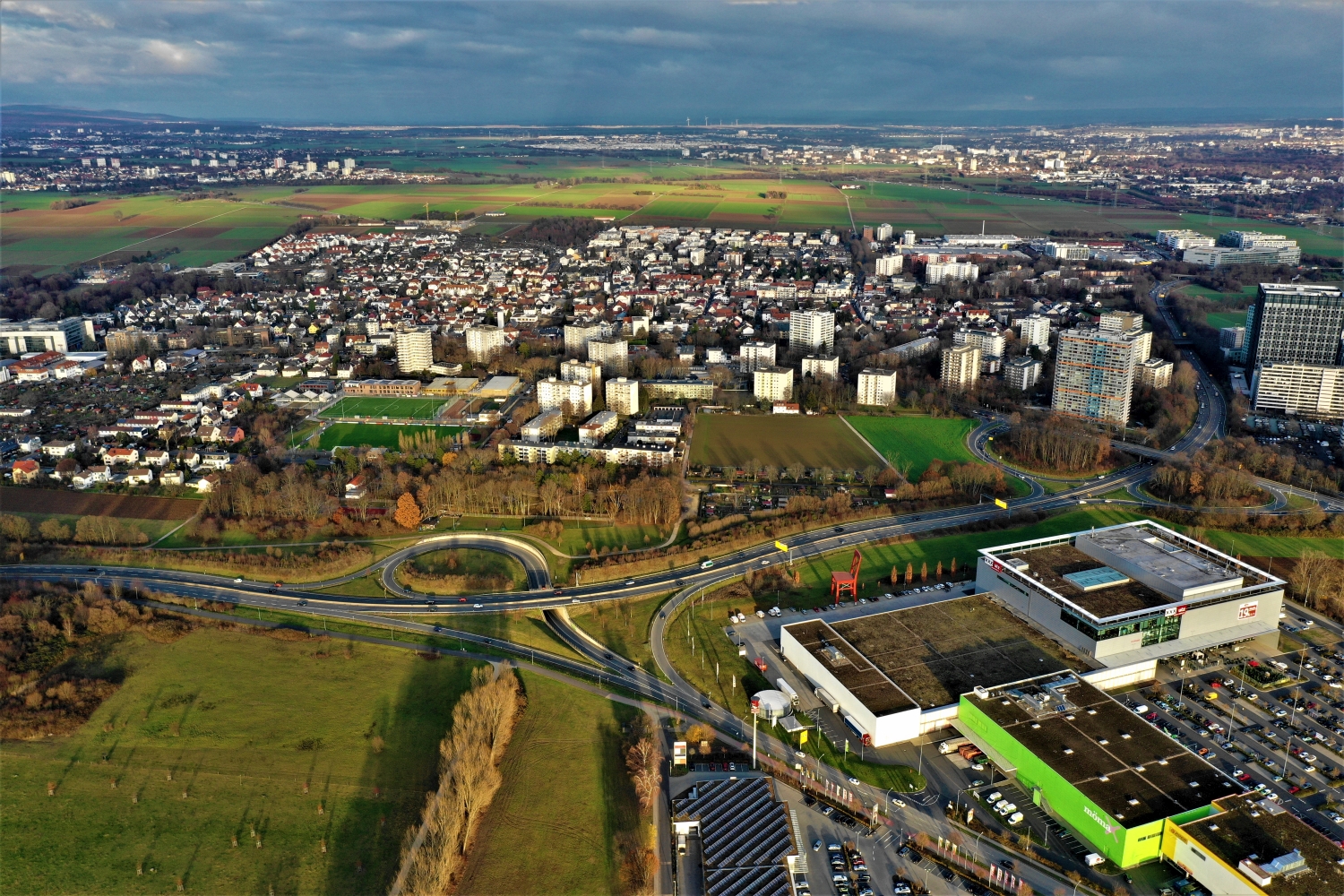
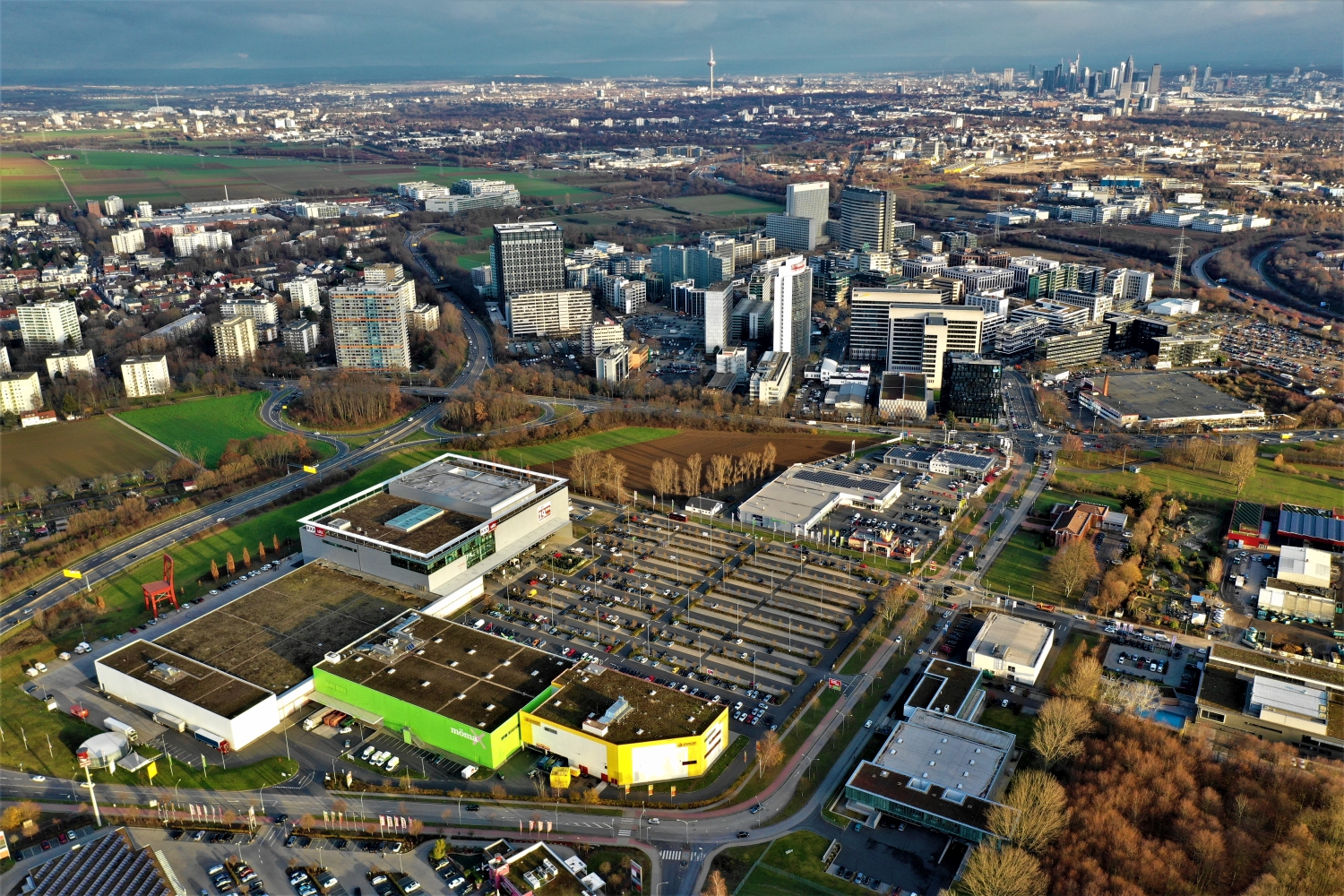
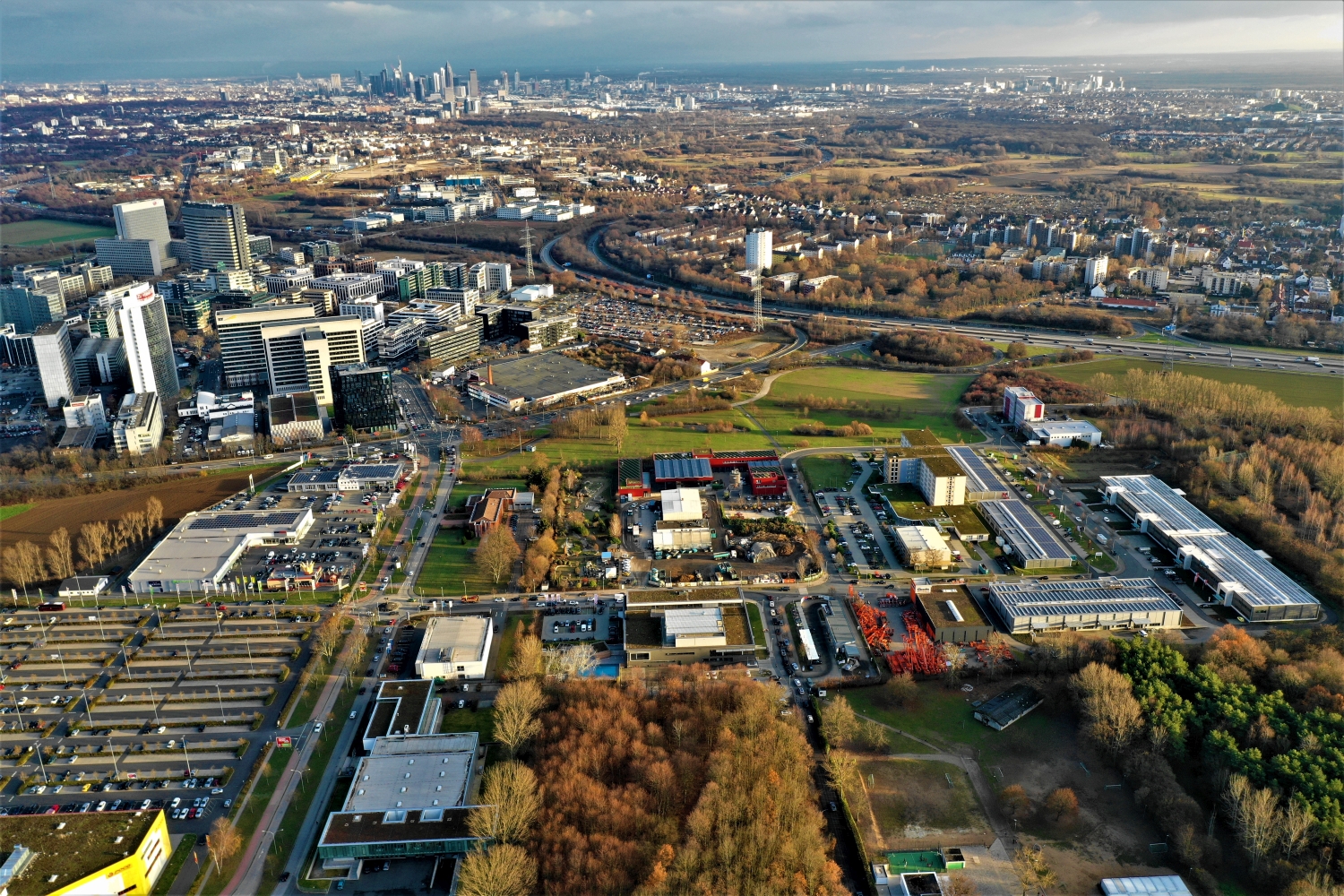
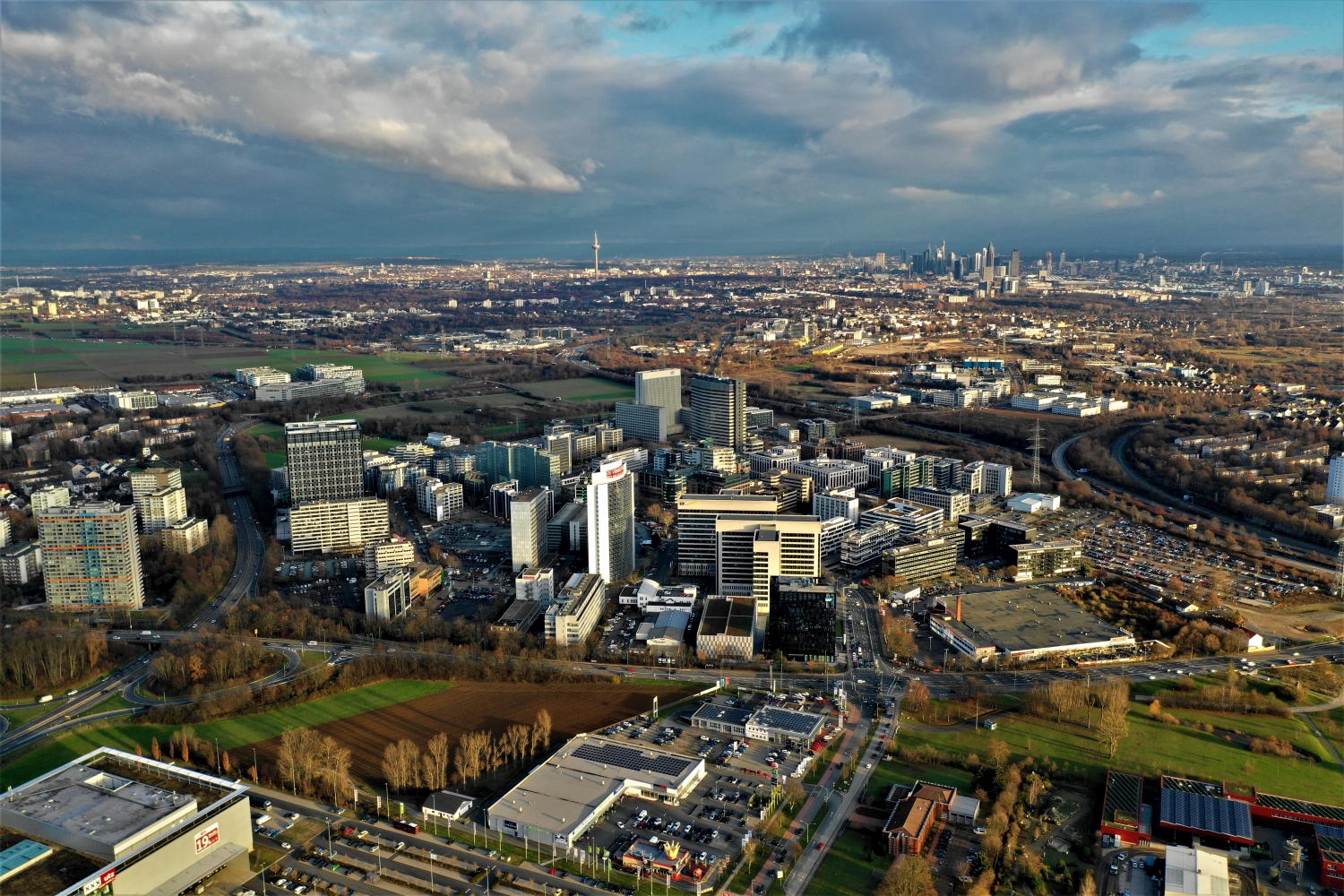
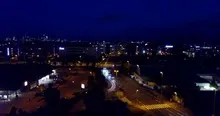
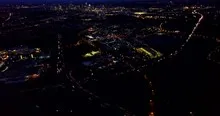
In Eschborn, tall office buildings are surprisingly close to fields. In the evening their facades glow, while the open spaces quickly disappear into the darkness. Together with the distant views towards Frankfurt, this gives the series two very different horizons.
The high-rise buildings at the edge of the field
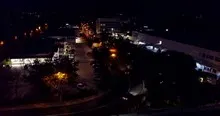
An office district like Eschborn Süd takes on a second appearance in the evening light. The illuminated windows describe individual floors; the arable land next to it can almost only be traced by its outline.
In tall buildings, the silhouette changes with every viewing angle. Two towers that stand close together from one direction reveal a wide gap from another perspective. In a shot for a city performance, such a gap helps to recognize individual buildings. A piece of surroundings at the foot of the houses is equally important. It shows how the large buildings arrive in the street space and what scale neighboring buildings, squares or traffic systems have in comparison.
Large roofs and their access
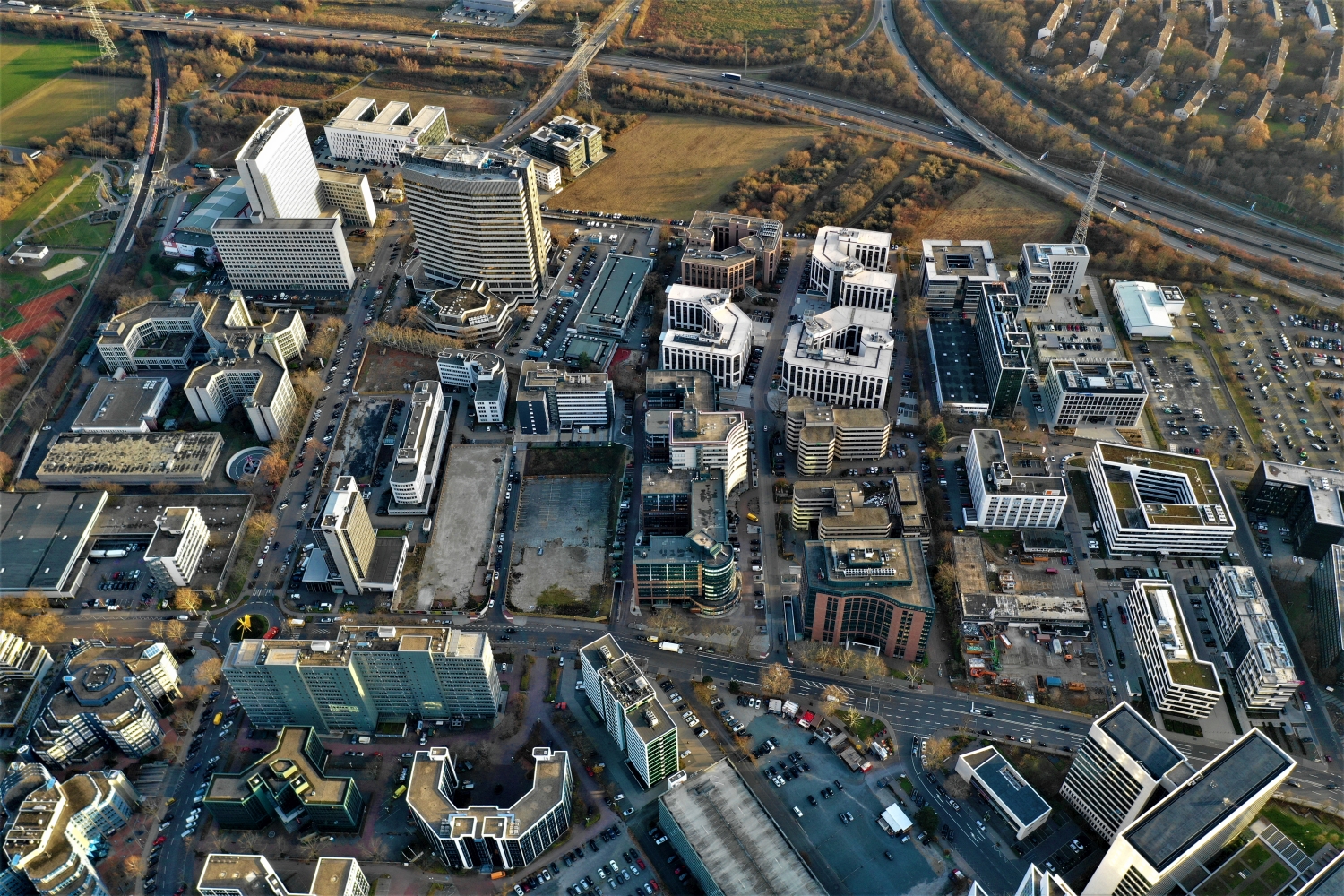
A commercial area can be read from the air by its size. There are shunting areas, driveways and smaller outbuildings between extensive roof areas. The transition to the surrounding town is therefore often very clear. However, the function of an individual business can hardly be determined from the shape of the roof alone. A factual caption can stick to what is visible and, for example, explain the location of the building on a driveway. This means the location view remains understandable even for readers who are unfamiliar with the site.
The different light of the city
At night, light and dark surfaces tell a different story than during the day. Streets remain visible as lines, while green spaces and unlit facades recede. A bright spot easily attracts more attention than the intended subject. When it comes to publishing, it helps to take a look at the small preview. If the location is also recognizable at this scale, the recording works as an introduction. When viewed larger, the transitions between the warm light of the streets and the darker buildings can be seen.
Warm tones within the series
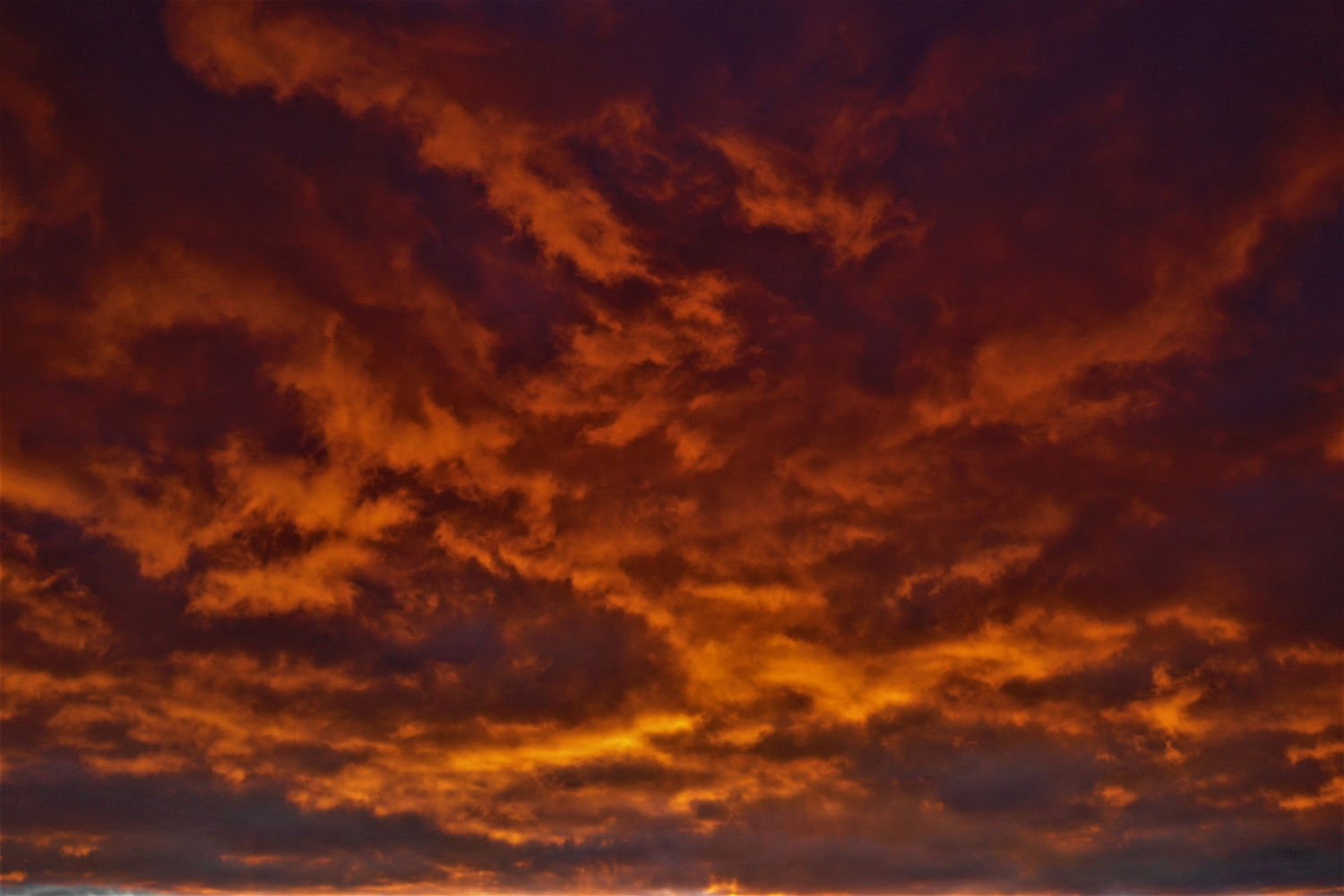
For a direct image comparison, use shot 82 and shot 4 from the gallery with 90 aerial photos. In the second view, warm reds and browns have more weight than in the first. Red-brown and yellowish areas are particularly noticeable next to cooler surfaces. What is interesting when comparing is whether they are concentrated on a single object or appear spread out across the entire view.
The camera data for shot 1 is December 12th, 2018, the camera data for shot 90 is April 23rd, 2025. This gallery therefore contains more than one recording time. Anyone who compares the landscape or the building condition can incorporate this data into the image description. The exposure time was 1/30 second for the first of the images mentioned and 1/500 second for the second.
The Aerial Videos section supplements the photos with 28 clips. The aerial photographer's photographs linked there include “Eschborn from the air”. The relevant video page on Adobe Stock can be opened using the respective preview.
An image for spatial documentation
In the case of a technical system, the direction of view determines which relationships can be explained. The course is clear along a traffic axis, and across it often the connection to the neighborhood. Both questions are valid for a project portrait. The aerial photographer can treat them in separate views. When publishing later, it will help to organize the selection according to these questions. Two visually different images can otherwise repeat the same information, while an entrance, a crossing or the connection to a neighboring property remains incomprehensible.
Related motifs in the aerial photo archive
The article Frankfurt am Main offers another perspective. Frankfurt at night first appears as a network of light. In the gallery RTW West near Eschborn from a bird's eye view there is a different focus. At Eschborn, the course of the regional tangent west can first be recognized by the breaks in the green.
Aerial photos Eschborn
Request a quoteEverything about the city of Eschborn
The city of Eschborn
Eschborn is a town in the Rhine-Main region of Hesse. The city lies on the border with Frankfurt am Main and is best known for its proximity to Frankfurt Airport and the Frankfurt Trade Fair.
Eschborn was first mentioned in a document in 753 as “Ezzesborne”. Eschborn was granted city rights in 1405 by Emperor Henry IV. Eschborn has been a Lutheran community since the 16th century, and the city has belonged to the Kingdom of Prussia since 1821.
Eschborn was badly damaged in the Second World War, but was rebuilt after the war. Today Eschborn is a modern and prosperous city with many residents from all over the world.
Sights in the city of Eschborn
Eschborn is a city in the north of Frankfurt am Main. The city is known for its sights to discover. One of the most popular attractions in Eschborn is Eschborn Castle. The castle was built in 1904 and is now used as a hotel and restaurant. Another popular place in Eschborn is the city museum. The city museum is located in the city's old town hall and shows the history of Eschborn using pictures and documents.
Eating and drinking in Eschborn and the surrounding area
Eschborn is located in the heart of Hesse and is a very livable and lovable place. Anyone who lives or vacations here will quickly find that the city is very hospitable and offers a large selection of restaurants and bars. In Eschborn you can try both classic German dishes and international specialties.
One of the most popular restaurants in the city is Café Schäfer, which offers hearty German dishes as well as many delicious vegetarian dishes. For those who prefer to eat Italian, there is also the Osteria Rossini in Eschborn, a very popular restaurant with a great atmosphere.
If you prefer something hearty, you should definitely try the Brauhaus Eschborn. There you can not only enjoy delicious beer, but also delicious regional specialties such as the “Eschborner Rippchen” or the “Schäfer-Stör”.